Central Idea: Forces make things start, stop and move in different ways
Lines of Inquiry:
How objects move in different ways (Function)
How forces change the way things move (Causation)
How movement can be changed (Change)
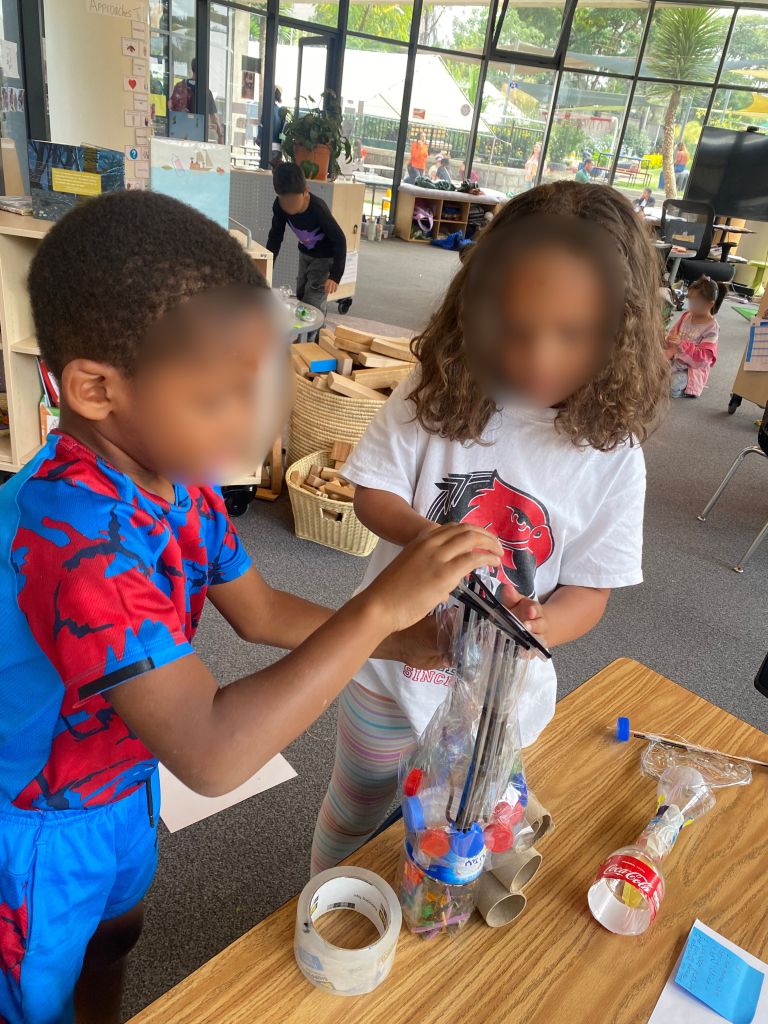
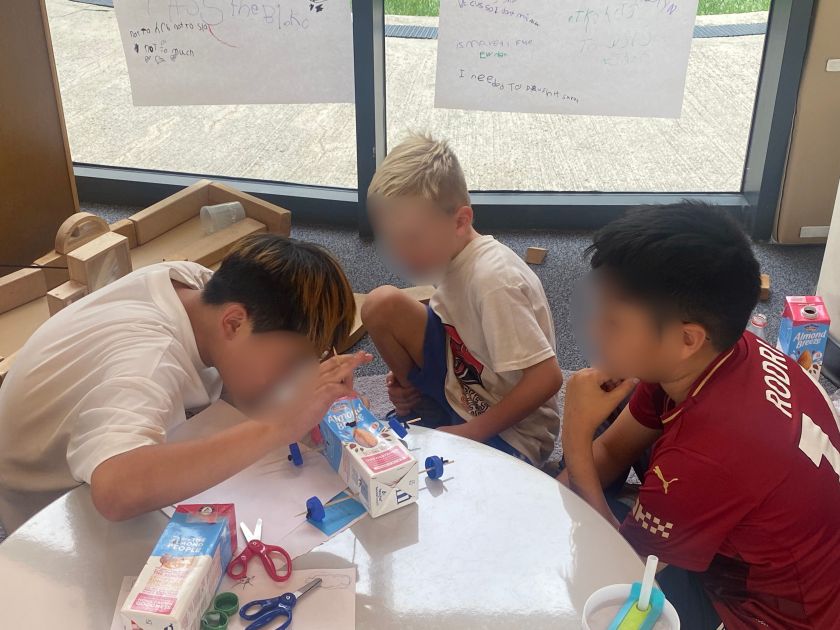
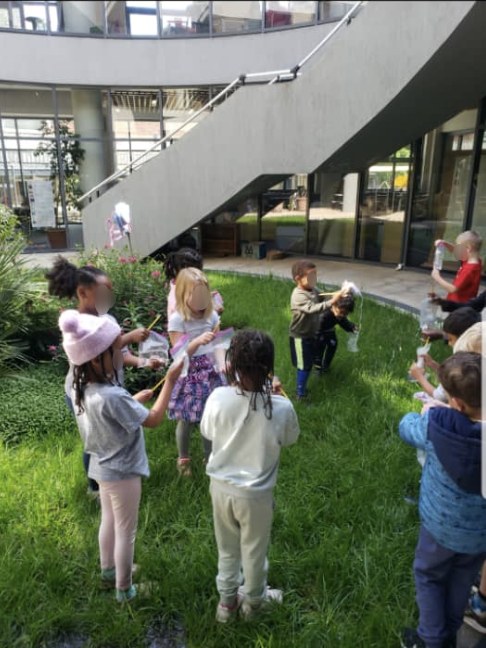
To wrap up our unit on forces and motion in a fun, engaging way we introduced our students to the story, “Galimoto” by Karen Lynn Williams. In this story, a young boy uses wire to make a push-toy car to play with. As a form of action, we challenged our students to use recyclable goods to make a toy that uses force or motion when played with. First, students identified what types of materials and resources we had at school that are considered, “recyclable.” We discussed how an item can be recycled if it is being used again for a new purpose. Students had many ideas, arguing that even the clay from art class could be recyclable!
Helping Out a Friend with their Galimoto!
After making our list of materials, students considered what they wanted to make using any of the materials we brainstormed. Students drew out their design for their toy, labeling each part of their design with what recycled item would be used to make it. Some students chose to make cars, others wagons or speedboats. Some got creative with their understanding of force and made a purse, stating that it uses force because you have to pull on it to pick it up. What became clear as students were designing, is that they had a strong understanding of push and pull forces and the different ways their movement can be changed. Students discussed related concepts like direction, speed, and weight when discussing how their object would move.
Finally, students built their creations! They had so much fun putting together their toys, testing out their ideas of how it would move. It was a great celebration of creativity and knowledge.
What? Open inquiry is a purposeful time of our day lasting about 45 minutes, where students engage in a variety of learning engagements that are connected to our learning objectives.
How? Open Inquiry is set-up as stations around the Hub that student’s “sign-up” for. At the beginning of the year, we asked students each day which station they would like to engage in first and then either wrote their name or moved their photo marker to visually represent the sign-up. Towards the middle of the year we introduced students keeping track of their own movement between stations with a personal Open Inquiry checklist. Students know that they do not need to stay at the same station for the entirety of the time, but should be engaged in each activity for an extended period of time, minimum of 15 minutes of engagement to start. The student’s checklist was further modified to include “must-dos” and “can-dos” to allow choice, but also highlight various stations that throughout the week they must attend. A teacher is always present at a “must-do” station to also document which students have engaged in that activity, although primarily it is the child’s job to recognize if they have or have not done the learning engagement yet for the week.
Why? Open Inquiry is really about students being able to explore their interests in connection to a broader theme. It’s also a time where real thoughtful differentiation can occur that meets kids where they are in terms of their readiness level and best methodology for learning. Prior to implementing Open Inquiry in the Hub environment, we would have daily free play time. Although we still incorporate free play periodically throughout the week, allowing students complete choice over any engagements in the space, we found that not only were students going to the same area again and again but many students didn’t know where to go at all. Open inquiry gives students opportunity for discovery, for enrichment in our learning and for being a Risk-taker and trying new things. Since we change the engagements weekly, students have enough time to explore the stations put out and go back to a favorite before they’re ready for a new challenge.
What does this look like in connection to a Unit of Inquiry?
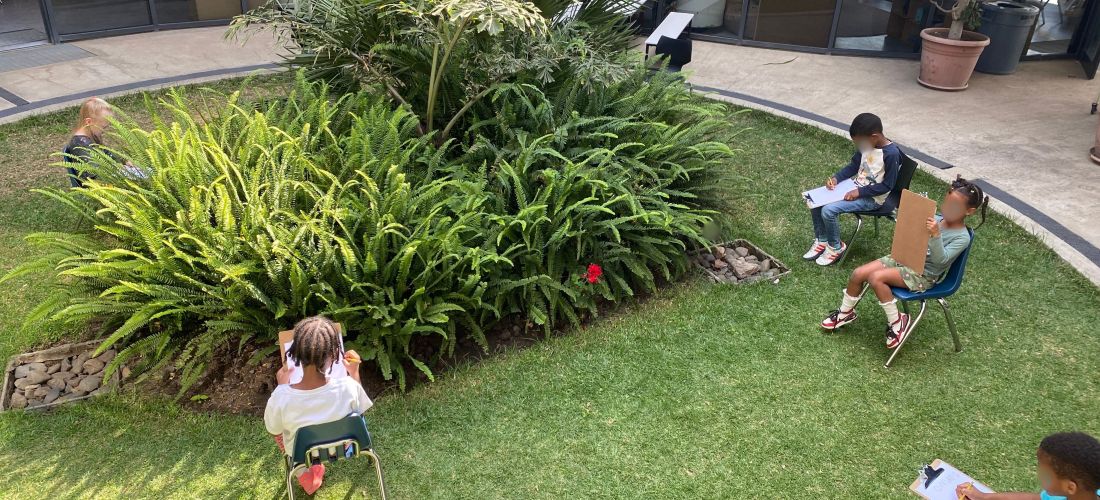
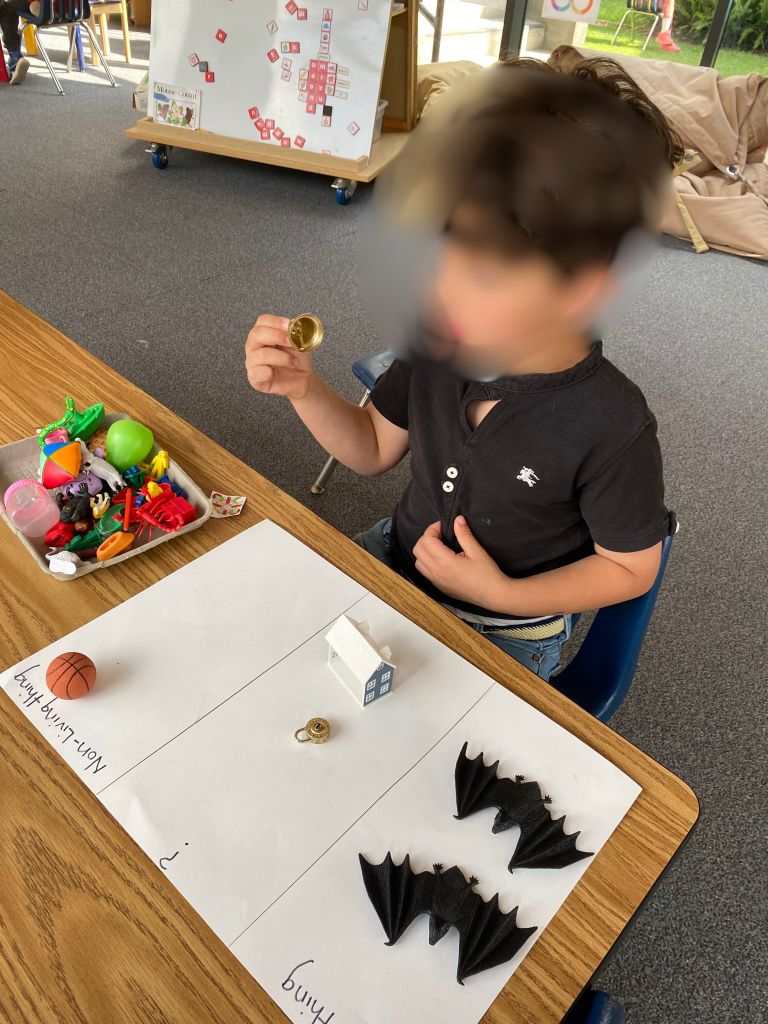
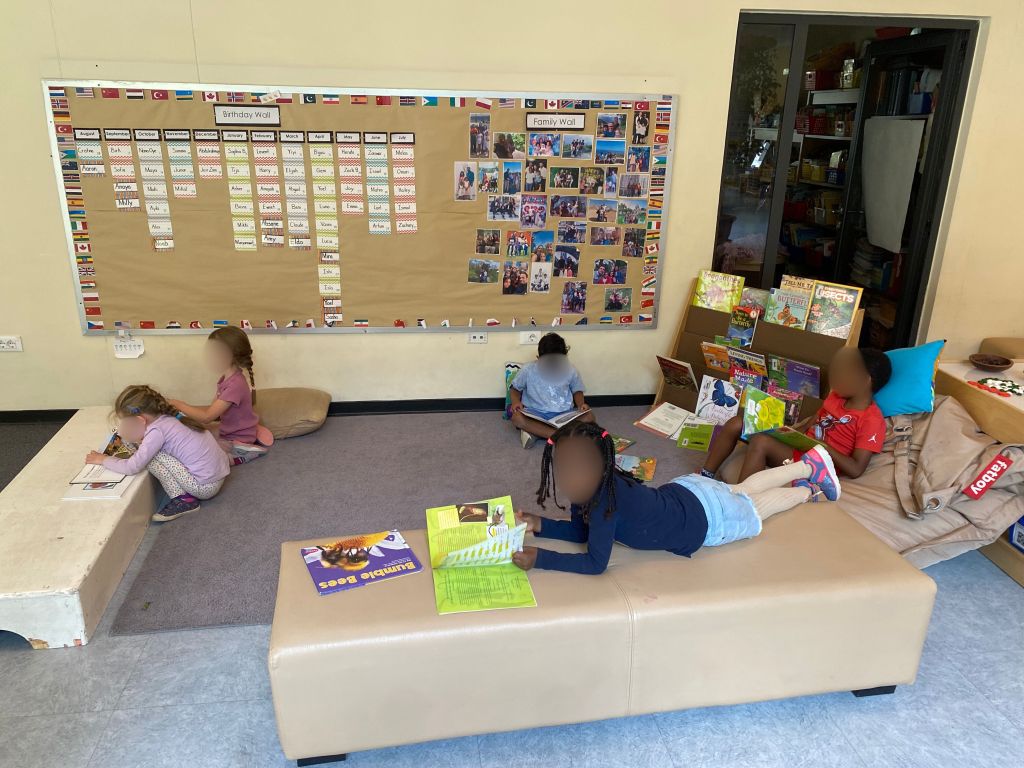
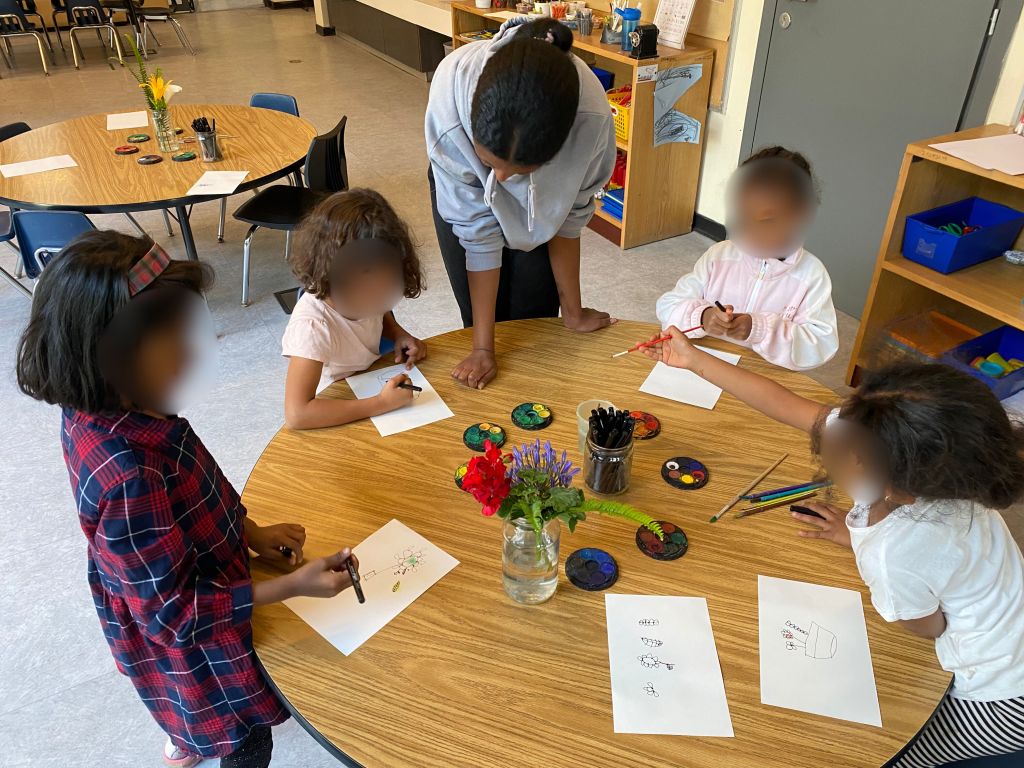
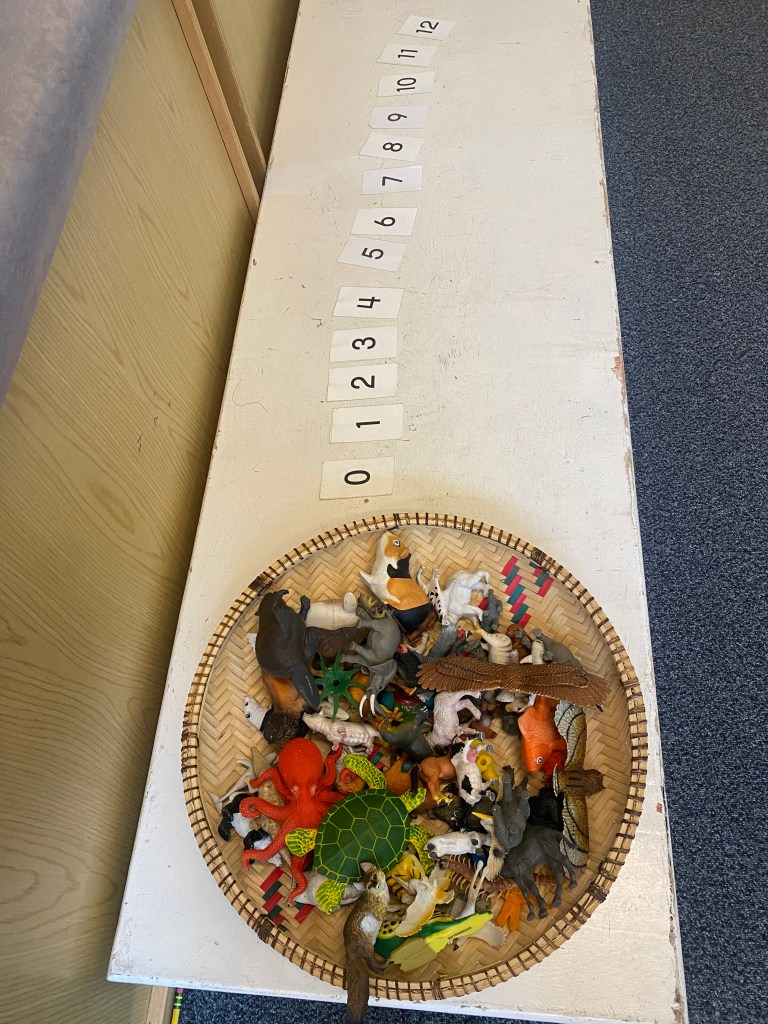
Let’s take a look at what stations could look like for a Unit of Inquiry. Below is what one week of Open Inquiry looked like last year during our Sharing the Planet Unit on Living Things. We were careful to ensure that the learning engagements covered a variety of skill areas both academic and ATLS. With the stations below in additional to learning about the unit students will work on their counting and cardinality, reading/book handling, close observation skills, sorting skills, and fine motor skills.
PYP Sharing the Planet
Central Idea: Caring for living things grows from learning about nature’s cycles and how we depend on each other.
Lines of Inquiry:
Living things and their life cycles (change)
How habitats make it possible for living things to meet their needs (connection)
How humans can take action to protect living things in their environment (responsibility)
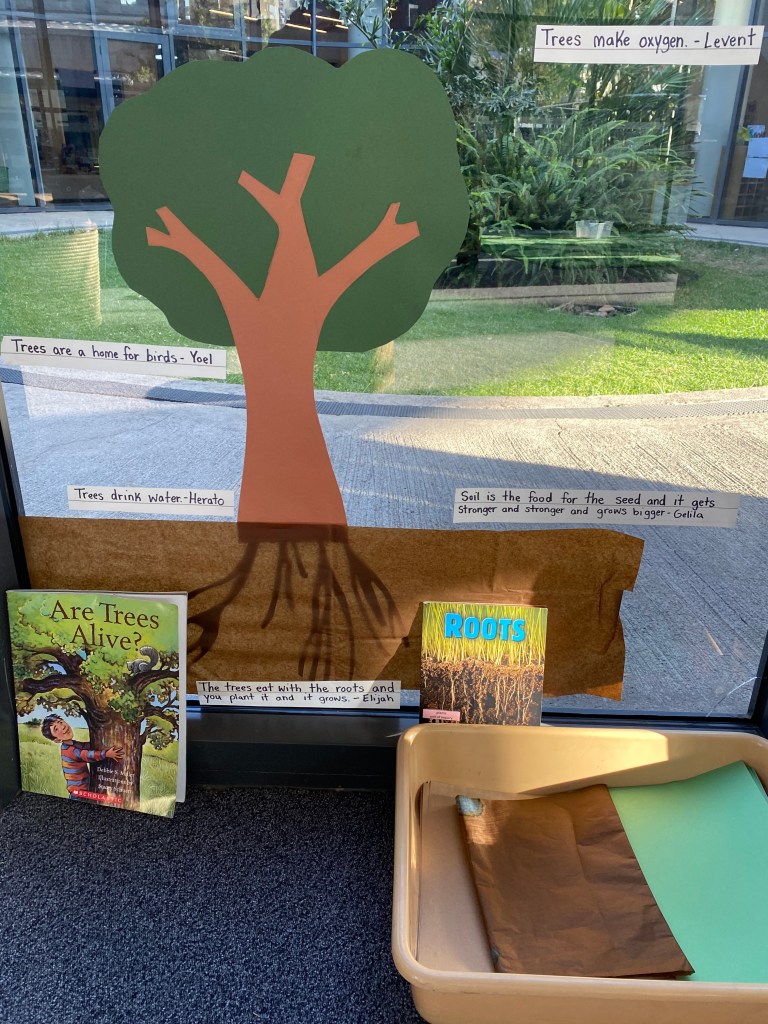
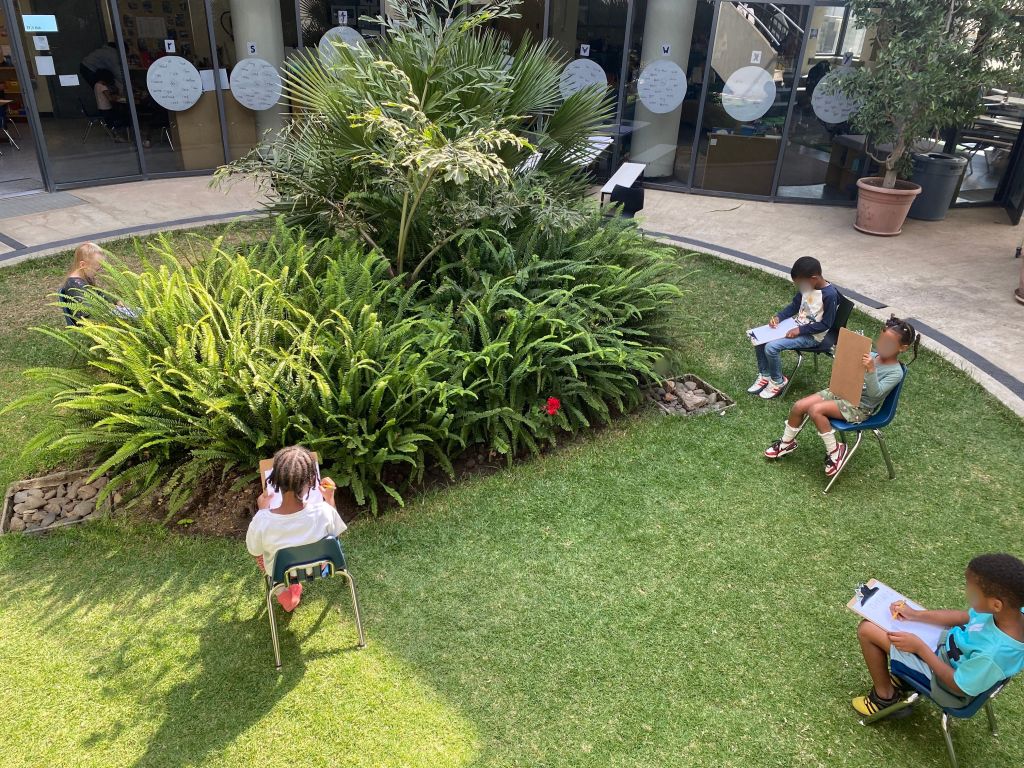
Sorting Living and Non-Living ThingsRead to Self Unit BooksPaint a Living ThingOrder the Animals by Number of LegsExplore if Trees are Alive and Make Your OwnSketch like a Naturalist
RL.K.9 With prompting and support, compare and contrast the adventures and experiences of characters in familiar stories
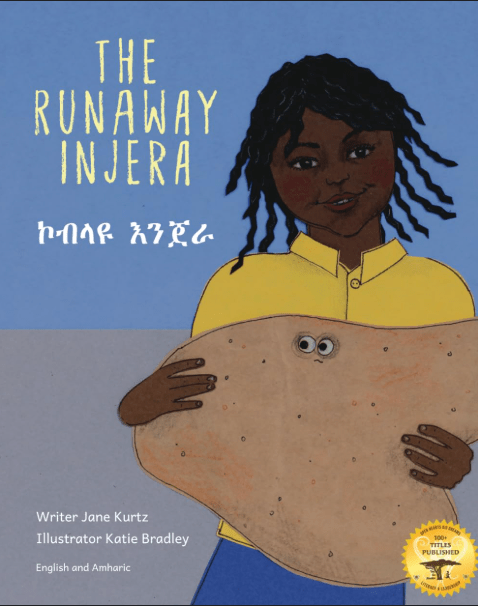
What? First students compared and contrasted the popular fable, “The Gingerbread boy” with a local take on the story, “The Runaway Injera.” After making treats that resembled each story, students again compared and contrasted but this time with their sense of taste.
How? With the holidays approaching, we decided it would be fun to incorporate some different types of texts into our literacy lessons to spark student interest and provide a pathway for other fun holiday activities.
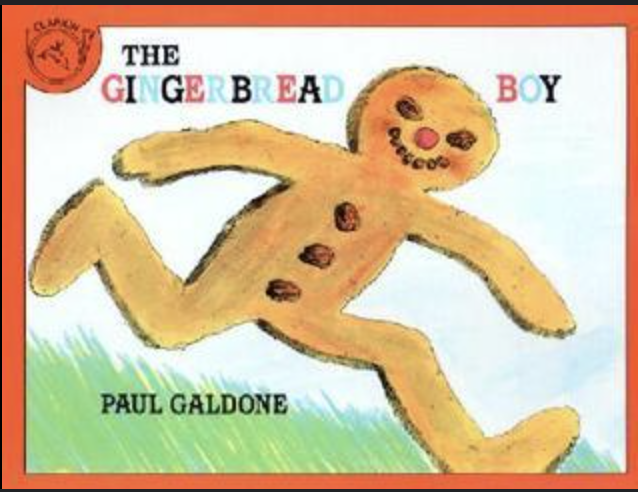
Day 1: First, we read the story “The Gingerbread Boy” by Paul Galdone. After reading the story, on our documentation chart we recorded who the characters were in the story, what the setting was, the problem in the story and the solution in the story. This was particularly interesting as it lead to a student debate on what the solution truly was! Many students said there was no solution because the gingerbread boy got eaten in the end of the school. We talked about how for the gingerbread boy there did not seem to be a solution, but for the fox who got to gobble him up there was a clear solution! This was a natural lead in to discuss how perspective of characters is something to consider when determining a problem and solution.
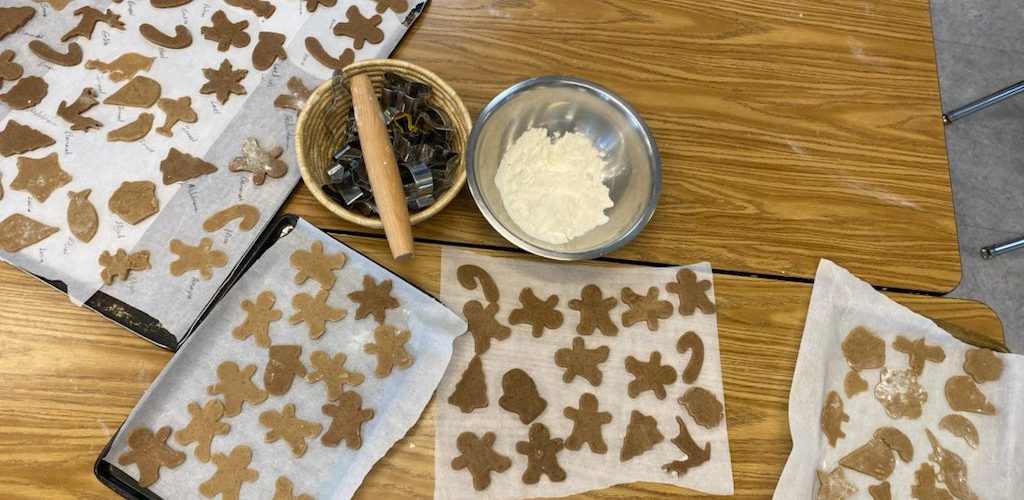
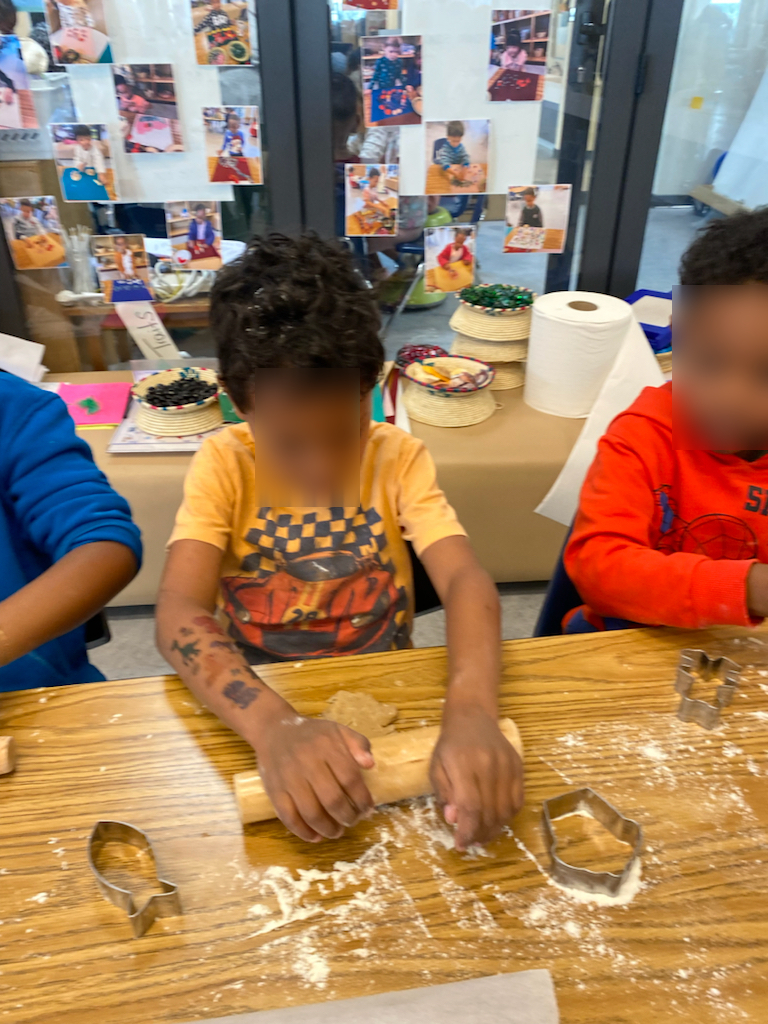
After we read the story, we told the children we were going to make gingerbread cookies! Each child got a chance to participate in part of the process as we needed to make three batches. Once the dough was made, the children discussed the concept of shape and how they were going to form their cookies. Each child got to choose which shape they would make their gingerbread cookie. Once out of the oven in the afternoon, students got to decorate their cookies with frosting and other sweet decorative goodies.
Rolling out our dough with different shapes
Day 2: The next day, we read the story “The Runaway Injera” by Jane Kurtz, who used to live in Ethiopia. We again documented on our classroom documentation sheet the characters of the story, the setting, the problem and solution. Students noticed that there were many similarities in the problem and solution in this story to the gingerbread boy story! However, the characters and the setting were not the same. This was a good start for our independent work follow-up.
That afternoon, students again had the opportunity to be hands-on and make their own treat. This time, students used injera bread to shape their own mini injeras. They stated that injera is a round shape so they chose the circle cutters to cut their own pieces. Each student decorated their own injera with Ethiopian spices.
Day 3: The final day of this learning engagement began with students completing an independent writing activity in their Story Workshop notebooks to “compare and contrast” the two stories. On their book, we glued a photo of each story at the top and drew a line down the middle for students to have a simple organizer to share their thinking. Students first wrote everything that was the same in a list format. Underneath on the chart they wrote everything they noticed that was different in the two stories. To differentiate this lesson, students could either write a word to go with each bullet point or they could write a complete sentence for each bullet point.
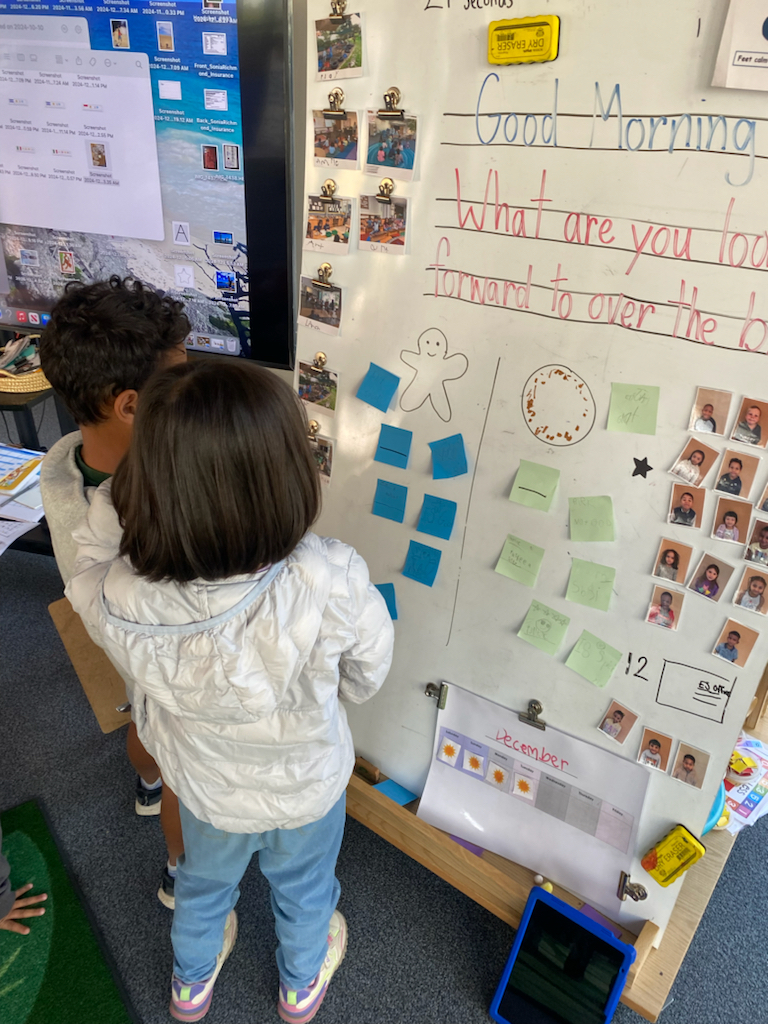
We ended our day with a taste testing party! Students received their cookie and their mini injera and we sat together for the party to try each treat. We told the children to carefully taste each, and think closely about how they would describe what they were tasting. What words would you use to describe the cookie? What about the injera? Would you use the same words or different words? At closing circle students came with their words in mind! Each child was given two sticky notes and told to write down one word to describe the cookie and one word to describe the injera. We created a whole group chart comparing and contrasting what each treat tasted like!
Students put their sticky note on our whole group chart. The blue sticky notes described their cookie and the green sticky notes described their injera.
Why? To really understand a new concept, students benefit from multiple encounters with that topic in different contexts. Although the standard for EY5 Literacy is for students to be able to compare and contrast stories, students will gain a richer understanding of comparing and contrasting if they have opportunities to compare and contrast other things. This lesson gave this opportunity, as students had a body to consider how stories can be the same or different, but also see how a similar model could be used to discuss similarities and differences for just about anything. Not only this, but students had such an enjoyable time completing immerse themselves in this fun, yummy, hands-on learning just in time for the holidays.
Central Idea: Awareness of weather patterns inspires people to create solutions for living safely and comfortably in different places.
Lines of Inquiry:
Patterns in weather in different places (form)
How people design solutions to solve problems (causation)
How people prepare for and respond to weather (responsibility)
What? Students explore their own identity through reflecting on memorable weather experiences and how they needed to respond to different types of weather.
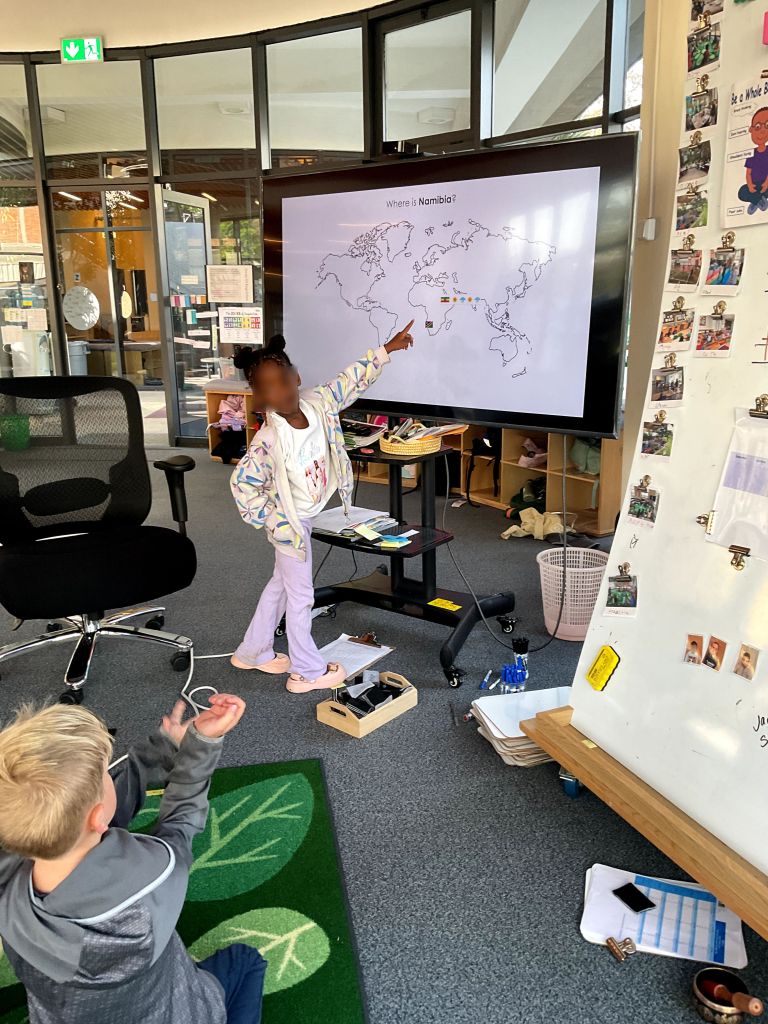
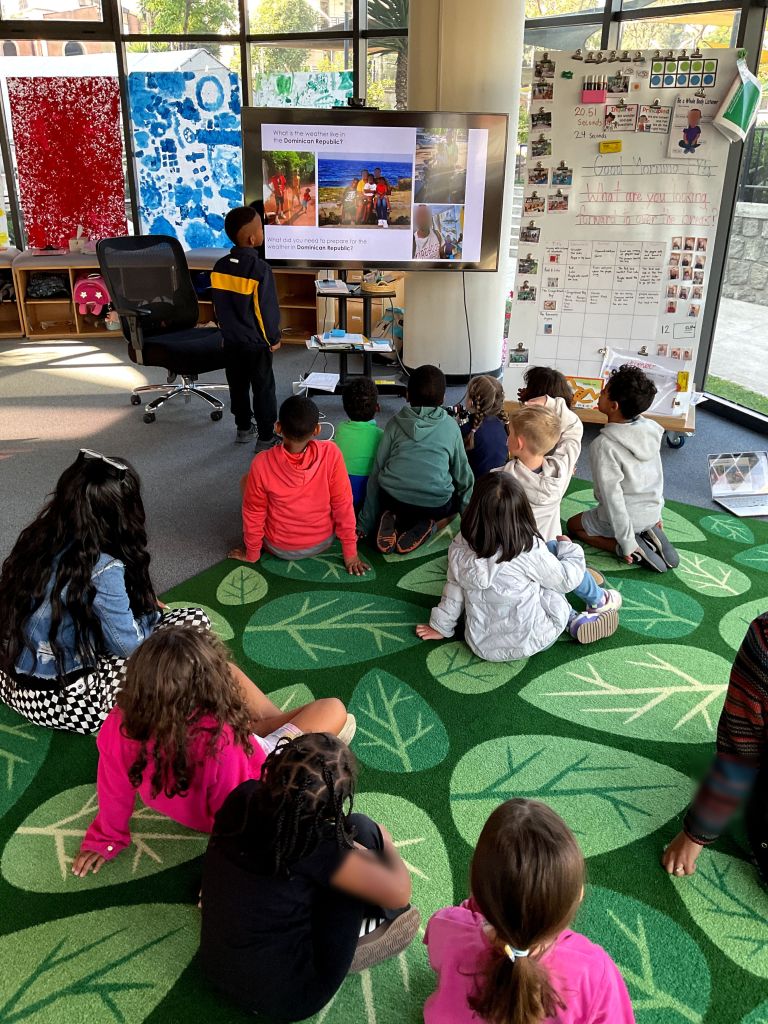
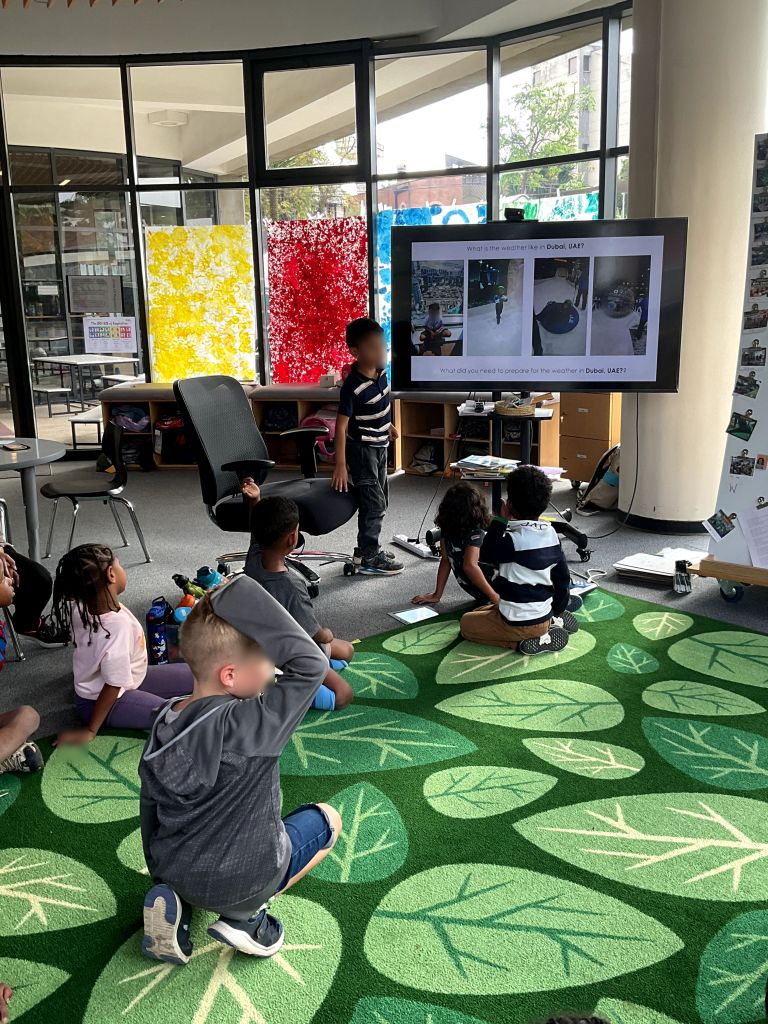
How? This project began because of a student inquiry in the response to the question, “is the weather always the same in every country?” Students and families were asked to email 3-5 photos of their child experiencing weather in a different country to the teacher. It could be a country the child used to live in or a country the child had visited on vacation. Once I received the photos, I put together a basic “presentation” for the child (although if time permits and students have the tech skills, students could do this piece themselves.) Each child then shared about their weather experience, first showing where the country was on a map of the world and then sharing the photos. For the share, children discussed their experience with weather and any seasonal patterns they know of in that country and. how they needed to prepare of the type of weather they were sharing about.
Here is the outline for the presentation-
1. Child shares where their country is on a map
2. Child shares what the weather was like in the country when they were there and what they needed to prepare for that type of weather.
3. Presenter answers questions from classmates.
Why? Allowing the children to “take us” all over the world with this fun presentation, provided an opportunity for each child to share a place and a memory vastly important to them. Identity was explored further when each child got to both ask and answer questions from their classmates about their experiences, allowing us to learn new things about one another. Since many children had never experienced a different weather type than a sunny and rainy weather pattern, this provided an opportunity for students to be knowledgable and learn from each other. We practiced our listening skills, question asking skills, and presentation skills, all while being Inquirers about each other’s lives and why different weather patterns exist.
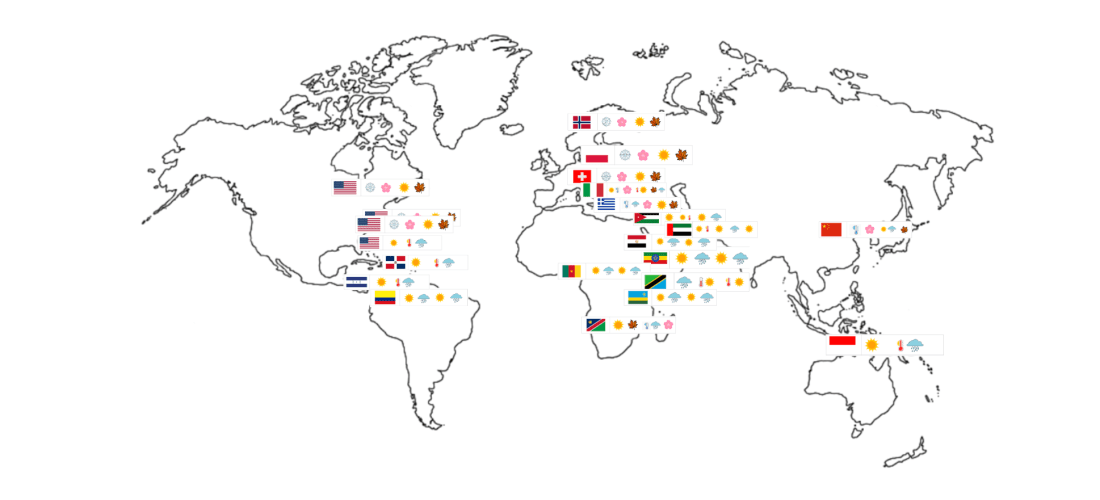
Our final weather patterns map after each child had shared their weather experiences. This map was teacher created throughout the unit using the data students shared about their weather experiences in each country.
Additional Note:
Incorporating weather into a Who We Are unit was both a challenge and an eye-opening experience for me as an educator. This unit came as a review of our Science Curriculum to incorporate the Next Generation Science Standards, a product of robust conversation and questioning as to its fit. Although there are still much elements on How the World Works in this unit, it was clear from teaching it that our experiences with weather do indeed play a huge part in how we grow up and who we become.
Central Idea: The Form of Material Impacts It’s Function
Lines of Inquiry:
The properties of materials (form)
The way materials are used (purpose)
Design (function)
What? Students have been inquiring into the properties of materials using their 5 senses for observation and the scientific process to test the properties of different materials. Students now have the opportunity to pick one type of material to research in depth during an immersive lab experience
How? Welcome to the plastic Lab! This is what our sign read to greet parents for our Celebration of Learning concluding our investigation and lab experience. The children walked their parents through their process from beginning to end with each activity we did in lab. Here’s the first 3 days of our process as a lab group:
Day 1: Opening Question: What do we use plastic for? Why? After discussing, children explore everyday household plastic objects including shampoo bottles, yogurt containers, water bottles, and classroom toys. Children use magnify classes to look closely and think about what they can learn from each of their senses. Discussion: What did you notice about plastic? To conclude, children are given a lab notebook. On the first page they wrote down a question they had about plastic.
Day 2: To begin, I showed students a picture of a tortoise (we several at school that roam the campus), but you could use any picture that is fun and relatable to your students. Opening Question: How would you describe this picture of a tortoise? I wrote down the words students were using to describe the tortoise, then we discussed that these were the characteristics of a tortoise. The children already knew this word characteristics because of our previous unit Who We Are. I then showed students some of the plastic they were looking at yesterday and asked them. What are all the words you could use to describe plastic? I gave my students each a few sticky notes and they wrote down as many words as they could with one word per sticky notes. We put up all the words on the board and I told students that because plastic is not a living thing like a tortoise, these words are all called the properties of plastic.
Day 3: Opening Question: Why do you think we produce plastic? This opening question was also one of my students’ inquiry questions from the first day! I showed them a collection of images of plastic items before allowing them answer the question in a group discussion. Students said anything from, “to make toys”, to “because you make anything out of it!” I showed them a list of words they had came up with from the previous day and read that list to them- hard, soft, pointy, strong, smooth, etc. Do you know what opposites are? I asked them. Some students did! A lot of the words my students came up with were opposites which we found interesting, which is why plastic is so unique and ultimately why plastic was produced. We read a chapter in the book, Plastic, about Alexander Parkes, the creator of plastic and how and why he made this material.
Drawing and Writing What We Think Will Happen During an Experiment with Plastic
Why? Students are naturally curious about what they use, and observe in their everyday life. Since all students got to choose which lab group they wanted to go into for this part of our unit, students were motivated and asked so many great questions which I used to move this unit along and hit on each line of inquiry. Our celebration of learning was a good opportunities to see which activities students had liked the best. Student rushed to show their parents how to fuse plastic beads together and were proud of their overall plastic designs, two of the activities we did later in this unit. Since this unit was full of hands-on activities and ended in a product students were proud of, they gained valuable collaboration, organization, and presentation skills.
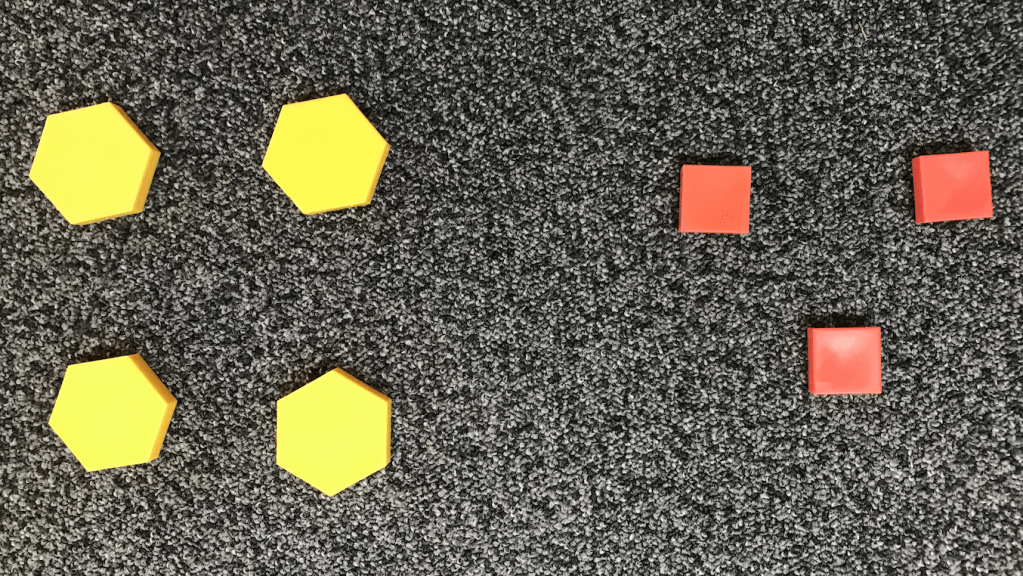
Pattern blocks are a great way for young learners to explore the concept of More Than and Less Than because they can be sorted easily by color and by shape. Children can start using terms such as “square” and “hexagon” in their vocabulary when talking about math and still easily be able to categorize them without getting into the concepts of number of sides. Children can either make groups that show the concept of more or less or make puzzles for their friends to challenge them to determine which one has more and which one has less.
Creative Counters
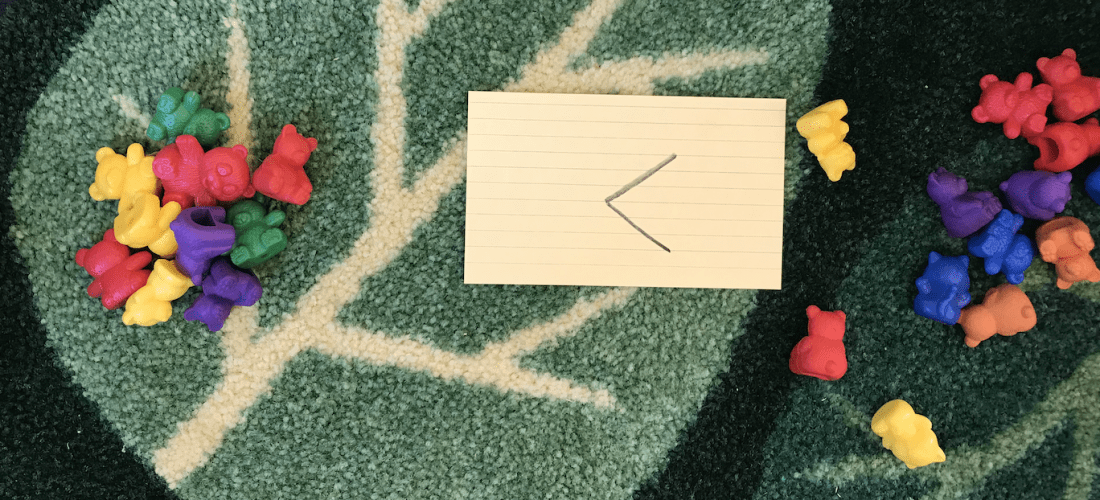
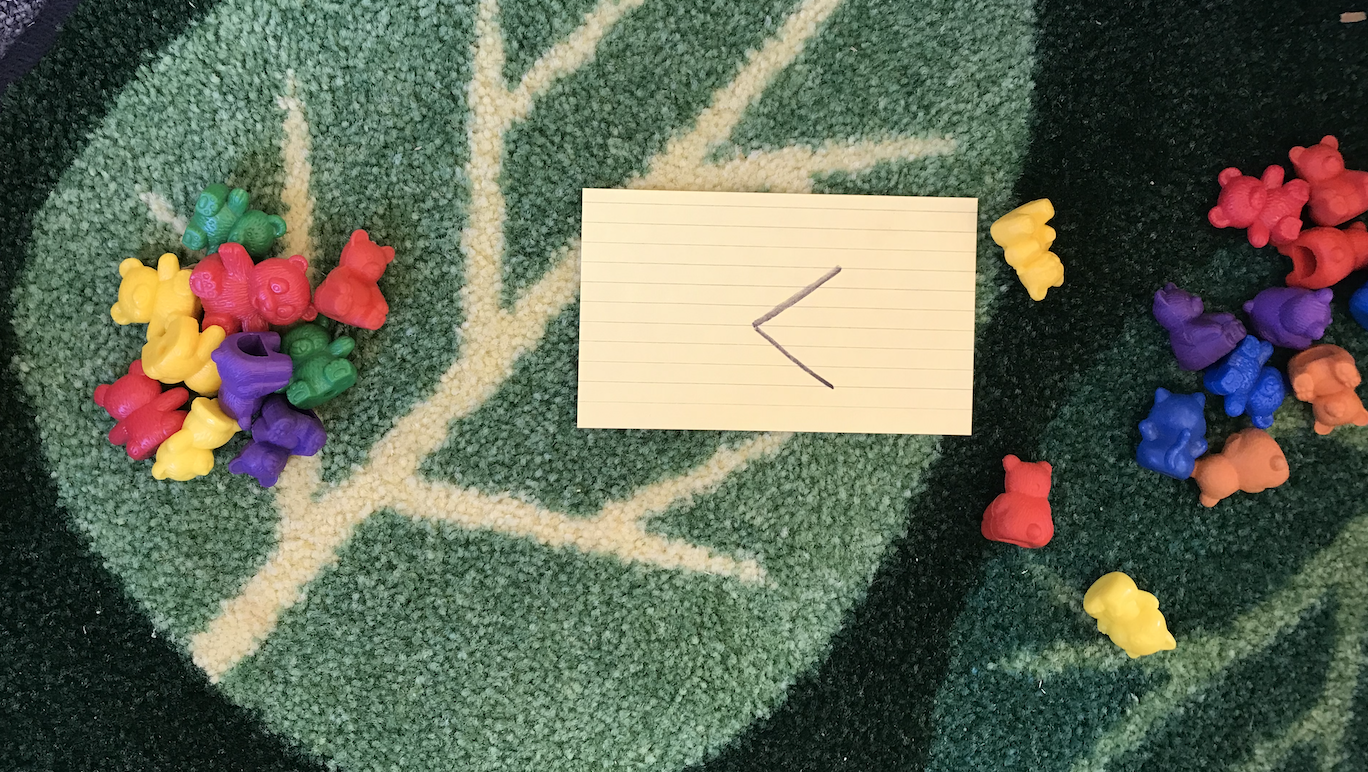
What counters do you have in your classroom that kids are already familiar with and love using? For me, it’s these little teddy bears. For this activity, the children found a partner and each played the game “How Many?” by reaching into the bin to pull out one handful of bears. Each partner counted how many bears they had and then the team determined who had more and who had less. We introduced the greater than and less than symbols, but the kids can also verbally talk about how many they got.
I believe Math Talks are one of the best methods to both challenge advanced students and support struggling students. In a math talk, students are given a problem, or question, to which there may be one or multiple answers, but there are many strategies of which this answer(s) could be found.
Steps to a Successful Math Talk
Have students work individually on the problem or question introduced– I tell my students, if you have figured out one way to solve the problem, do another. Find as many strategies or solutions as you can.
Walk around and jot down what methods students are using– I keep a running list of strategies that both work and do not work with names next to them so I have a plan for who to invite up to share their work.
Come back together as a class to share– I call on the students who’s names I wrote down and tell them which strategy I would like them to talk about.
Students teach each other– I used to write down the answers for my kids and have them talk through their thinking as I write, but I’ve found that once my class feels comfortable with each other, the students can write and explain their own strategies while using their presenting skills.
Allow the class to ask follow-up questions once a student shares– I also ask clarifying questions, especially if the student arrived at an incorrect solution so that as a class we can discuss the misconception. At the end of each share, I ask the class, who else used this strategy? This is important as it allows students who were not asked to share to be recognized for their work.
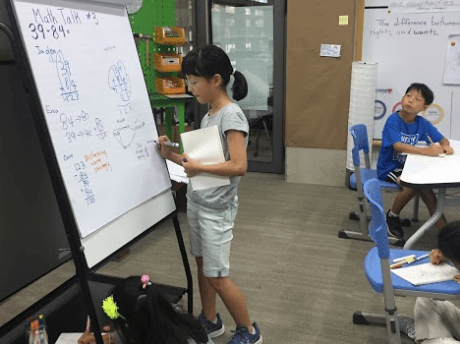
We use Math Talks quite frequently in my 4th grade classrooms. I found the Math Talk from which these pictures are taken to be a great pre-assessment for my students in terms of addition. Most of my students were able to use the standard algorithm for addition to solve the question 39+84=. Many of my students chose to use some type of visual representation for the problem, either a number line, or an organizer with breaking apart the numbers. One of my advanced students was even able to recognize that 39 and 84 are both divisible by 13 and solved this problem by first dividing each by 13 then multiplying 13 by the total he divided by.
Children find meaning in, in the same way that adults only want to write about something they enjoy. And what do Kinder students love to do? Play! Therefore, teaching kids writing through play seemed like a natural fit when I wanted to teach them “How-To” writing. Here is the 2 Day Outline:
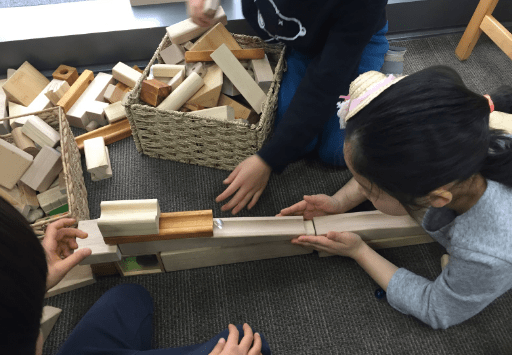
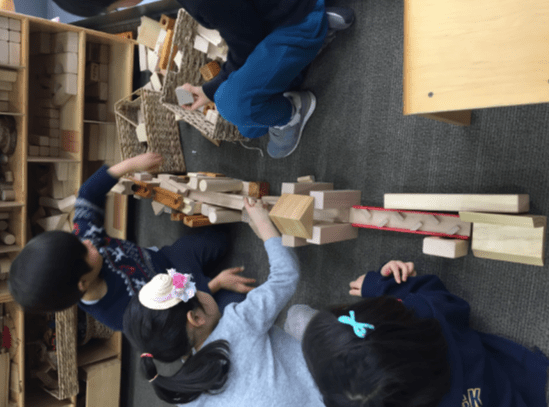
Day 1, PLAY: Before I began this lesson, I arranged different toys around the classroom for my students to use during a play session including dominos, blocks, tubes and a marble run. Since this lesson was in connection to these Kinder student’s unit on Force and Motion, I made sure all these toys could somehow be used to demonstrate this idea.
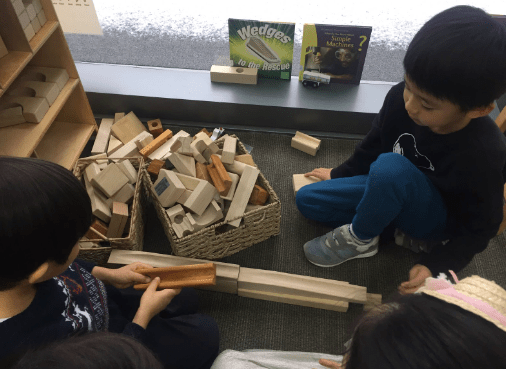
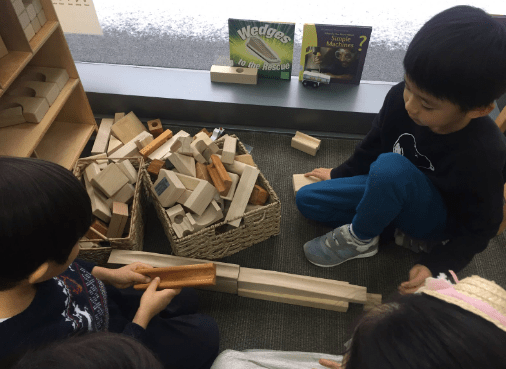
I started this lesson with the whole class, reviewing words and ideas that the students already knew about Force and Motion. The kids were great, talking about push and pull and friction and how these work with objects. Next, I broke the students into small groups and assigned each group a toy to play with. I told the kids that their group’s job was to build something that demonstrated what they knew about Force and Motion. I told them I wanted them to consider what the beginning of their project was going to look like, what the middle would look like and how they would know they were done with their creation. Below is a sequence of what some of their play looked like.
BeginningMiddleEnd
During their play time, I ran around like a crazy teacher taking as many pictures as possible of each of the 4 groups to use during the writing activity on day 2.
Day 2, Sequence & Write: For day 2, I made laminated sequence cards for each group including one picture from the beginning, one picture from the middle, and one picture from the end of their play. Each group’s job was to put these cards in order in how they believed the steps in how they made their structure went. I went around to each group and asked the kids questions in connection to their sequencing- “why did you put this card first?” “Can you tell me using the cards how I can build the tower you made?”
Once I had checked in with a group successfully, I gave each student in that group a folded piece of paper as a book. The kids turned this folded sheet into their own “How To” book. They completed a page 1 for the beginning, a page 2 for the middle and a page 3 for the end of their play project. Each page had a picture and writing in the form of words or complete sentences depending on the student’s literacy level. Once done, I had the kids make a title page, getting inspiration by looking at a few picture books we had around the classroom.
All stories we read have a beginning, middle, and end. Yet, not all stories our students write are so lucky. Maybe it’s a missing introduction to text’s characters, or maybe it’s no conclusion to the main event. It can be difficult for many adults to write concisely with clear sequencing, therefore teaching a 6 year old how to write a complete concise story may seem daunting. But there’s an easy way you can get started, and it all begins with pulling out a picture book from your shelf.
For this activity, it will be helpful to have a picture book that your child is not too familiar with, as the goal is to access your child’s creative story-telling side. If the picture book is too familiar, your child may simply quote the book when completing the activity. (This happened when I tried this activity out on my student . . .:) )
Activity: Picture Storyteller Grades: K-2 Materials: pencil, lined paper, one picture book, extra blank piece of paper
Pull out the picture book and explain to your child that today she/he will be writing a story using the pictures from the book. Ask your child which picture from the first 1-4 pages of the book your child would like to use as the beginning picture to her/his story. Once your child picks one of the books pictures for the “beginning” ask specifically what the beginning of the story is for? You’ll likely get answers along the lines of: giving the settling, introducing characters, talking about time, etc. Help your child define what it means to write the beginning of the story. Next, take your blank piece of paper and cover the words on the page your child has selected so that the only part viewable is the picture. Tell your child to write 1-2 sentences (depending on your child’s comfort level with writing) that tell a beginning using the picture from the text. If the text is unfamiliar to your child there should be a great deal of creativity involved, such as naming characters, picking a location, or coming up with an interesting scenario based on the clues from the illustration.
For the “middle” of your child’s story, go through a similar process. Allow your child to pick any page they want from the center of the picture book. It can be any picture that attracts their attention. Discuss what the middle of a book is for and have your child write 1-2 sentences shaping the middle part of their story, while you cover the text with the blank piece of paper. The middle of the story should have an event. For 1st Grade, it is completely fine if the event is something as simple as the characters going on a fishing trip together. There should be some detail about what happens and word choice signaling that this event is in sequence and is indeed the middle of the story.
The ending of the story comes from your child picking one of the last 1-4 pages of the story to write about. This might depend on the book which pictures you want to allow your child to use, but generally any page near the end of the text could be used for a thoughtful, creative ending. Make sure to specifically ask your child what the ending of the book is for and cover the text! An ending does not just have the words “the end,” it includes closure to the events in the story. Something as simple as, the family returned home after a long day fishing, makes it clear that the event has ended and thus the story is over.
Have fun with this activity and feel free to modify for varying ages and degrees of difficulty! These suggestions are based off of a 1st Grade Writing level and the standard, W.1.3 of Common Core for writing narratives.
Let’s talk about money. As a hardworking parent, you know the value of it. That’s why when you pick your child up from school and they ask if you can stop at Target on the way home, your immediate answer isn’t always yes. It may seem like your child doesn’t have a “money mind” yet, however that’s just not true. Does he or she have a piggy bank at home? My students do. I’m willing to bet there’s not more than a couple dollars in there, but whatever there is saved, it’s heavily guarded not to be touched by siblings, pets, and especially parents (or homeschool teachers!). Kids love money, and from an early age learn to differentiate a penny from a nickel, dime, and quarter. Likely, your child already knows how much each coin is worth. This sets you up for the ultimate fun, money, challenge for some hands-on math action.
Materials: – Suggestion: 61 cents (3 dimes, 5 nickels, and 6 pennies) – a paper – a pencil
Grade Level: Suggestion is based on 1st grade math standards. For older students, add quarters or even dollars to this activity.
Below are two activities for you to try, one addition and one subtraction. Before you begin, make sure to review with your child each coin’s name and amount its worth.
Activity 1: How many combos? (Addition)
Write down a number at the top of your child’s piece of paper. I would start with a low number, like 7, to get them started. Tell them that their job is to use the coins in front of them to make 7 cents. They can use any combination of coins. Once they find the nickel and 2 pennies, congratulate them on adding money and ask them to write the number sentence they just created! You might need to help them start by writing ____ + _____ + _____= 7 on their empty sheet of paper to fill in the blanks.
Increase the amount in your next problem by choosing a slightly higher number, like 11. Allow your child to explore how to make the number again using the coins.
Once your child has gotten a chance to use all the coins, challenge them to create as many different combinations of coins as possible to make one single number. For example, for the number 26, your child might at first choose 5 nickels, adding them together to make 25, then an additional 1 penny. Another combination could be 1 dime, 3 nickels, and 1 penny. A third combination could be 2 dimes, 1 nickel and 1 penny. (There’s even more combinations!) This is exciting, because your child gets to discover new patterns and combinations as he or she completes each number! There’s not “one right answer” for any given problem, allowing your child the space to take risks, and creatively problem solve.
Continue to have your child write down number sentences as you go, to develop an understanding for mathematical equations. This is a great activity for many reasons, one being that often kids don’t have much hands-on experience transferring physical amounts to a written expression. This activity allows your child to build expression writing skills with groups numbers of 1s, 5s, and 10s.
Activity 2: Sub(traction) Shop!
Take a toy your child has lying around nearby (seriously, any toy!) and tell them you are going to buy it from them. Make up a number that is less than the number of coins you have (61 cents or however much). Maybe you’re going to buy their barbie doll for 25 cents. Or in my case, I first purchased a playdough box for 13 cents then a playdough ice cream cone for 38 cents. Instead of paying with the correct amount however, count out a higher number and hand it over to your child (make sure there is enough coins left for the change). Explain to your child that you only had those coins in your pocket that day and then ask for change. Your child might need to write down what you paid them, and then a reminder on how much the item cost to begin with! But once there is a number sentence written on the piece of paper, he or she can use their mathematical abilities to calculate how many cents you are owed back, and in what combination of coins!
After this first purchase, your child likely will enjoy picking out items (toys) themselves for you to buy. Have your child this time pick how much each item should cost. The more you can make this their choice, the more engagement your child will have. I love this activity because it’s the perfect combination of play and math, and who knows? Maybe this will help them one day with that career in Sales!




 Sonia Richmond