Numbers are all around us; we just need to look for them. So often, we choose to ignore the numbers right in front of us—the numbers that are part of our everyday routines and the daily desires of our students. Or maybe we don’t choose to ignore them. Maybe we are so conditioned to a particular curriculum or methodology that we bypass the logic of everyday numbers entirely. We don’t mean to; it is just something that happens. But what if “page 24, section b, scenario number 8” was not what happened tomorrow? What if the only thing that happened was answering a single question . . . How did Ronaldo get so good at football?
Quick! Look carefully, there’s footballs flying at you. Left, right look everywhere. How many footballs do you see? A quick flash thinking exercise as a warm-up, a crash course in subitizing that keeps them alert for the game. The only preparation? Copy and pasting some footballs onto some slides, or even having the kids cut out some footballs themselves and gluing them onto index cards to challenge their friends. Tell the kids its a way to warm-up for the match. Ronaldo stays alert with his mind and his body to think quick during a game.

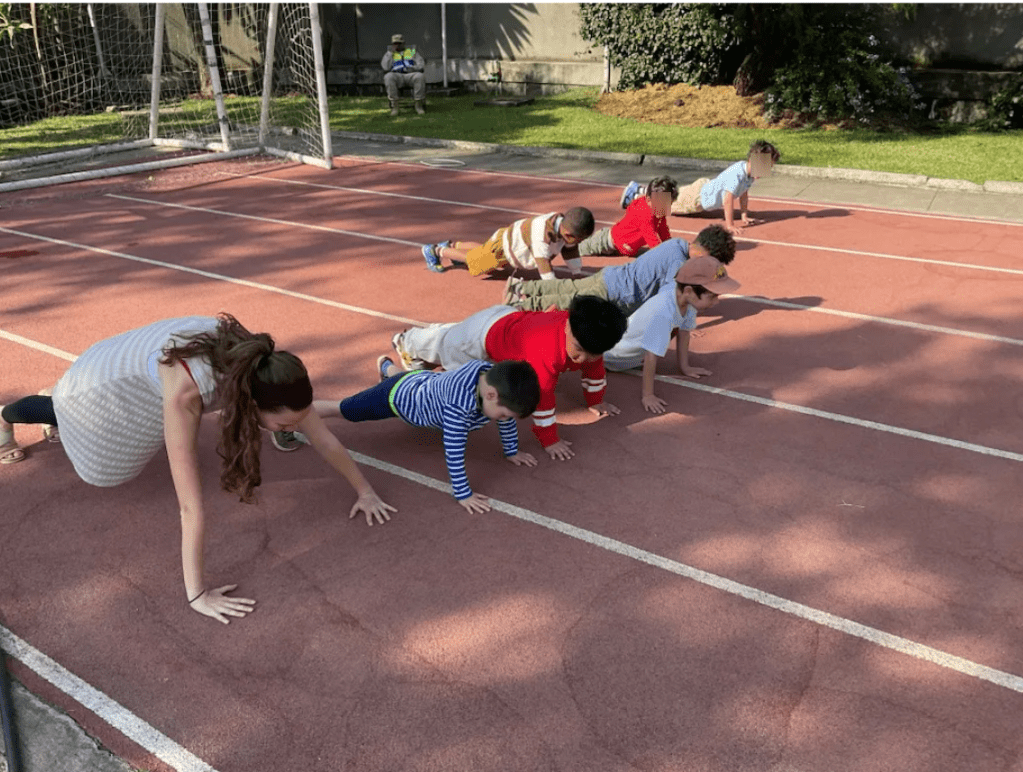
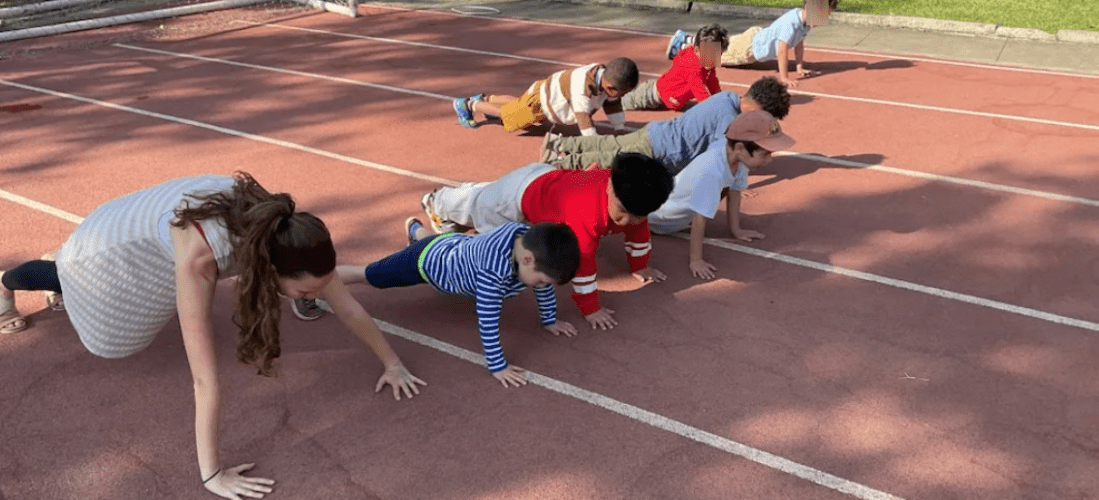
Time to warm up! Now that our minds are warmed up, it’s time to do the same with our bodies. Heading out to the track for some exercises builds both our strength and our rote counting skills. One by one, the children pick an exercise they want to lead and choose the count for how many repetitions we are going to do together. Most of the children count by ones, but some choose to challenge their teammates with skip-counting. As they go down with each push-up, you can hear them chant: “5, 10, 15, 20…”
Ronaldo always warms up before he plays.
Okay ready to play! But wait . . . we need Jerseys. Ronaldo is number 7, but what number do you want to be? The children design their own Jersey and write their favorite number on the back. Can you identify all the numbers from the Jerseys of your friends? What numbers are missing? We write down a list of the numbers we are missing in case more friends want to join us to play later.

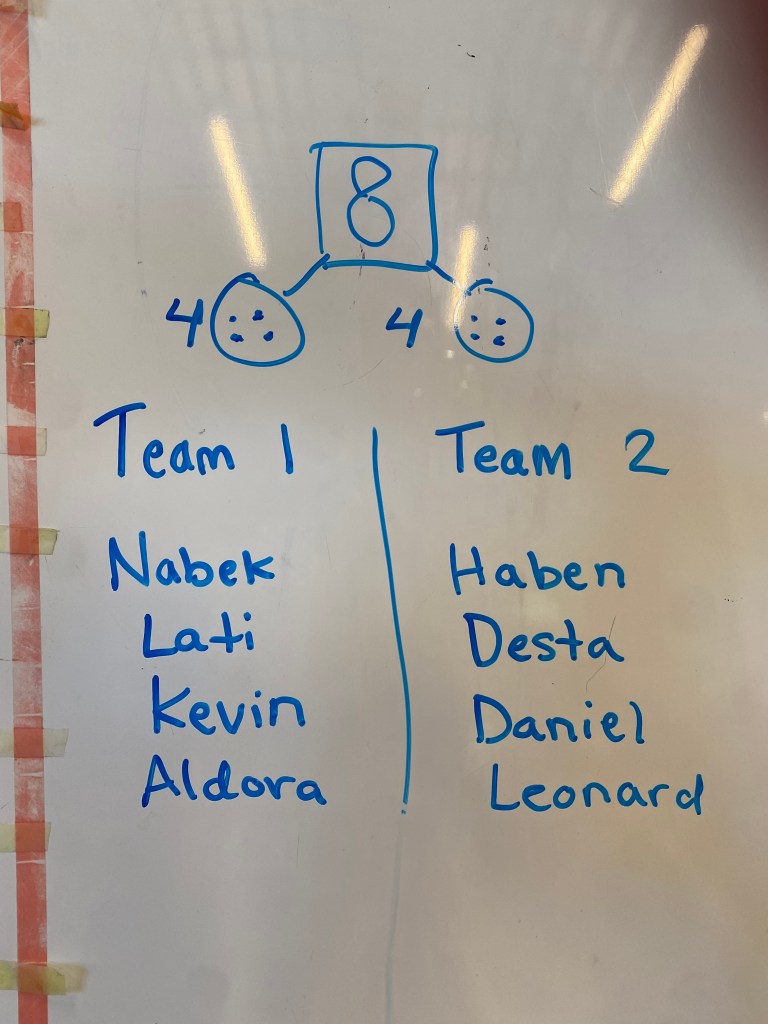
Finally, we are ready to play, but there is a problem… there are 8 students. How many students should we have on each team? We use our paper players as concrete manipulatives, moving them around to figure out what even teams look like and practicing our problem-solving skills. “Even” means that the teams have the same number of players. It looks like there will be 4 players on each team, since 4 + 4 = 8. Let’s double-check with a part-part-whole model to ensure our teams have two equal parts!
It’s time to play, we just need a way to keep score. The children decide they can use a white board to write a tally each time one of the teams gets a goal. At the end, we will know how many goals each team scored. One child volunteers to be the official score-keeper, proudly recording each mark.
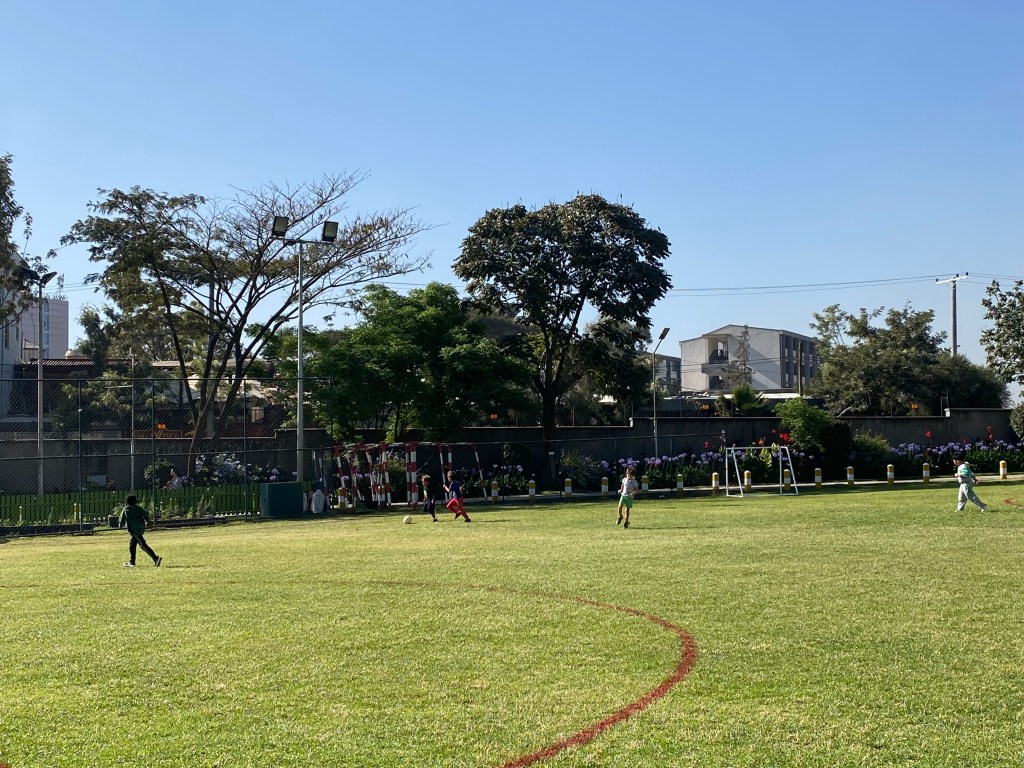
Great job, teams! The game is done. But before we can go to snack, we need to compare the numbers to see which team won. Twelve is larger than 4, but by how much? Let’s use the “count on” strategy to figure it out together: 5, 6, 7, 8, 9, 10, 11, 12. That’s 8 more than 4! Can anyone tell me how many goals were scored altogether? Let’s start tomorrow by calculating the total number of goals. I wonder if fewer or more goals will be scored the next time you play.

Time to have our snack to fuel up for some recess and more football! Ronaldo would be back on the field before no time.