When I was working as an Intern in South Korea, one of my mentor teachers once told me that he did not see the purpose of worksheets. He strongly believed that there was no organizer the students couldn’t make themselves, or concept that couldn’t be more creatively introduced or dug into. He would further rationalize this belief in describing how not using worksheets was also more sustainable, as through a game or activity the skill can be practiced again and again rather than just once on a disposable paper.
To this day, whenever I see a worksheet being used in a classroom I can’t stop my brain from undergoing a thorough investigation on the necessity of the sheet. I’ll often find myself conceptualizing what a parallel lesson could look like that would use all the same components, but none of the wasted resources. I’ve brought this into my own teaching as much as possible, finding great satisfaction in designing something that has permanence and authenticity.
Literacy instruction is an area of education that is often chock -full of printable sheets. And although, I believe handwriting is a critical component of any well-balanced program, I think there is a time and place for pencil and paper writing in the Early Years. To show some examples, I take you into my own Early Years space where intentionally draws students to the same concepts and at times very same activities that a worksheet provides, but in a playful child focused way.
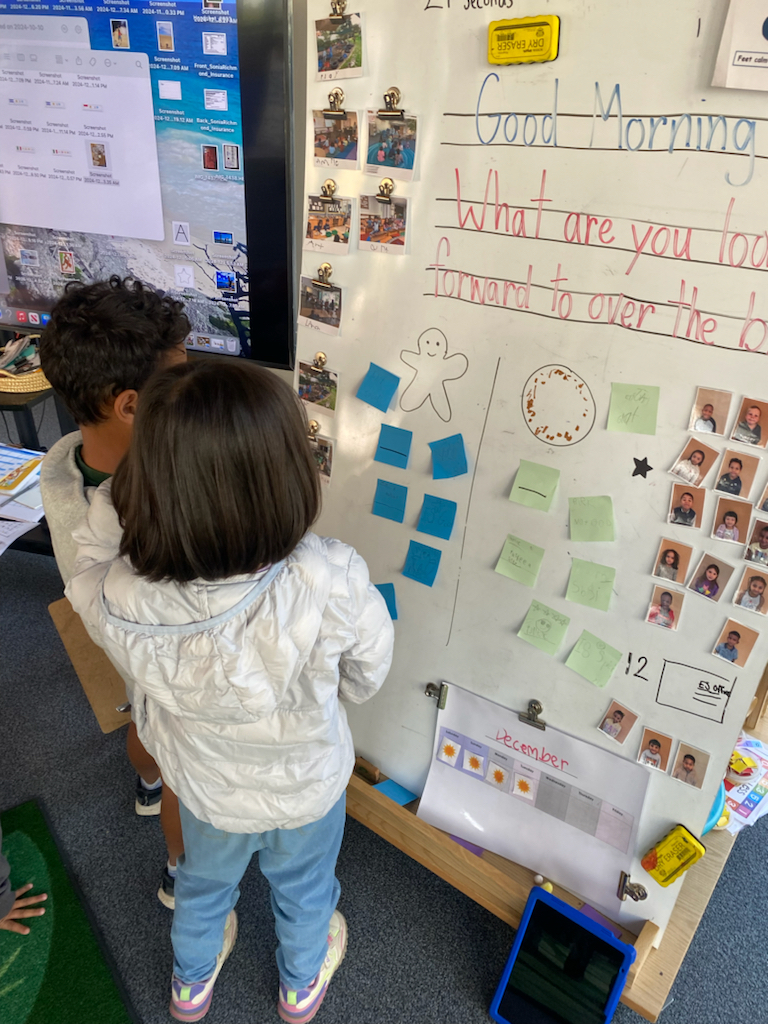
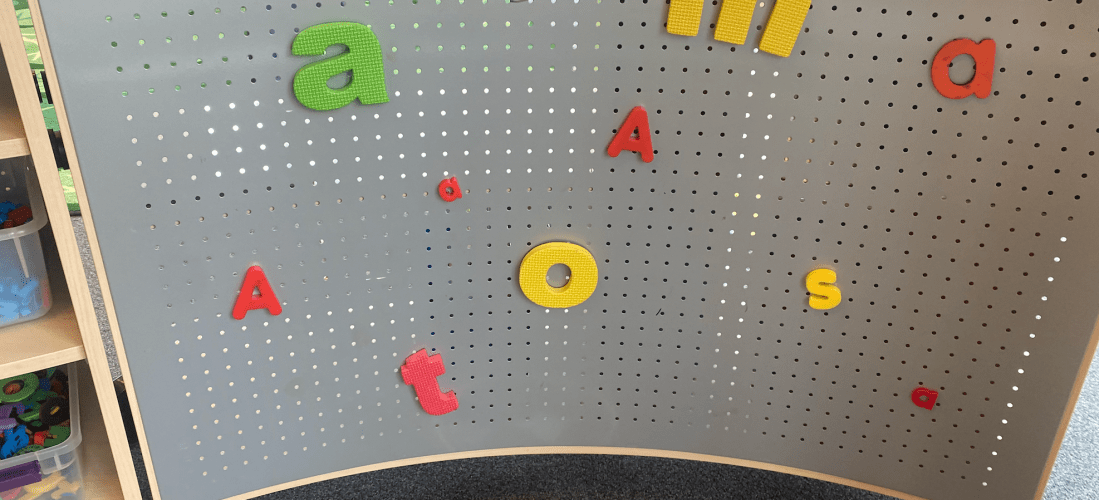
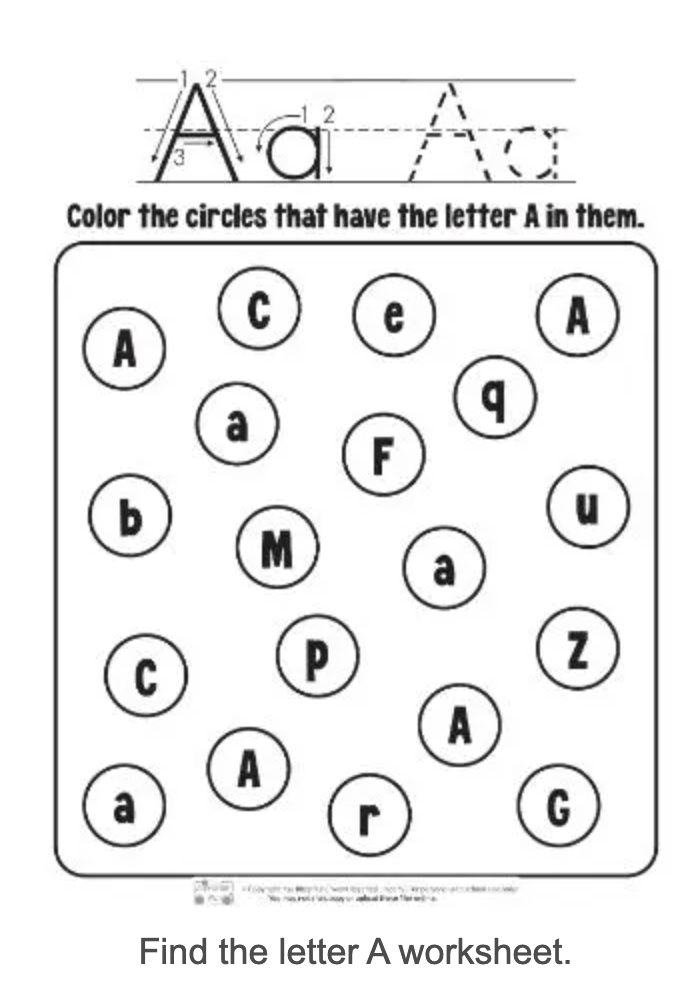
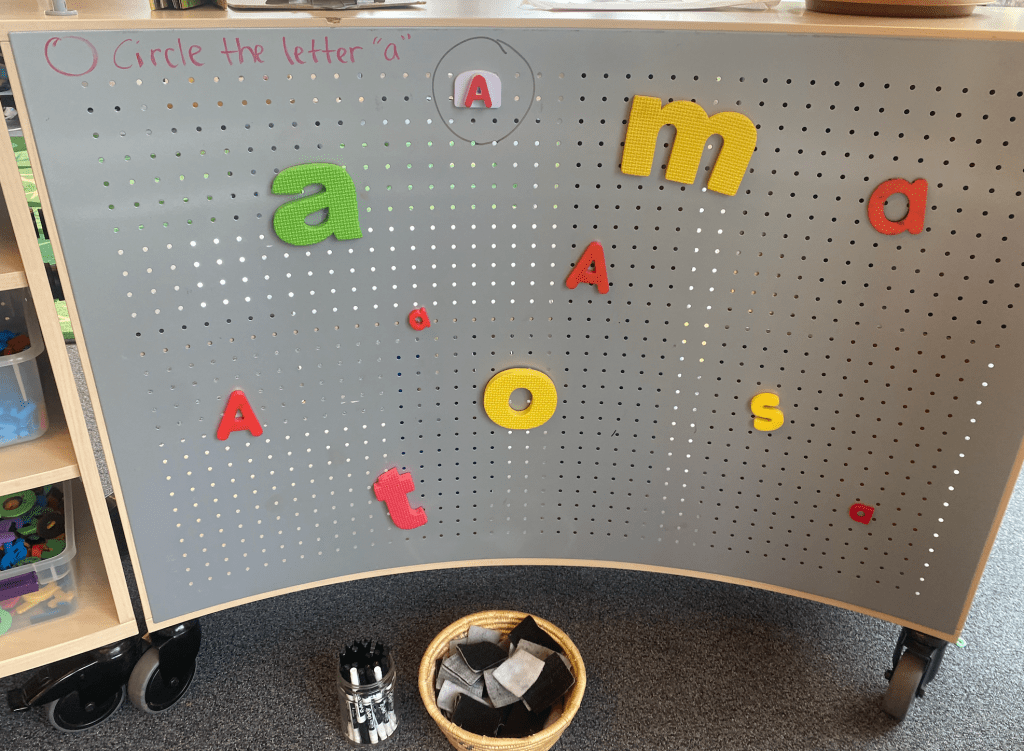
On the left, you can see a standard alphabet worksheet. The letter of the day is “a” and the child can engages in a search style activity to color in all the corresponding letters. On the right, you see a magnetic board low to the ground for child-use with a very similar activity. Letters of different sizes, font styes and colors are available to the child and whiteboard markers to draw a circle around each “a.” A similar activity, but presented in an entirely different way.
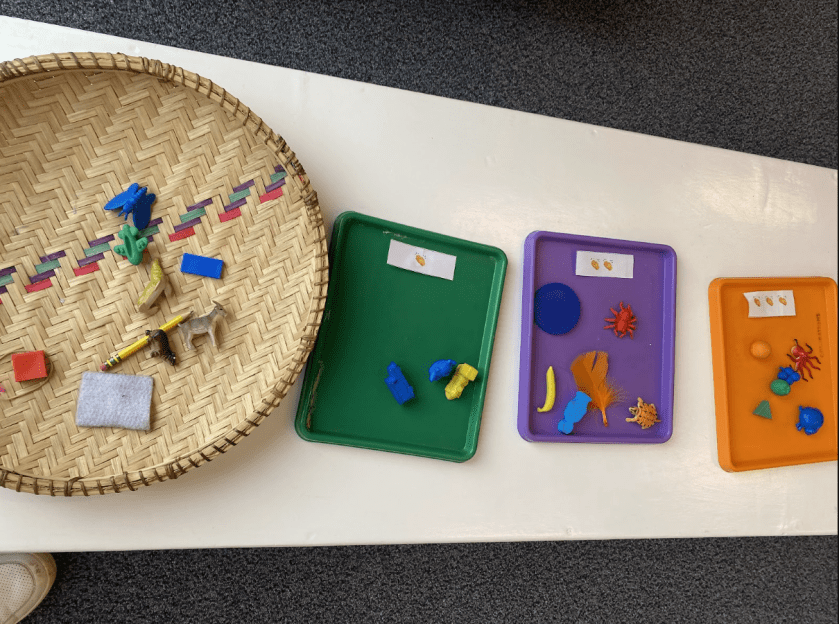
To give another example, consider a syllable sort designed for children to determine the number of syllables in a given word. Lots of worksheets have students cutting out and gluing pictures under the correct number of claps. Cutting and gluing are both excellent skills for children to be practicing alongside the skill of detecting how many syllables are in a word, but if you’re looking for something that can be used over and over again, why not make a syllable sorting station? Students will enjoy picking up their favorite toys and objects around the room to sort into the correct tray marked by a clap symbol.
For this last example, I’ll come back to the idea of letter formation, and how children learn to not only be able to identify a letter but also be able to form it. As I said before, there is a time for pencil and paper letter writing. However letter formation does not need to be that black and white (literally!). Children can learn to how to form the letter before they learn how to “write” the letter and here are some developmentally appropriate ways!
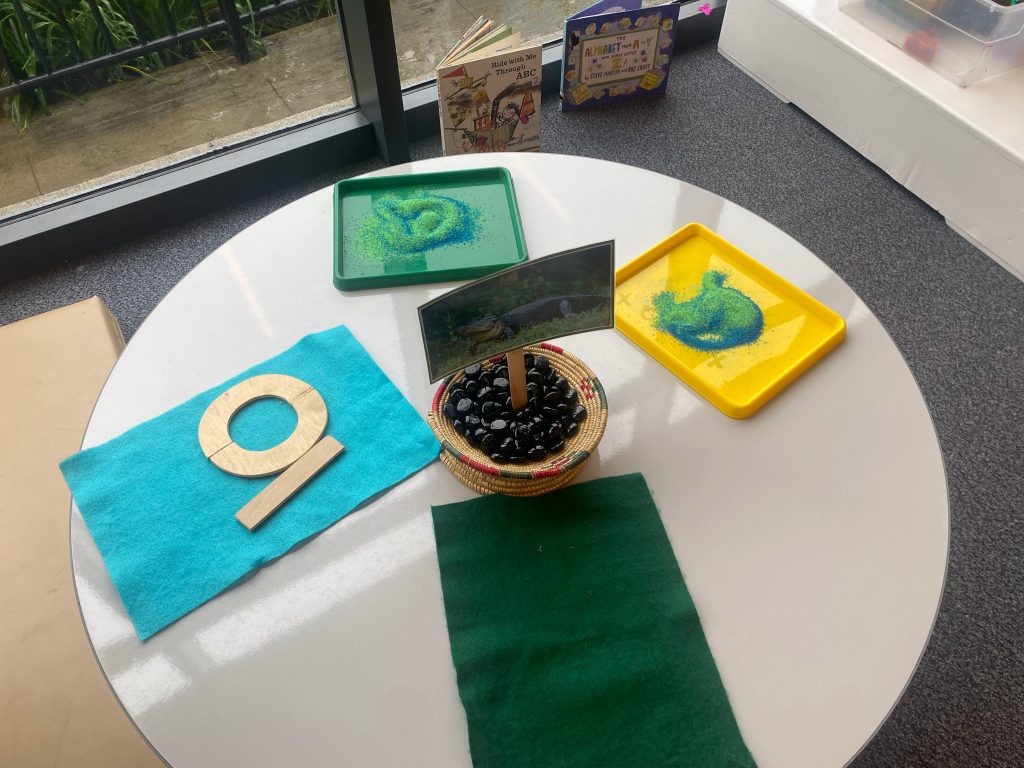
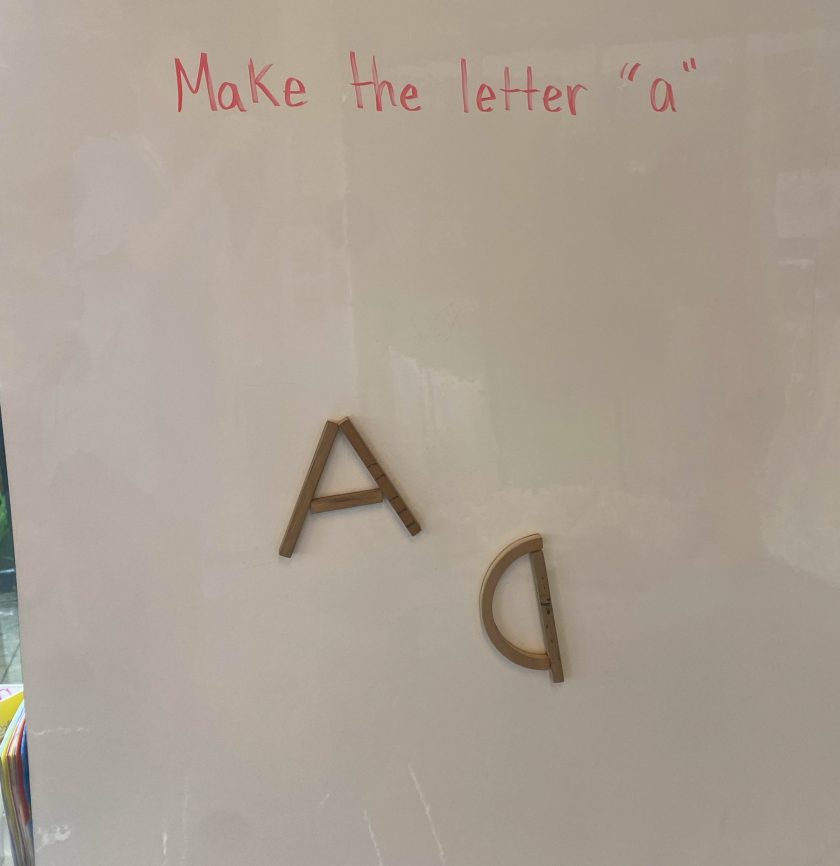
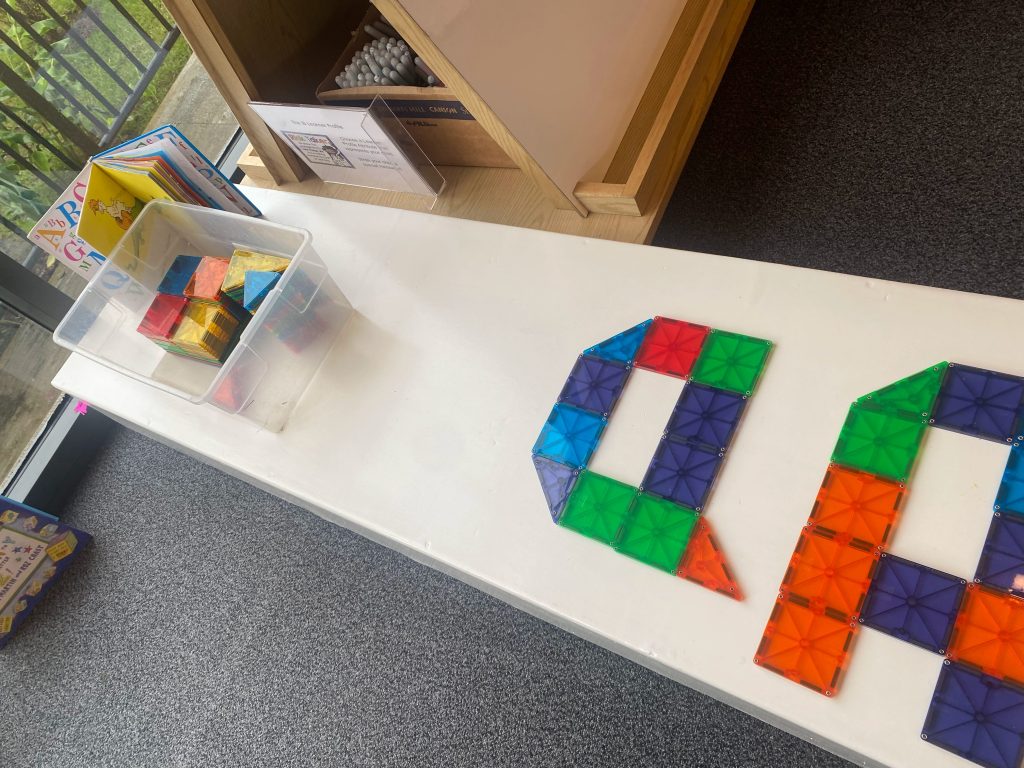
Interactive materials and a variety of ways to use them allows children the choice and freedom to practice forming letters how they wish. Children are encouraged to try many ways of making the given letter, or can spend time reviewing letters they already know way. It’s a win-win because they can play with some of their favorite toys like magnatiles and sand during this time to be creative in how they complete their letter design.
There isn’t a roadmap for taking ideas off of paper and bringing them at large into the classroom. It’s a mindset shift that once you identify, can become hard to ignore. Planning for it takes time, but it gets easier once you recognize how it looks and what resources can replace paper. Additionally, it’s not just on you, children can create their own activities and games to set-up in the space as well! It’s all about experimenting to see what could work, and embracing a new way of thinking.