Central Idea: Forces make things start, stop and move in different ways
Lines of Inquiry:
How objects move in different ways (Function)
How forces change the way things move (Causation)
How movement can be changed (Change)
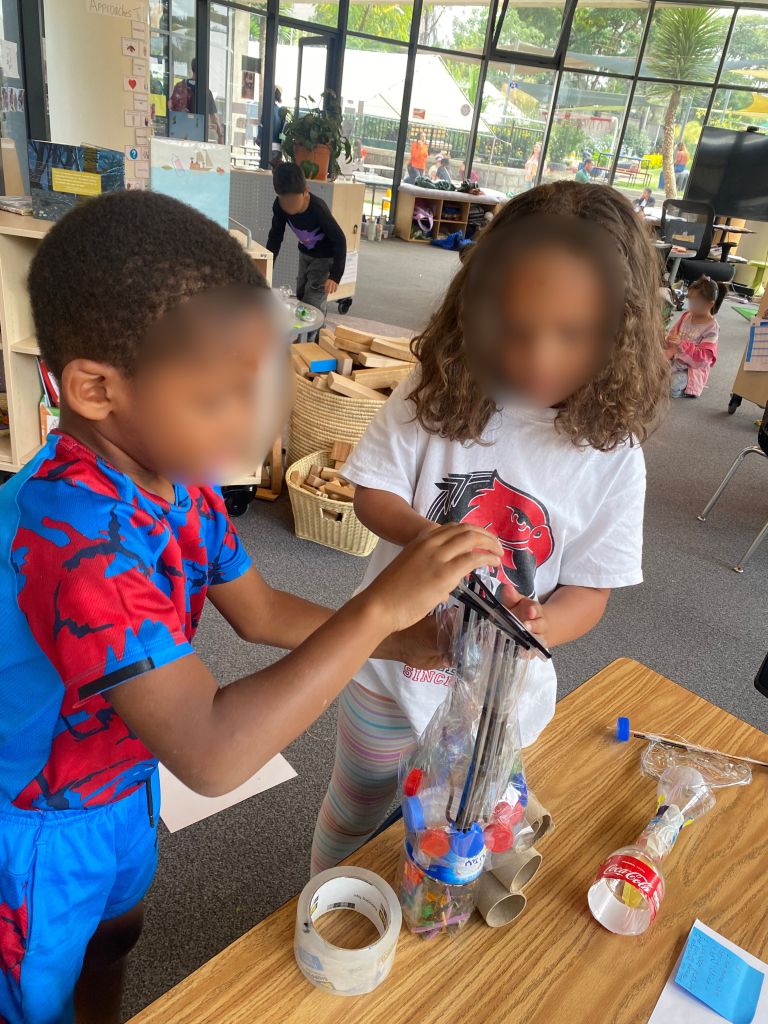
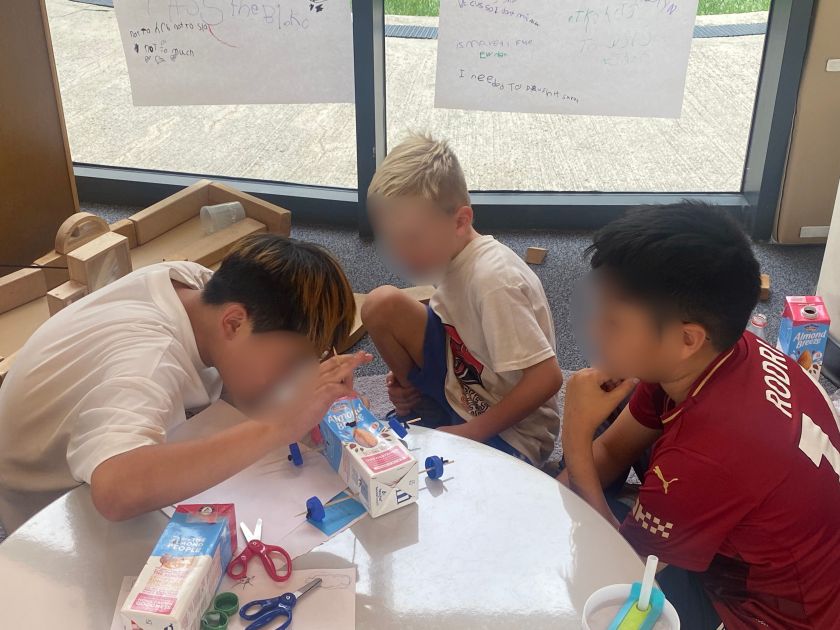
To wrap up our unit on forces and motion in a fun, engaging way we introduced our students to the story, “Galimoto” by Karen Lynn Williams. In this story, a young boy uses wire to make a push-toy car to play with. As a form of action, we challenged our students to use recyclable goods to make a toy that uses force or motion when played with. First, students identified what types of materials and resources we had at school that are considered, “recyclable.” We discussed how an item can be recycled if it is being used again for a new purpose. Students had many ideas, arguing that even the clay from art class could be recyclable!
Helping Out a Friend with their Galimoto!
After making our list of materials, students considered what they wanted to make using any of the materials we brainstormed. Students drew out their design for their toy, labeling each part of their design with what recycled item would be used to make it. Some students chose to make cars, others wagons or speedboats. Some got creative with their understanding of force and made a purse, stating that it uses force because you have to pull on it to pick it up. What became clear as students were designing, is that they had a strong understanding of push and pull forces and the different ways their movement can be changed. Students discussed related concepts like direction, speed, and weight when discussing how their object would move.
Finally, students built their creations! They had so much fun putting together their toys, testing out their ideas of how it would move. It was a great celebration of creativity and knowledge.
What? Open inquiry is a purposeful time of our day lasting about 45 minutes, where students engage in a variety of learning engagements that are connected to our learning objectives.
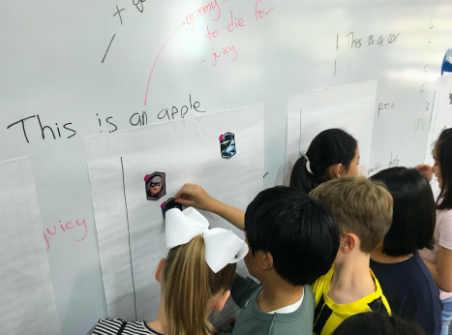
How? Open Inquiry is set-up as stations around the Hub that student’s “sign-up” for. At the beginning of the year, we asked students each day which station they would like to engage in first and then either wrote their name or moved their photo marker to visually represent the sign-up. Towards the middle of the year we introduced students keeping track of their own movement between stations with a personal Open Inquiry checklist. Students know that they do not need to stay at the same station for the entirety of the time, but should be engaged in each activity for an extended period of time, minimum of 15 minutes of engagement to start. The student’s checklist was further modified to include “must-dos” and “can-dos” to allow choice, but also highlight various stations that throughout the week they must attend. A teacher is always present at a “must-do” station to also document which students have engaged in that activity, although primarily it is the child’s job to recognize if they have or have not done the learning engagement yet for the week.
Why? Open Inquiry is really about students being able to explore their interests in connection to a broader theme. It’s also a time where real thoughtful differentiation can occur that meets kids where they are in terms of their readiness level and best methodology for learning. Prior to implementing Open Inquiry in the Hub environment, we would have daily free play time. Although we still incorporate free play periodically throughout the week, allowing students complete choice over any engagements in the space, we found that not only were students going to the same area again and again but many students didn’t know where to go at all. Open inquiry gives students opportunity for discovery, for enrichment in our learning and for being a Risk-taker and trying new things. Since we change the engagements weekly, students have enough time to explore the stations put out and go back to a favorite before they’re ready for a new challenge.
What does this look like in connection to a Unit of Inquiry?
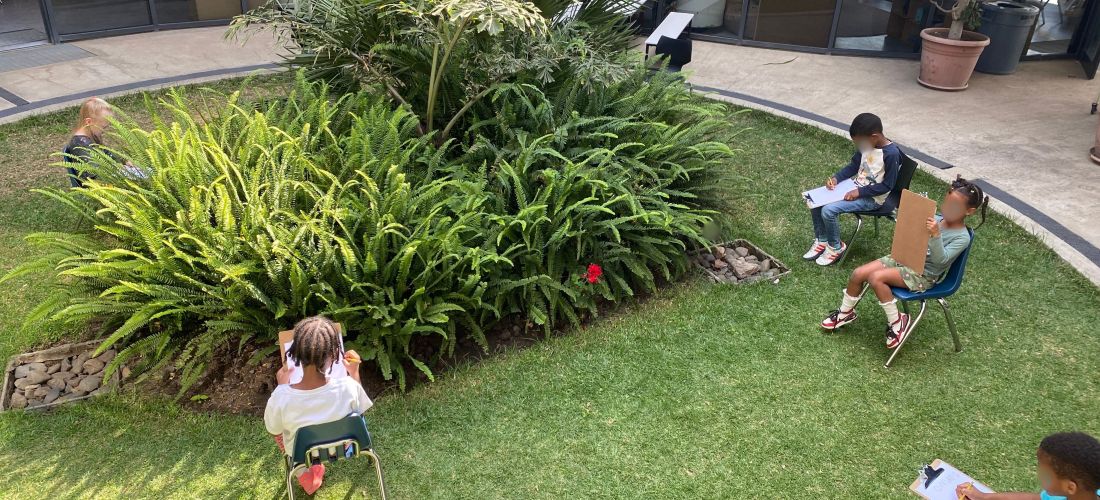
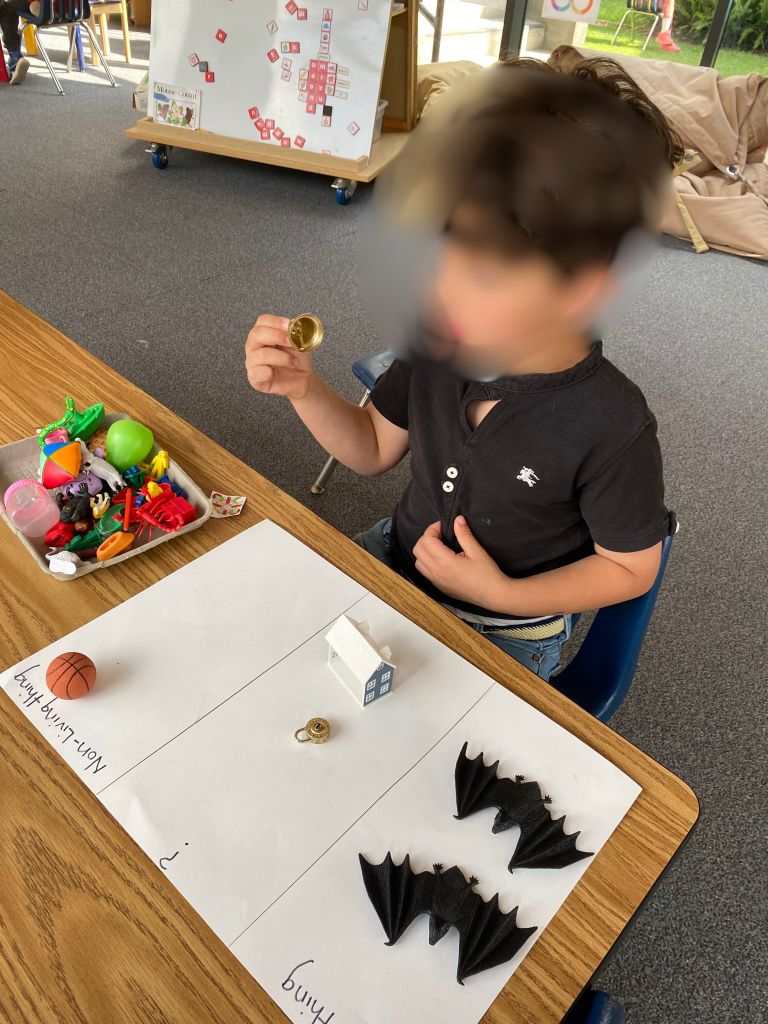
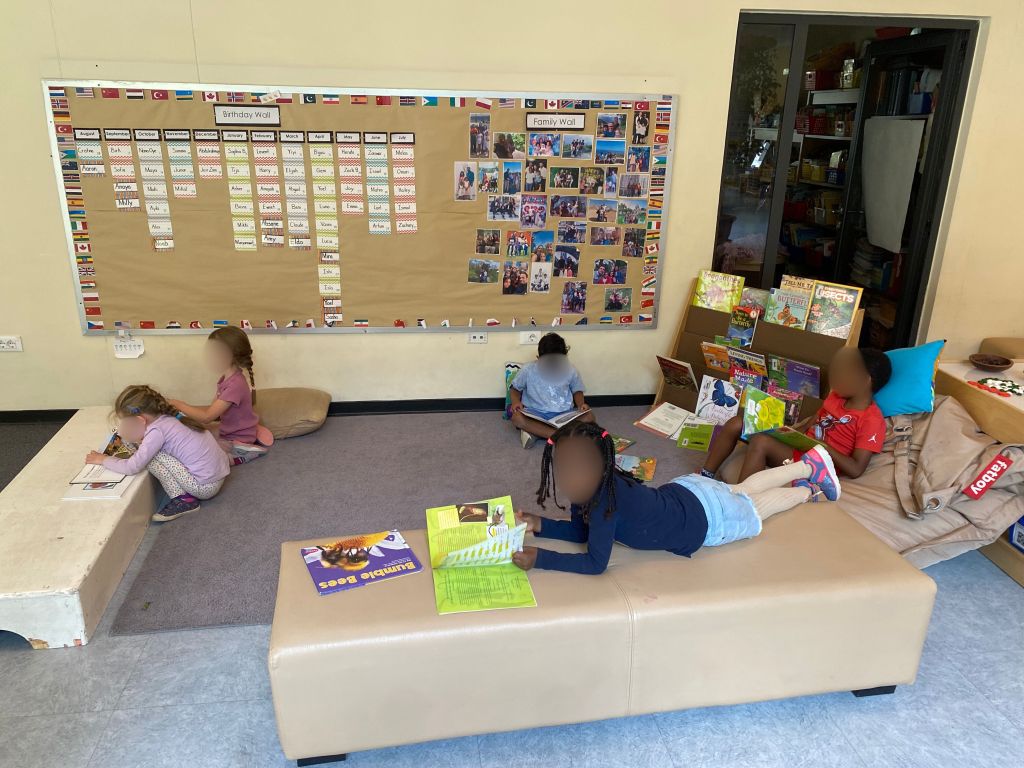
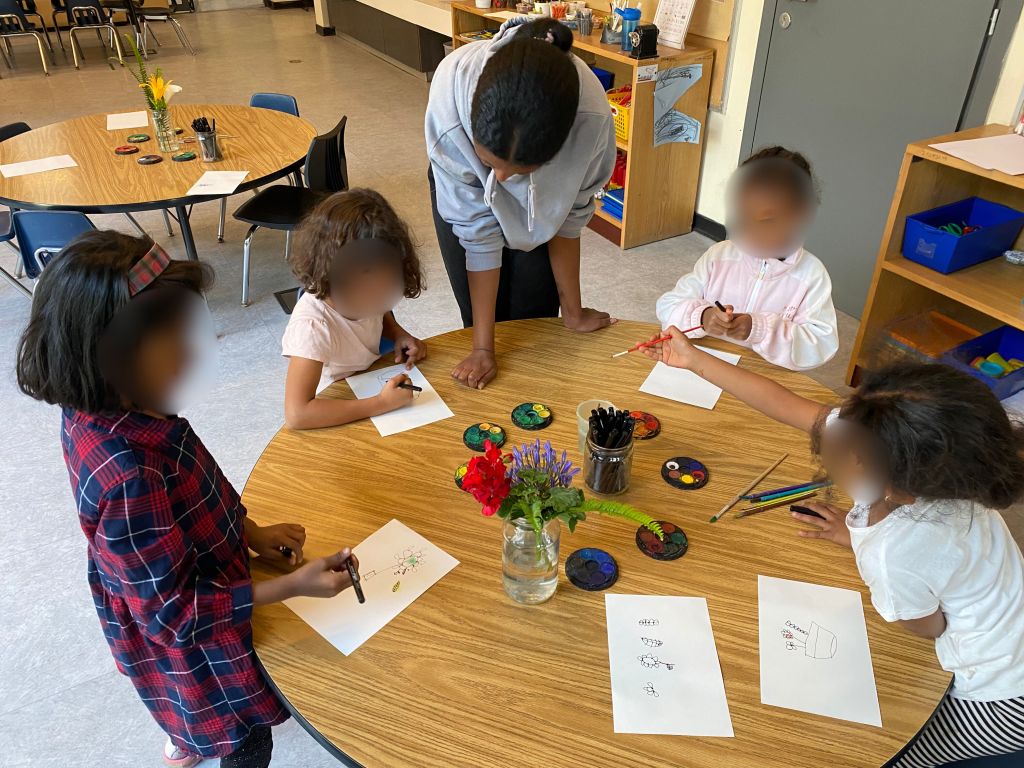
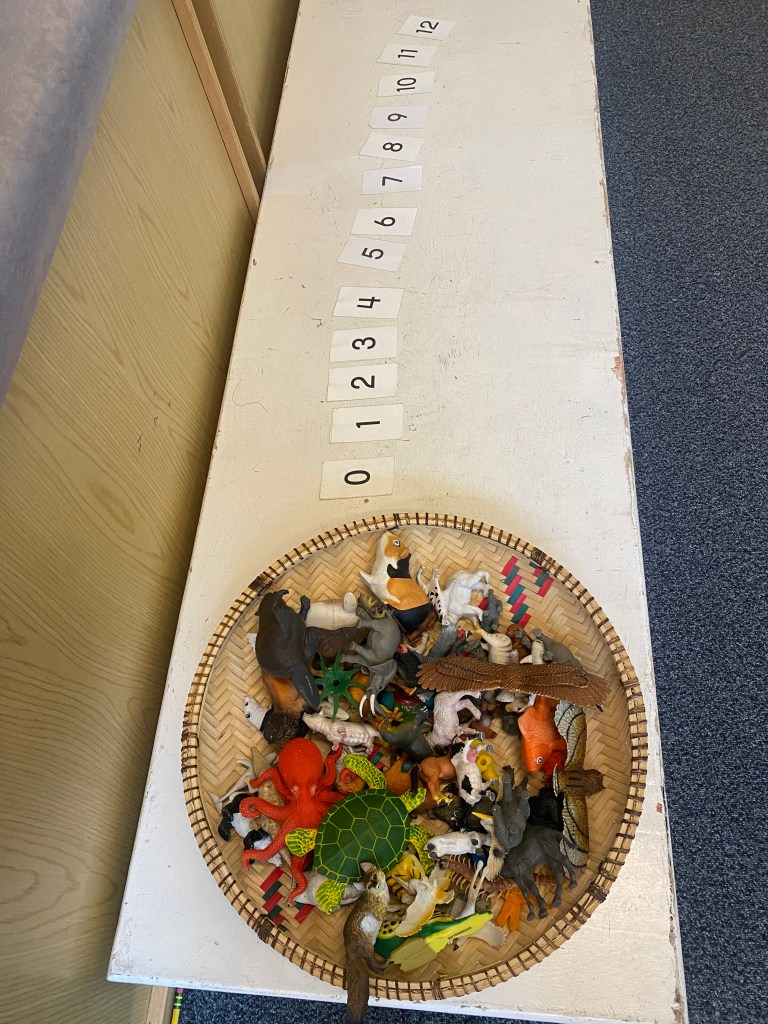
Let’s take a look at what stations could look like for a Unit of Inquiry. Below is what one week of Open Inquiry looked like last year during our Sharing the Planet Unit on Living Things. We were careful to ensure that the learning engagements covered a variety of skill areas both academic and ATLS. With the stations below in additional to learning about the unit students will work on their counting and cardinality, reading/book handling, close observation skills, sorting skills, and fine motor skills.
PYP Sharing the Planet
Central Idea: Caring for living things grows from learning about nature’s cycles and how we depend on each other.
Lines of Inquiry:
Living things and their life cycles (change)
How habitats make it possible for living things to meet their needs (connection)
How humans can take action to protect living things in their environment (responsibility)
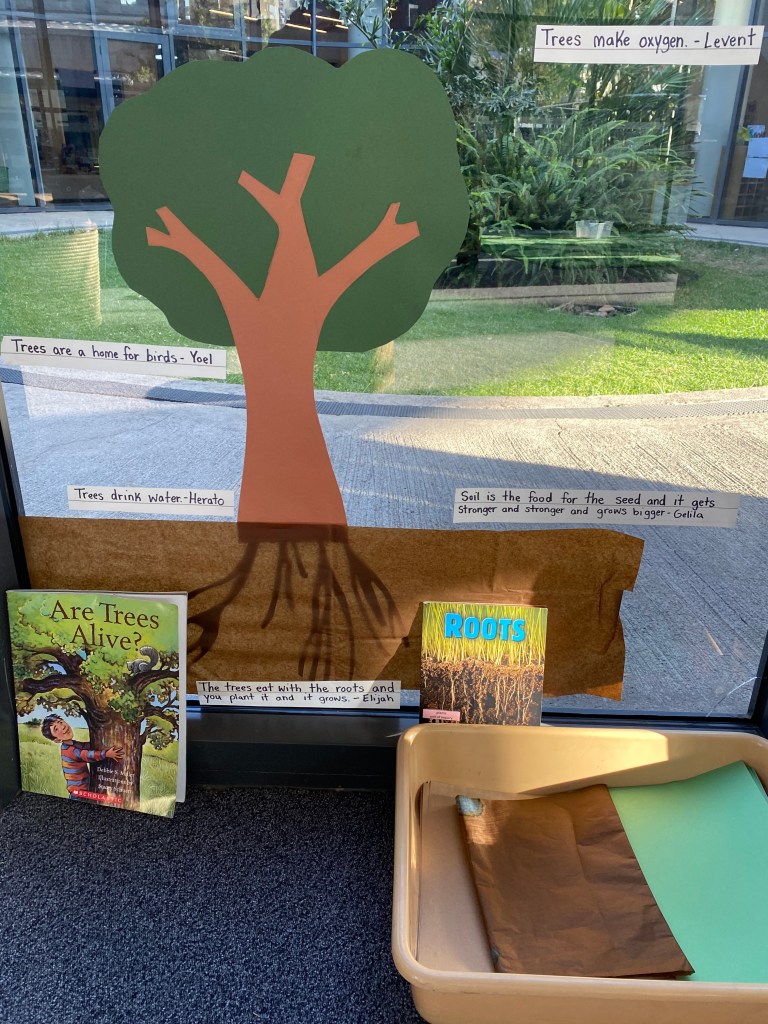
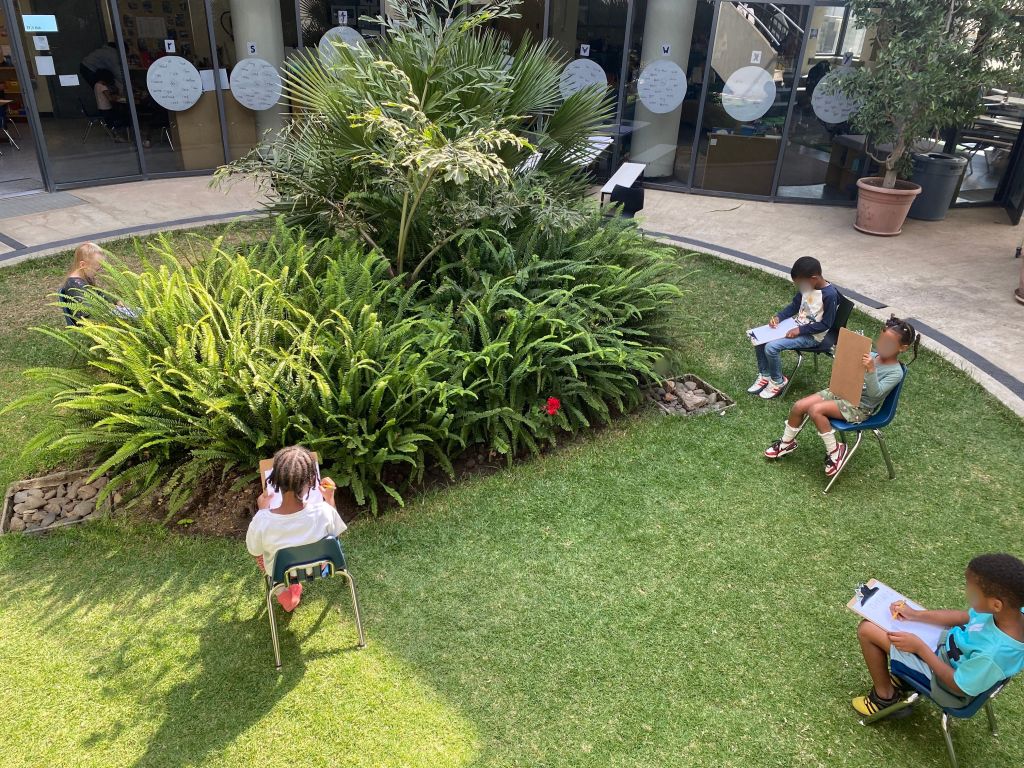
Sorting Living and Non-Living ThingsRead to Self Unit BooksPaint a Living ThingOrder the Animals by Number of LegsExplore if Trees are Alive and Make Your OwnSketch like a Naturalist
In the welcome weeks of the school year, my main goal is to get to know my students. Another goal, is for my students to make the connection that in order to achieve any hopes and dreams they might have for the year, we must create a safe space that encourages risk-taking and accepts mistakes. At the school I currently teach at, we have 5 Core Values: honesty, respect, responsibility, fairness, and compassion. These core values are what students live by to represent the school’s mission. But how do you create a class space where each of these values is the norm?
To start off this mini-unit for the welcome weeks of school, we talked about culture as a class. We brainstormed what we think of when we think of the word culture and came up with a class definition for the word. My classes definition was “traditions and behavior that is passed on within a group of people.” With this definition, we determined that a culture could apply to a smaller group or community, like we have in the classroom. I next wrote up the following 5 statements, each on a separate large sheet paper throughout the room.
1. Write what color a culture of compassion reminds you of and why (use that color!).
2. Draw an image that shows what a culture of respect looks lik
3. Describe a time that you were responsible or saw someone else being responsible.
4. Write a short phrase you would hear in a culture of honesty.
5. Draw a symbol that you believe represents a culture of fairness.
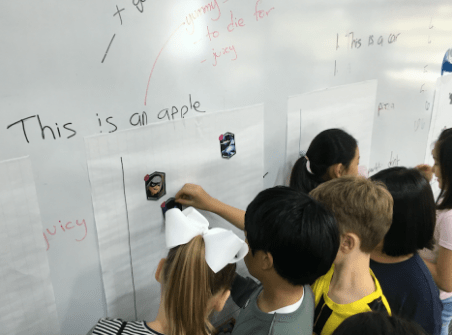
Having the students rotate through these posters in small groups and write down their ideas in this visible thinking exercise really paid off. The students were creative in their responses, had rationale for their ideas, and were open about their experiences. As a wrap-up to this activity, I gave each student a sticky-note. I told them that on that sticky note they were to write down one idea from someone else that they liked from any one of the posters. When we gathered back together as a class, the kids shared the one idea they liked out-loud. Each student then stuck his or her sticky-note on the front board. We used these sticky notes as a tool in helping us build our class essential agreement.
RL.K.9 With prompting and support, compare and contrast the adventures and experiences of characters in familiar stories
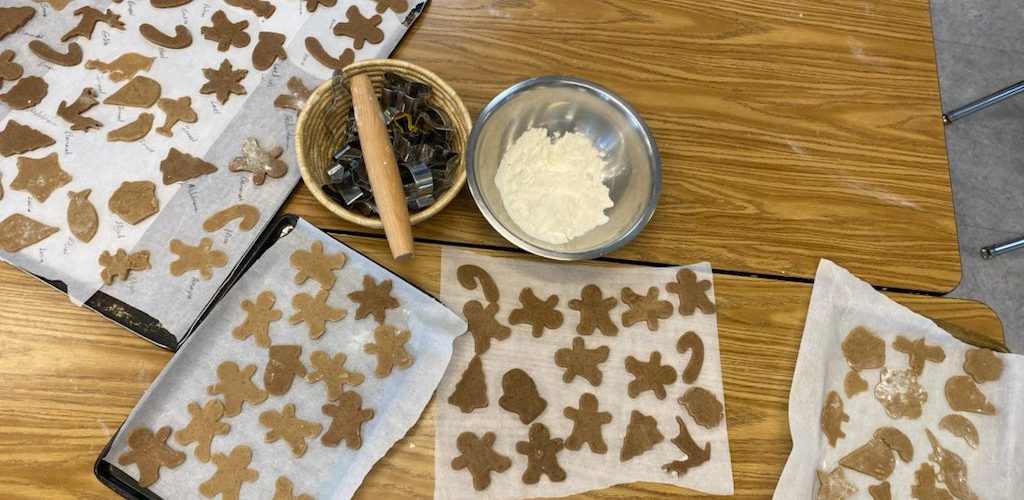
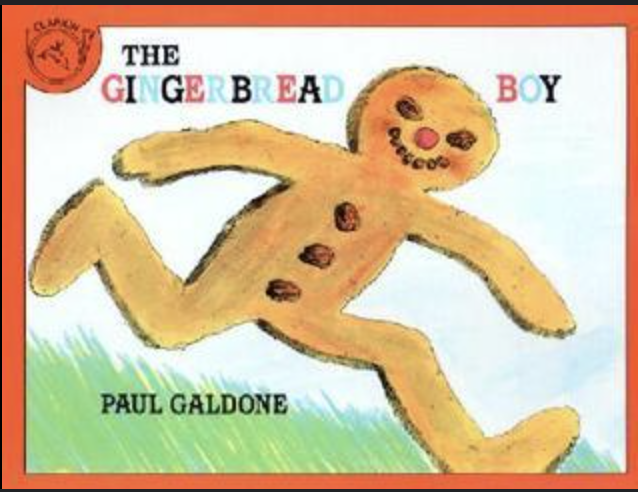
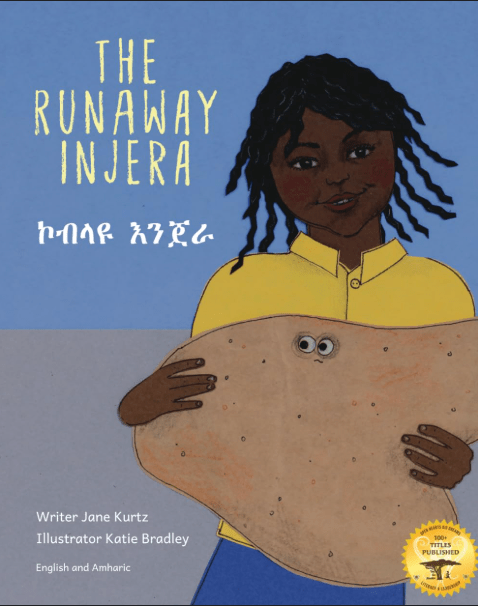
What? First students compared and contrasted the popular fable, “The Gingerbread boy” with a local take on the story, “The Runaway Injera.” After making treats that resembled each story, students again compared and contrasted but this time with their sense of taste.
How? With the holidays approaching, we decided it would be fun to incorporate some different types of texts into our literacy lessons to spark student interest and provide a pathway for other fun holiday activities.
Day 1: First, we read the story “The Gingerbread Boy” by Paul Galdone. After reading the story, on our documentation chart we recorded who the characters were in the story, what the setting was, the problem in the story and the solution in the story. This was particularly interesting as it lead to a student debate on what the solution truly was! Many students said there was no solution because the gingerbread boy got eaten in the end of the school. We talked about how for the gingerbread boy there did not seem to be a solution, but for the fox who got to gobble him up there was a clear solution! This was a natural lead in to discuss how perspective of characters is something to consider when determining a problem and solution.
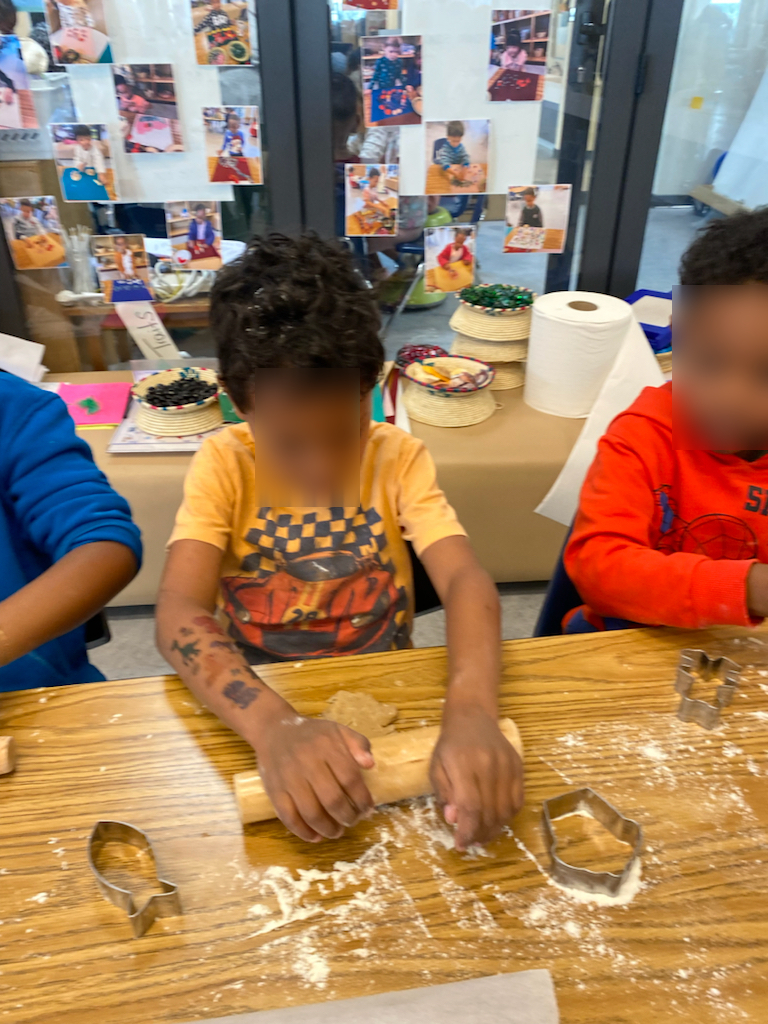
After we read the story, we told the children we were going to make gingerbread cookies! Each child got a chance to participate in part of the process as we needed to make three batches. Once the dough was made, the children discussed the concept of shape and how they were going to form their cookies. Each child got to choose which shape they would make their gingerbread cookie. Once out of the oven in the afternoon, students got to decorate their cookies with frosting and other sweet decorative goodies.
Rolling out our dough with different shapes
Day 2: The next day, we read the story “The Runaway Injera” by Jane Kurtz, who used to live in Ethiopia. We again documented on our classroom documentation sheet the characters of the story, the setting, the problem and solution. Students noticed that there were many similarities in the problem and solution in this story to the gingerbread boy story! However, the characters and the setting were not the same. This was a good start for our independent work follow-up.
That afternoon, students again had the opportunity to be hands-on and make their own treat. This time, students used injera bread to shape their own mini injeras. They stated that injera is a round shape so they chose the circle cutters to cut their own pieces. Each student decorated their own injera with Ethiopian spices.
Day 3: The final day of this learning engagement began with students completing an independent writing activity in their Story Workshop notebooks to “compare and contrast” the two stories. On their book, we glued a photo of each story at the top and drew a line down the middle for students to have a simple organizer to share their thinking. Students first wrote everything that was the same in a list format. Underneath on the chart they wrote everything they noticed that was different in the two stories. To differentiate this lesson, students could either write a word to go with each bullet point or they could write a complete sentence for each bullet point.
We ended our day with a taste testing party! Students received their cookie and their mini injera and we sat together for the party to try each treat. We told the children to carefully taste each, and think closely about how they would describe what they were tasting. What words would you use to describe the cookie? What about the injera? Would you use the same words or different words? At closing circle students came with their words in mind! Each child was given two sticky notes and told to write down one word to describe the cookie and one word to describe the injera. We created a whole group chart comparing and contrasting what each treat tasted like!
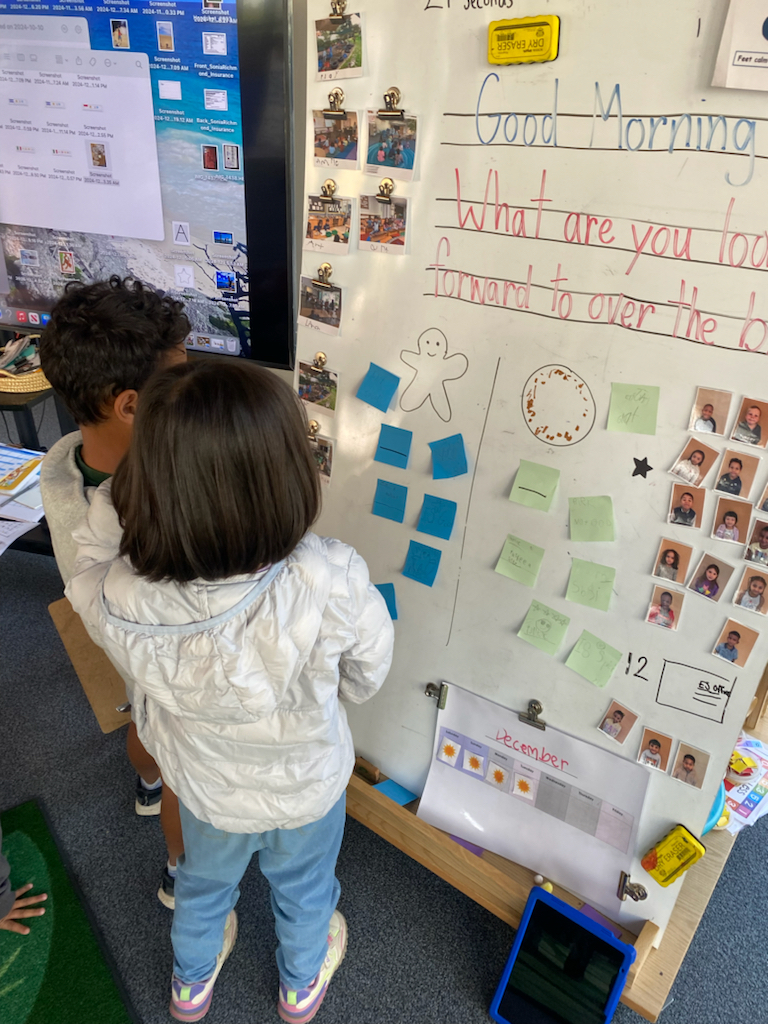
Students put their sticky note on our whole group chart. The blue sticky notes described their cookie and the green sticky notes described their injera.
Why? To really understand a new concept, students benefit from multiple encounters with that topic in different contexts. Although the standard for EY5 Literacy is for students to be able to compare and contrast stories, students will gain a richer understanding of comparing and contrasting if they have opportunities to compare and contrast other things. This lesson gave this opportunity, as students had a body to consider how stories can be the same or different, but also see how a similar model could be used to discuss similarities and differences for just about anything. Not only this, but students had such an enjoyable time completing immerse themselves in this fun, yummy, hands-on learning just in time for the holidays.
Central Idea: Awareness of weather patterns inspires people to create solutions for living safely and comfortably in different places.
Lines of Inquiry:
Patterns in weather in different places (form)
How people design solutions to solve problems (causation)
How people prepare for and respond to weather (responsibility)
What? Students explore their own identity through reflecting on memorable weather experiences and how they needed to respond to different types of weather.
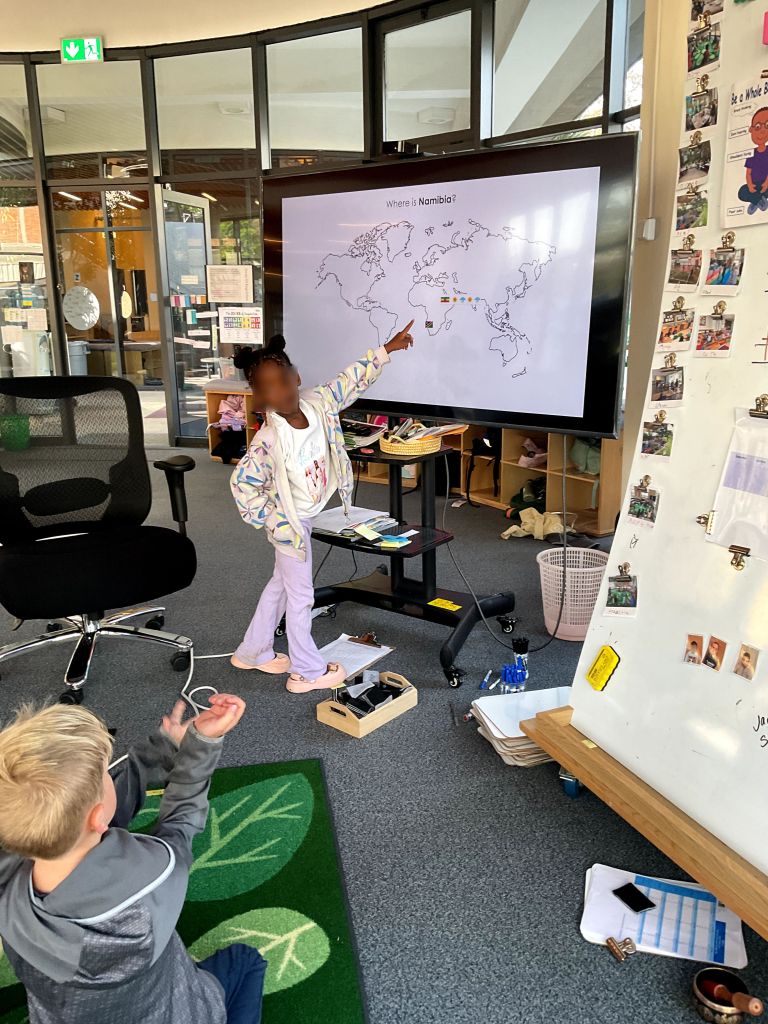
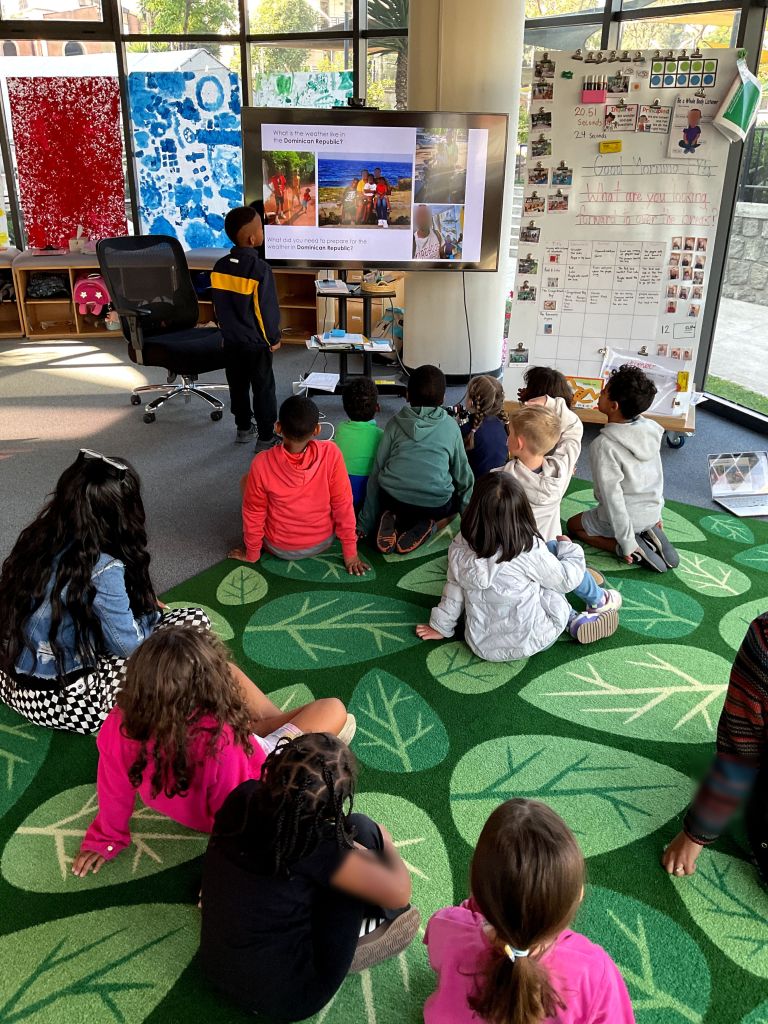
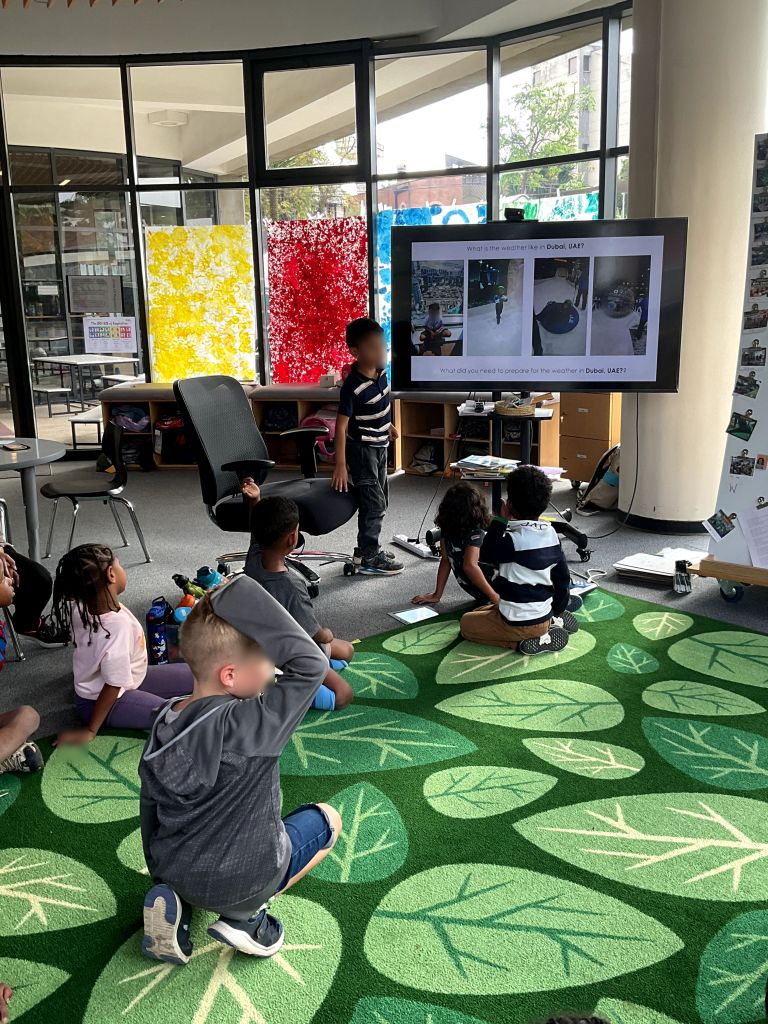
How? This project began because of a student inquiry in the response to the question, “is the weather always the same in every country?” Students and families were asked to email 3-5 photos of their child experiencing weather in a different country to the teacher. It could be a country the child used to live in or a country the child had visited on vacation. Once I received the photos, I put together a basic “presentation” for the child (although if time permits and students have the tech skills, students could do this piece themselves.) Each child then shared about their weather experience, first showing where the country was on a map of the world and then sharing the photos. For the share, children discussed their experience with weather and any seasonal patterns they know of in that country and. how they needed to prepare of the type of weather they were sharing about.
Here is the outline for the presentation-
1. Child shares where their country is on a map
2. Child shares what the weather was like in the country when they were there and what they needed to prepare for that type of weather.
3. Presenter answers questions from classmates.
Why? Allowing the children to “take us” all over the world with this fun presentation, provided an opportunity for each child to share a place and a memory vastly important to them. Identity was explored further when each child got to both ask and answer questions from their classmates about their experiences, allowing us to learn new things about one another. Since many children had never experienced a different weather type than a sunny and rainy weather pattern, this provided an opportunity for students to be knowledgable and learn from each other. We practiced our listening skills, question asking skills, and presentation skills, all while being Inquirers about each other’s lives and why different weather patterns exist.
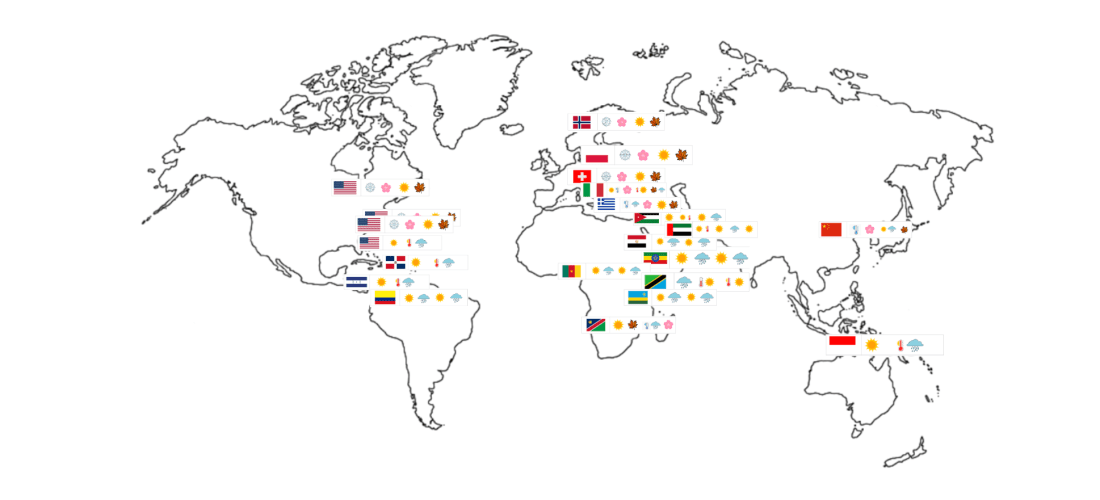
Our final weather patterns map after each child had shared their weather experiences. This map was teacher created throughout the unit using the data students shared about their weather experiences in each country.
Additional Note:
Incorporating weather into a Who We Are unit was both a challenge and an eye-opening experience for me as an educator. This unit came as a review of our Science Curriculum to incorporate the Next Generation Science Standards, a product of robust conversation and questioning as to its fit. Although there are still much elements on How the World Works in this unit, it was clear from teaching it that our experiences with weather do indeed play a huge part in how we grow up and who we become.
Central Idea: The Form of Material Impacts It’s Function
Lines of Inquiry:
The properties of materials (form)
The way materials are used (purpose)
Design (function)
What? Students have been inquiring into the properties of materials using their 5 senses for observation and the scientific process to test the properties of different materials. Students now have the opportunity to pick one type of material to research in depth during an immersive lab experience
How? Welcome to the plastic Lab! This is what our sign read to greet parents for our Celebration of Learning concluding our investigation and lab experience. The children walked their parents through their process from beginning to end with each activity we did in lab. Here’s the first 3 days of our process as a lab group:
Day 1: Opening Question: What do we use plastic for? Why? After discussing, children explore everyday household plastic objects including shampoo bottles, yogurt containers, water bottles, and classroom toys. Children use magnify classes to look closely and think about what they can learn from each of their senses. Discussion: What did you notice about plastic? To conclude, children are given a lab notebook. On the first page they wrote down a question they had about plastic.
Day 2: To begin, I showed students a picture of a tortoise (we several at school that roam the campus), but you could use any picture that is fun and relatable to your students. Opening Question: How would you describe this picture of a tortoise? I wrote down the words students were using to describe the tortoise, then we discussed that these were the characteristics of a tortoise. The children already knew this word characteristics because of our previous unit Who We Are. I then showed students some of the plastic they were looking at yesterday and asked them. What are all the words you could use to describe plastic? I gave my students each a few sticky notes and they wrote down as many words as they could with one word per sticky notes. We put up all the words on the board and I told students that because plastic is not a living thing like a tortoise, these words are all called the properties of plastic.
Day 3: Opening Question: Why do you think we produce plastic? This opening question was also one of my students’ inquiry questions from the first day! I showed them a collection of images of plastic items before allowing them answer the question in a group discussion. Students said anything from, “to make toys”, to “because you make anything out of it!” I showed them a list of words they had came up with from the previous day and read that list to them- hard, soft, pointy, strong, smooth, etc. Do you know what opposites are? I asked them. Some students did! A lot of the words my students came up with were opposites which we found interesting, which is why plastic is so unique and ultimately why plastic was produced. We read a chapter in the book, Plastic, about Alexander Parkes, the creator of plastic and how and why he made this material.
Drawing and Writing What We Think Will Happen During an Experiment with Plastic
Why? Students are naturally curious about what they use, and observe in their everyday life. Since all students got to choose which lab group they wanted to go into for this part of our unit, students were motivated and asked so many great questions which I used to move this unit along and hit on each line of inquiry. Our celebration of learning was a good opportunities to see which activities students had liked the best. Student rushed to show their parents how to fuse plastic beads together and were proud of their overall plastic designs, two of the activities we did later in this unit. Since this unit was full of hands-on activities and ended in a product students were proud of, they gained valuable collaboration, organization, and presentation skills.
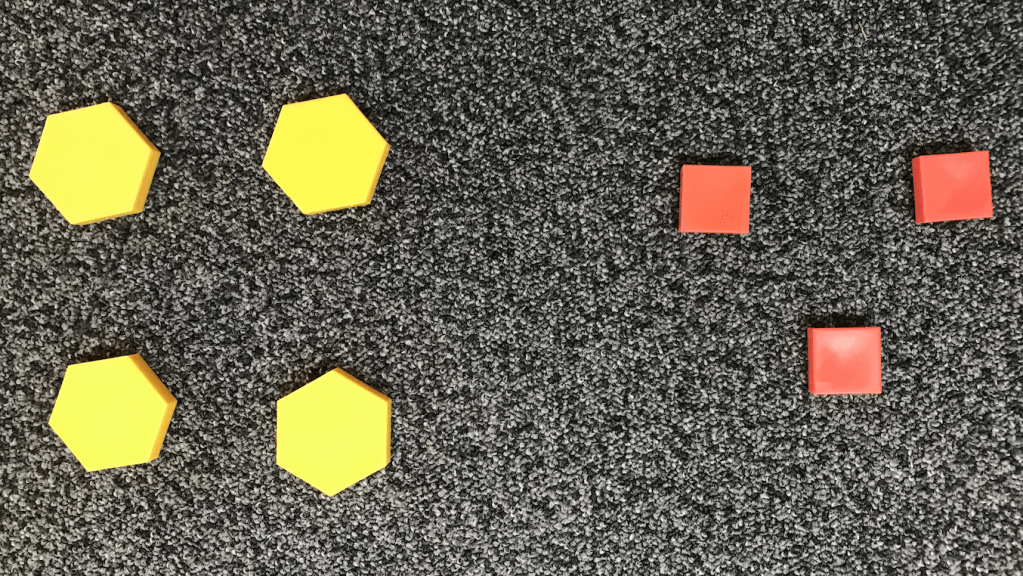
Pattern blocks are a great way for young learners to explore the concept of More Than and Less Than because they can be sorted easily by color and by shape. Children can start using terms such as “square” and “hexagon” in their vocabulary when talking about math and still easily be able to categorize them without getting into the concepts of number of sides. Children can either make groups that show the concept of more or less or make puzzles for their friends to challenge them to determine which one has more and which one has less.
Creative Counters
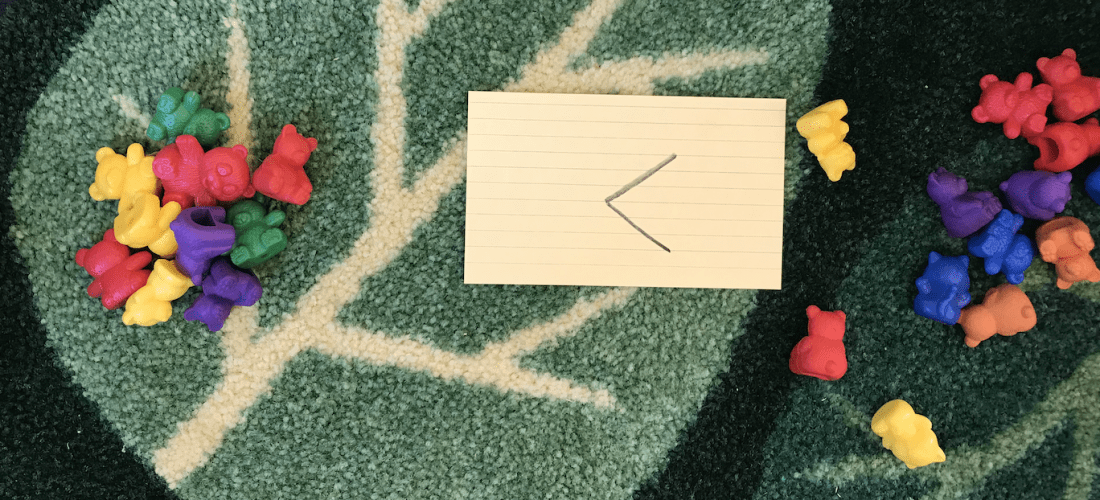
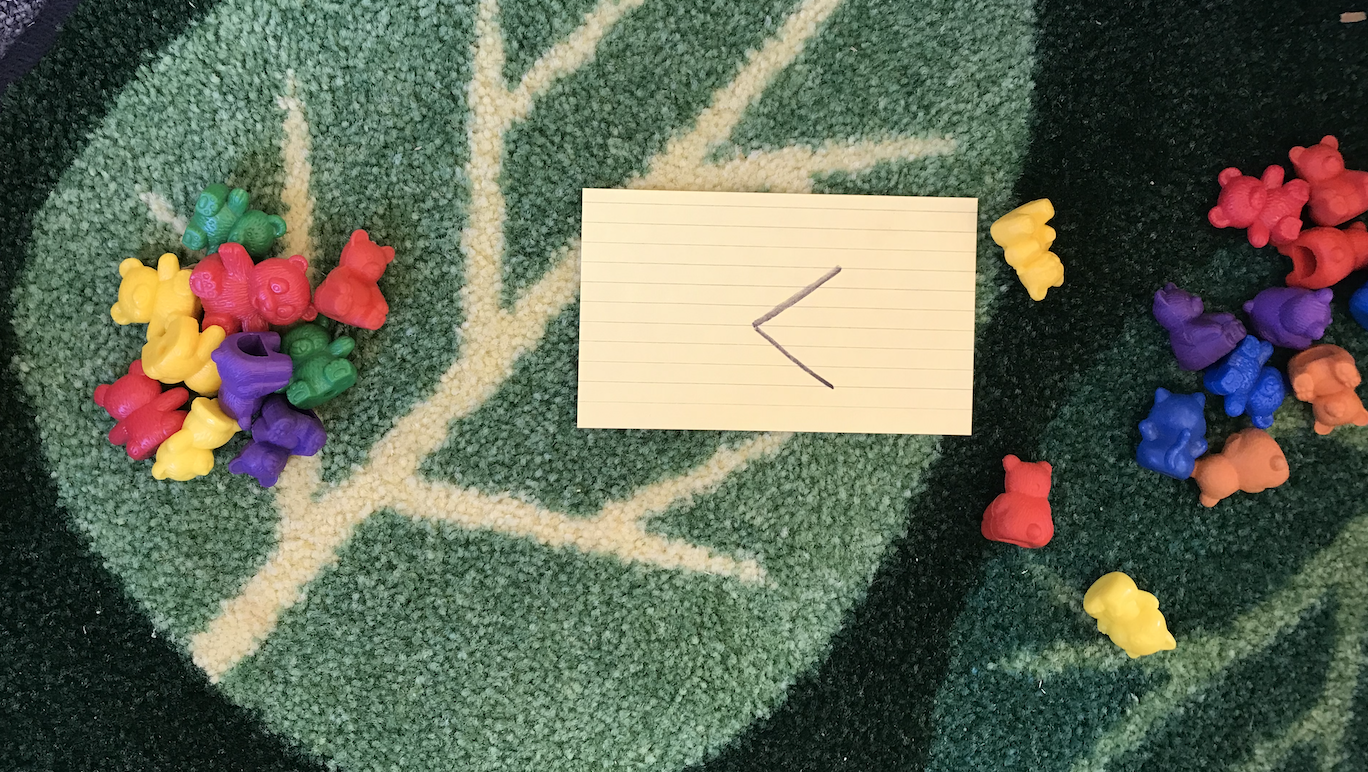
What counters do you have in your classroom that kids are already familiar with and love using? For me, it’s these little teddy bears. For this activity, the children found a partner and each played the game “How Many?” by reaching into the bin to pull out one handful of bears. Each partner counted how many bears they had and then the team determined who had more and who had less. We introduced the greater than and less than symbols, but the kids can also verbally talk about how many they got.
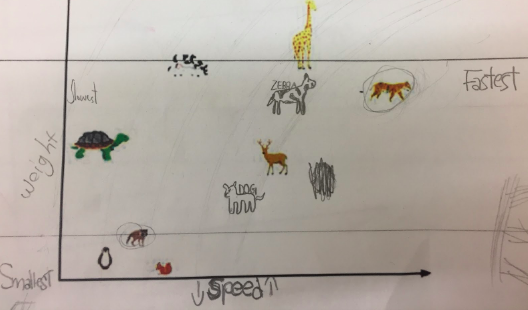
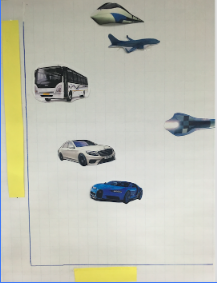
Take a look at the image on the left. What do you notice? You may recognize this image to be a graph. You may also know that this graph comes from a lesson written by inquiry mathematics advocate Jo Boaler. Boaler’s goal in her lesson, is for students to understand that graphs show comparisons. However, you’ll notice one difference between the image on the left and the image Boaler uses in her lesson plan. In this image, I have taken out the labels on the axis. My reasoning? Because I believed my students could figure that part out themselves.
I asked the following set of questions to my 4th grade classes.
Sample Student Work
What can you tell me about this image?
What would you label the axises?
Where would you place a zebra? What about a dog?
Not only were my students able to correctly label the axises, but they also were able to infer where a dog and where a zebra would be appropriately placed on the graphs. Interestingly, each group had their own perspective as to where a “dog” and where a “zebra” would go providing opportunity for a unique classroom discussion on perspective. There can be different breeds of dogs, so why couldn’t this be placed differently!
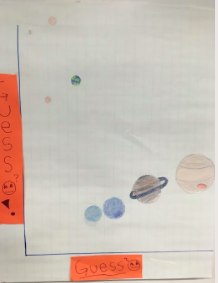
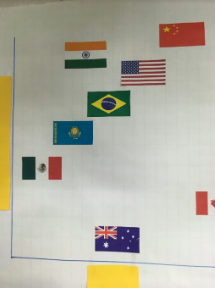
Good inquiry mathematics stretches with the ideas of the children in the classroom. We took this one day exercise and turned it into a 3-day math project, as students wanted to create their own graphs similar to Jo Boaler’s animal one. My students researched topics such as flags of countries and weights of planets, and built their own graphs comparing and contrasting areas of interest. While starting off as just a math lesson, this project grew to incorporate geography, science, and social studies into math.
Some examples of my student’s final graphs. They wanted to leave the axis’s off to have other peers and community members guess what they were comparing on their graphs. Can you guess?
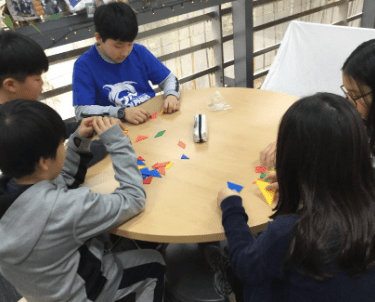
For this math lesson, I broke my students into small groups and allowed them time to play with tangrams to explore how the shapes fit together. Once they had about 5 minutes to play, I asked them some guiding questions to begin discovering fractions.
How many times does the small triangle fit into the larger triangle?
How many times does it fit into the small square?
If the small triangle fits into the small square 2 times, what fraction of a small square is a small triangle?
Of course these questions were basic for my 4th grade students, but I wanted them to determine that although all the shapes are different sizes, each shape can be measured using the smallest triangle.
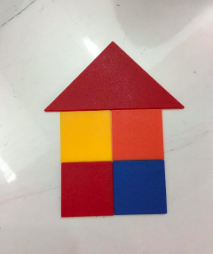
Next, I let my students play again! I gave my students 5 more minutes to play with the pieces but told them that by the end of the 5 minutes they must have some sort of picture created with the blocks. This picture should not have more than 10 pieces, and should include at least 3 different colors of pieces. I showed them this picture of a house as a simple picture I made using my requirements.
Once each group of students agreed on a picture, I first went around and took a picture of each one. This is mostly because I didn’t want someone to bump the table and the kids to not remember what color piece went where. With the images documented, I had my students pull out their math notebooks to answer the following question: What fraction of your total picture is each color?
Answering was a challenge for many of my students. Even with the guiding questions at the beginning, I had students tell me that in the picture on the right blue is 3/10th of the total because 3 pieces were blue out of 10 total. But with some patience and some partner work, most of my students came to quickly understand this misconception and determine a strategy to accurately answer this journal prompt!
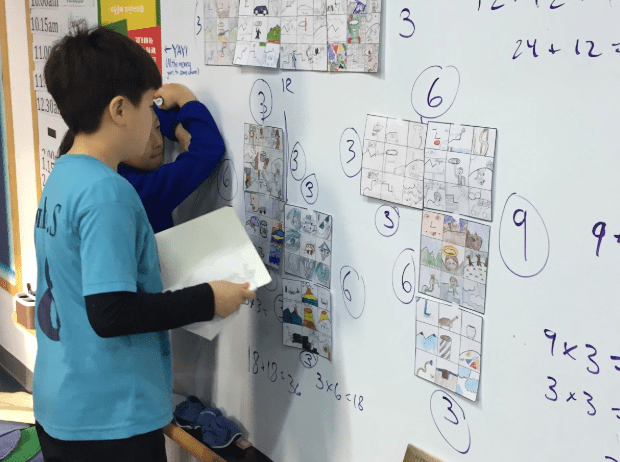
As an introduction to compound shapes I arranged pieces of artwork my students had completed into three different shapes on the board: an L, a snake, and a straight line. The artwork came directly from our unit on imagination, where students drew pictures to fill a nine frame square.The kids loved using their art as the base of math, connecting to the problem because their pieces were being used on the board.
First, I asked my students: Does each compound shape have the same area? Answers varied and as a class we calculated that each shape does indeed have the same area.
Next, I asked my students: does each compound shape have the same perimeter? Again, answered varied and we calculated as a class that each shape had the same perimeter as well.
For our independent challenge I had students work out an answer to the following question:
Is there a way I can arrange these boxes to have the same area but a different perimeter?
Students loved this challenge as it provided them with an opportunity to disprove the belief that shapes with the same area must have the same perimeter. They ultimately discovered that if they moved these four nine-frame boxes into a square that the area remained 36 square units, but the perimeter switched from being 30 units to being only 24 units around.




 Sonia Richmond