Central Idea: Imagination and creativity are powerful tools for extending our ability to think and create
Line of Inquiry: The ways in which we inspire imagination
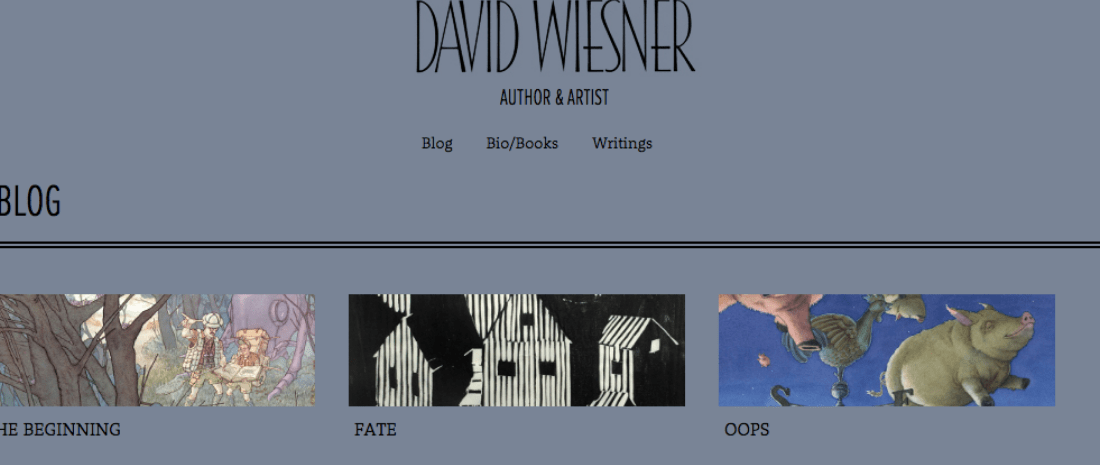
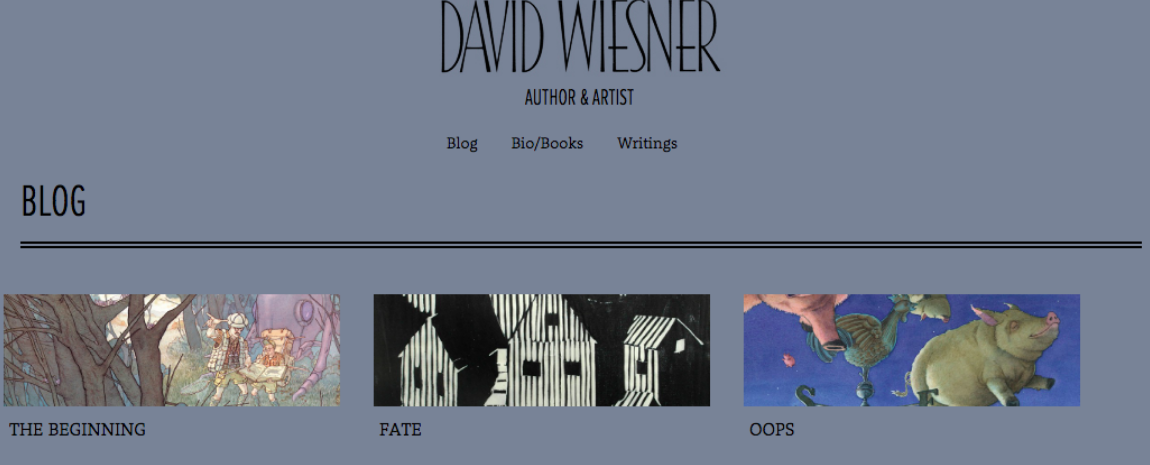
What: We read several books by popular children’s writer David Weisner including Sector 7 and Tuesday. David Weisner writes mainly in pictures instead of words. After reading these books, I had students look through David Weisner’s online blog to determine what in his life inspired him to create such unique stories.
Copyright David Wiesner
How: I did several whole class read alouds of David Weisners work so student were familiar with his unique way of writing and illustrating. I next had students investigate on his blog where these ideas came from. Students used their macbooks to research and read any of the posts. As the read, they wrote down on sticky notes any life experiences that Weisner references in his blog that sparked the imagination for his picture books. There were many clear examples in his blog where he references an event from his childhood or experience as a young adult.
Why: The most creative works are routed in the identities of the people who created them. In order for my students to be creative, they must understand that individuals are inspired from their passions and their histories.
Central Idea: The act of people coming together to support community issues can be a force for change.
Lines of Inquiry:
The needs of a community
The responsibility of individuals towards supporting communities (think in terms of concentric circles, how do you start with yourself and move out to the bigger community)
Impactful action
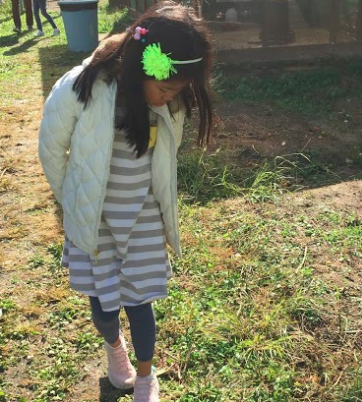
What? I took my students out to the school garden to investigate. After, we read the book The Garden on Green Streetby Meish Goldish as a class.
How? First, I reviewed in the classroom my expectations for student behavior in the school garden, including how to be responsible where we walk and what we touch. Next I posed the question: How does our garden function? After giving them 10 minutes to explore, I gathered the class back together to discuss our findings. Students reported that people, plants and animals work together to help our garden. Teachers volunteer time, parents help after school and student gardening clubs come together to keep the plants healthy. After this conversation we read the book which discusses a fictional community garden and people banding together to save the garden from construction. This book had students consider possible impactful actions in connection to the roles and responsibilities the townspeople took to make a change.
Why? Students need hands-on experiences to deeply connect to the lines of inquiry. Since this garden was on school grounds and most students had been at least one time before, this was a perfect opportunity to build on student prior knowledge. The students came away from this lesson more knowledgable about the gardening community and its needs at our school and more curious about the nature they explored during the investigation portion of the lesson.
Teachers often spend many lessons having students write various styles of poems which follow a specific theme or style of writing. Students are taught a kind of poem, how to write it, and maybe some literary devices to help them along the way, without always understanding the why people write poetry. What is poetry really?
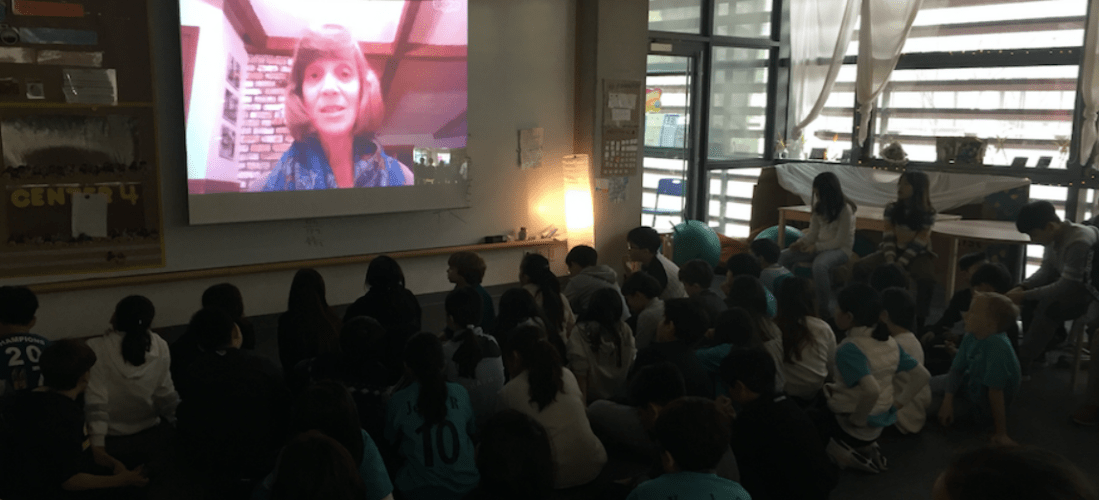
My mom is a poet, and I once had my students Skype her so that she could give a reading of some of her poems. My students had never heard a poet read before and so I wanted to give them some insight on the passion behind poetry, the tone of a reader, and what inspires someone to write. I did a simple exercise with my students in preparation for this Skype call, which I believe teaches the purpose of writing poetry.
Skype Call to Mom!
First, I had my students look at a picture of Piute Creek, a location in Yosemite National Park. An author who inspires my mother by the name of Gary Snyder has a poem titled Piute Creek written about this location. I had my students close their eyes for a minute and picture themselves there. What would you see? smell? be doing? Be in that picture. Next, I read my students Gary Snyder’s poem. This allowed my students to understand how feelings and experiences could be put into words.
Next, I read my students a poem by Robert Frost, The Pasture. This time I did the opposite. I read the poem first, and then after asked my students to tell me what a picture of this poem might look like. If I had had more time, perhaps I would have had my students each draw a picture, or interpretation of this poem. The takeaway from this exercise was that poetry is designed to bring out experiences, to tell stories, and to fill a readers head with imagery.
My students were inspired to find pictures from home or take pictures at home of something that inspires them to write poetry about as a next step. This lesson also directly connected to our unit of inquiry on imagination and inspiration.
Let’s talk about money. As a hardworking parent, you know the value of it. That’s why when you pick your child up from school and they ask if you can stop at Target on the way home, your immediate answer isn’t always yes. It may seem like your child doesn’t have a “money mind” yet, however that’s just not true. Does he or she have a piggy bank at home? My students do. I’m willing to bet there’s not more than a couple dollars in there, but whatever there is saved, it’s heavily guarded not to be touched by siblings, pets, and especially parents (or homeschool teachers!). Kids love money, and from an early age learn to differentiate a penny from a nickel, dime, and quarter. Likely, your child already knows how much each coin is worth. This sets you up for the ultimate fun, money, challenge for some hands-on math action.
Materials: – Suggestion: 61 cents (3 dimes, 5 nickels, and 6 pennies) – a paper – a pencil
Grade Level: Suggestion is based on 1st grade math standards. For older students, add quarters or even dollars to this activity.
Below are two activities for you to try, one addition and one subtraction. Before you begin, make sure to review with your child each coin’s name and amount its worth.
Activity 1: How many combos? (Addition)
Write down a number at the top of your child’s piece of paper. I would start with a low number, like 7, to get them started. Tell them that their job is to use the coins in front of them to make 7 cents. They can use any combination of coins. Once they find the nickel and 2 pennies, congratulate them on adding money and ask them to write the number sentence they just created! You might need to help them start by writing ____ + _____ + _____= 7 on their empty sheet of paper to fill in the blanks.
Increase the amount in your next problem by choosing a slightly higher number, like 11. Allow your child to explore how to make the number again using the coins.
Once your child has gotten a chance to use all the coins, challenge them to create as many different combinations of coins as possible to make one single number. For example, for the number 26, your child might at first choose 5 nickels, adding them together to make 25, then an additional 1 penny. Another combination could be 1 dime, 3 nickels, and 1 penny. A third combination could be 2 dimes, 1 nickel and 1 penny. (There’s even more combinations!) This is exciting, because your child gets to discover new patterns and combinations as he or she completes each number! There’s not “one right answer” for any given problem, allowing your child the space to take risks, and creatively problem solve.
Continue to have your child write down number sentences as you go, to develop an understanding for mathematical equations. This is a great activity for many reasons, one being that often kids don’t have much hands-on experience transferring physical amounts to a written expression. This activity allows your child to build expression writing skills with groups numbers of 1s, 5s, and 10s.
Activity 2: Sub(traction) Shop!
Take a toy your child has lying around nearby (seriously, any toy!) and tell them you are going to buy it from them. Make up a number that is less than the number of coins you have (61 cents or however much). Maybe you’re going to buy their barbie doll for 25 cents. Or in my case, I first purchased a playdough box for 13 cents then a playdough ice cream cone for 38 cents. Instead of paying with the correct amount however, count out a higher number and hand it over to your child (make sure there is enough coins left for the change). Explain to your child that you only had those coins in your pocket that day and then ask for change. Your child might need to write down what you paid them, and then a reminder on how much the item cost to begin with! But once there is a number sentence written on the piece of paper, he or she can use their mathematical abilities to calculate how many cents you are owed back, and in what combination of coins!
After this first purchase, your child likely will enjoy picking out items (toys) themselves for you to buy. Have your child this time pick how much each item should cost. The more you can make this their choice, the more engagement your child will have. I love this activity because it’s the perfect combination of play and math, and who knows? Maybe this will help them one day with that career in Sales!