Where do you see math in the following picture?
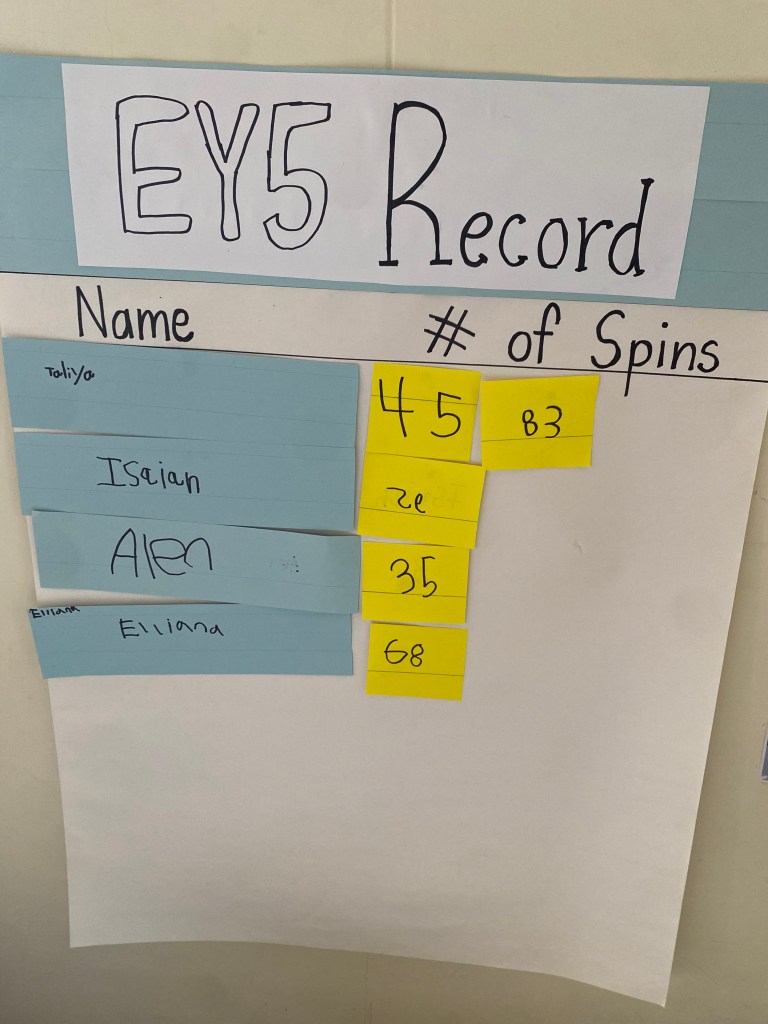
This chart came from a noticing I had that during a unit focusing on the concepts of design that the children in EY5 were very interested in spinning tops that year- Beyblades to be exact. These were the tops where you release the button and the top goes off and has a battle with someone else’s top to see which one will win and keep spinning. The problem was, the children kept bringing their Beyblades into school and naturally they would get lost or broken. So instead of banning them completely, I wondered . . . how can we make this at school so everyone can participate and where does math fit in with this activity?
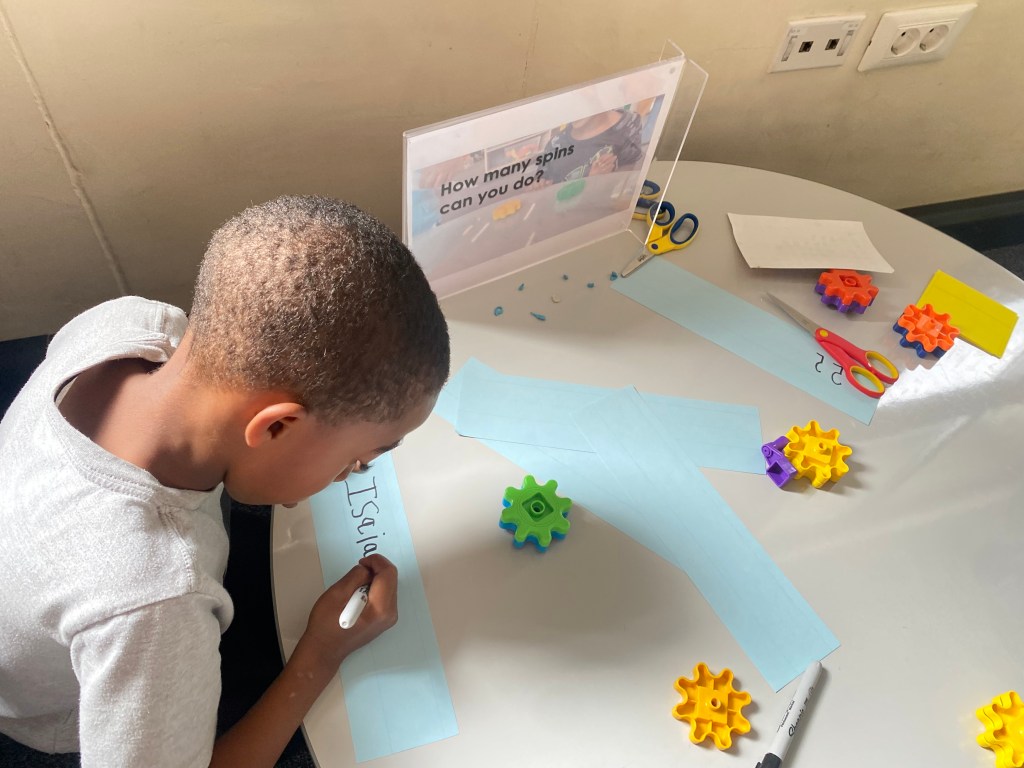
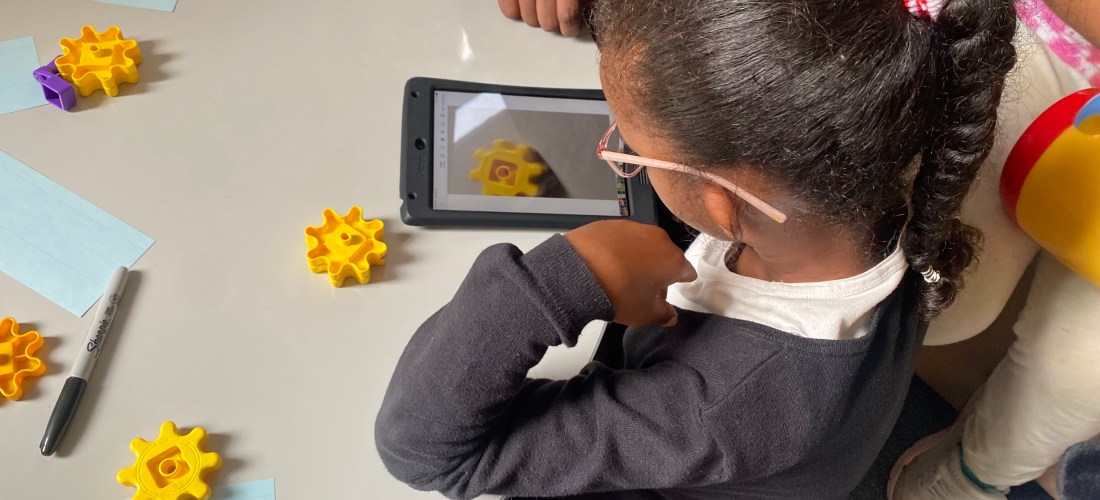
The children discovered that if you stack 2 gears on top of one another, its makes a spinner that resembled how Beyblades work. When given an appropriate flick, the gears would turn rapidly around on the tabletop. It was fun to see how quickly the gear-tops could spin, but the children were discouraged because they didn’t actually know who’s top was going around more. So we thought, how can we count how many times the spinner goes around more accurately?
This is how the idea of using our iPads emerged!
How it worked is the children used the iPads to take a recording as the top was spinning using the slow-motion feature on the iPad. After the spinner came to a halt, they rewatched the spin in slow motion carefully counting every time the spinner went around. Sometimes the children needed to watch the video more than once to get a better idea of the exact number.
Once confident in the number they got, the children wrote down how many spins they got on the chart next to their name!
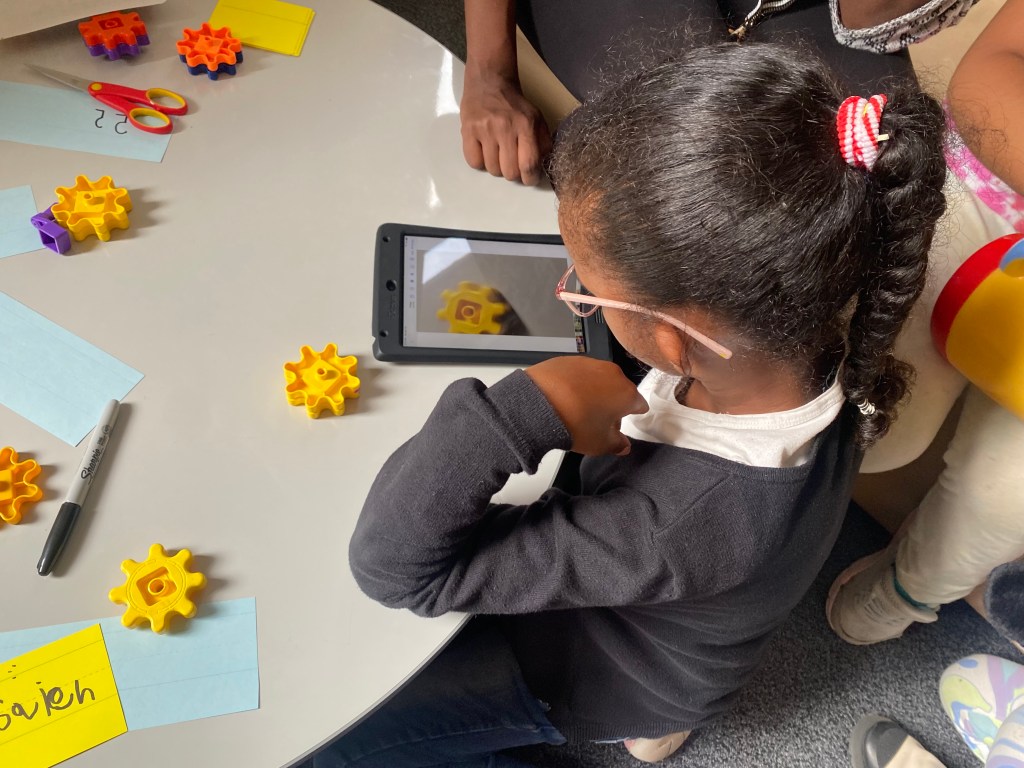
The children were so interested in this project, that they wanted to do it again and again. They tested different types of spinners, adding more or less gears to see if this sped up or slowed down the spin. They also did more than one spin to see if they could beat their record. The chart was the last step in this process to make our thinking visible, showcasing our hard work and to give the children a little more practice writing the big numbers they were determining when they counted each spin.
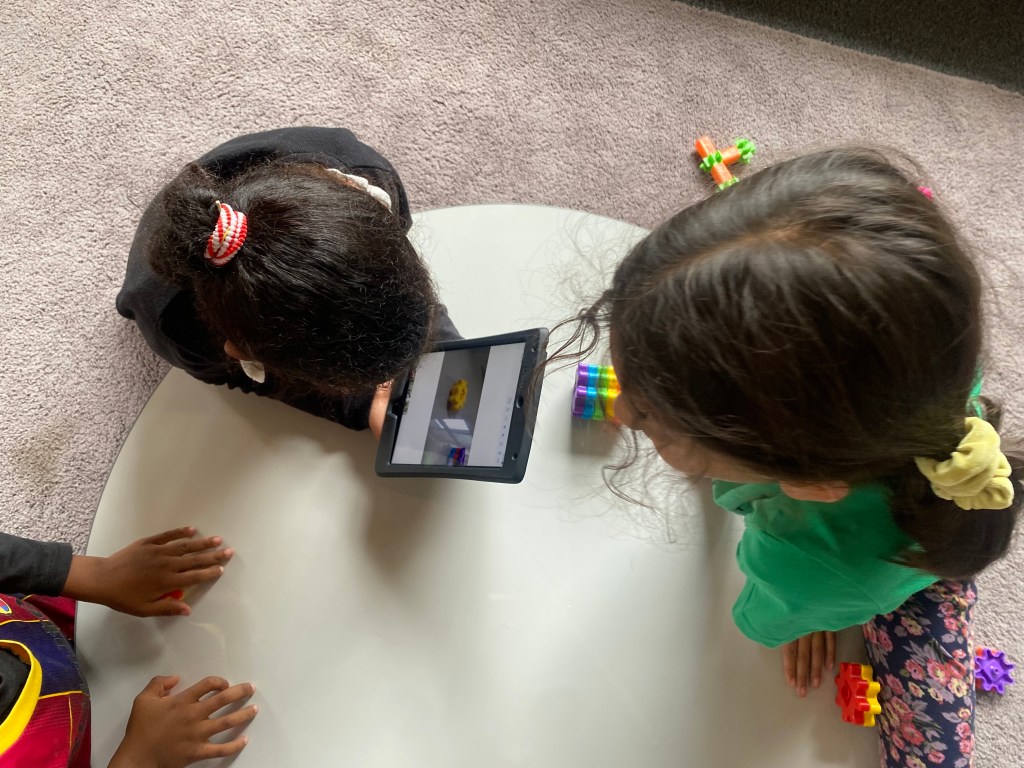
It was a memorable because the children took it into their own hands, and could go through the steps themselves. Additionally, coming from their own interests, the children were motivated to continue to add to the project and create a station that lasted in our learning environment!

