Working with children who need a little extra support when it comes to reading and writing is a part of my career that I love. You can see the growth, a child who can’t identify their letters, beginning to read their very first words. There’s nothing quite like it. And although there’s programs and infinite resources available that aid in this process (some far better than others) I’ve always found that no matter how intentional a program sets itself to be, there’s always a little something lacking. Young children are obsessed with themself, it’s developmentally appropriate, so what if I could use that to their advantage as developing readers and writers? Taking research based practices and putting a bit more of them into it.
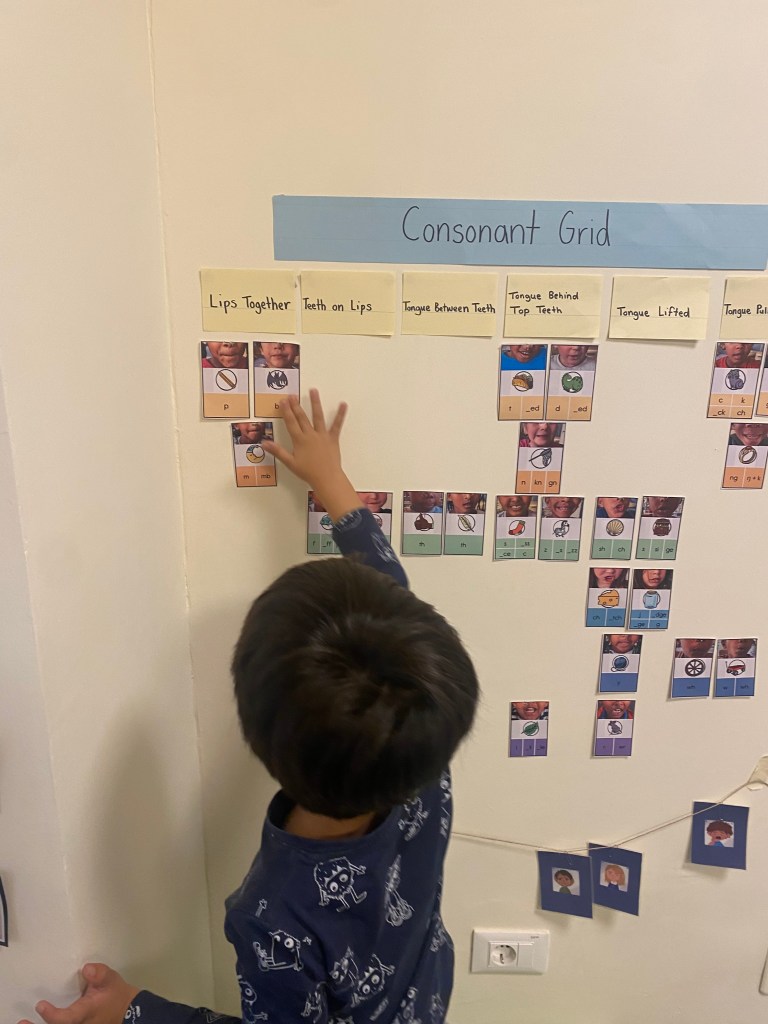
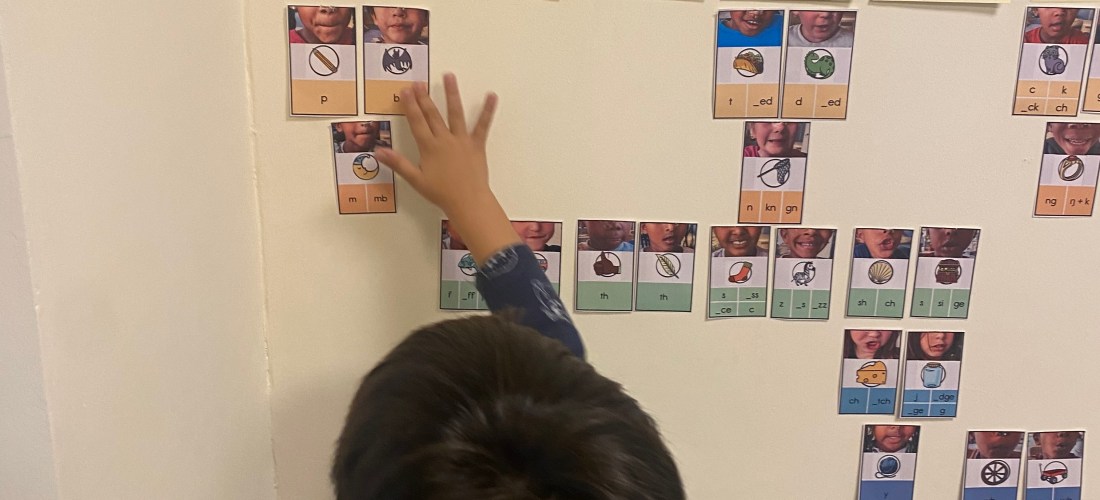
When I first had the idea to make a consonant grid and vowel valley using all the students faces from the whole grade-level, I was met with a little scepticism from my curriculum coordinator. It wasn’t that she disliked the idea, in fact she loved it, she just knew that this was a project that was going to take time. Her questioning came from a concern of, how long will this take and will the amount of time it takes make an noticable difference in how the children interact and use this resource. It was purely from a logic standpoint. However for me, I couldn’t imagine doing anything else. To look at a sound wall that represented “diversty” yet didn’t actually represent our population at all with its pre-filled student faces was out of the question. I went ahead and made it- calling students over one at a time during their choice time block to make the sound and correct facial structure for a specific sound. And what happened next, blew me away.
The children started to notice. They would start by finding their face and practice the positioning and then they would look for their friends. It was part of their daily flow, coming back and back to the wall throughout the day. They would show their family members when they came to pick them up- can you find me? They would say or “look this is me!” Their pride evident in their expression. It became a resource outside of the classroom as well, parents asking for a copy of it so they could have it to practice at home. The impact was extraordinary, all because the children saw themselves.
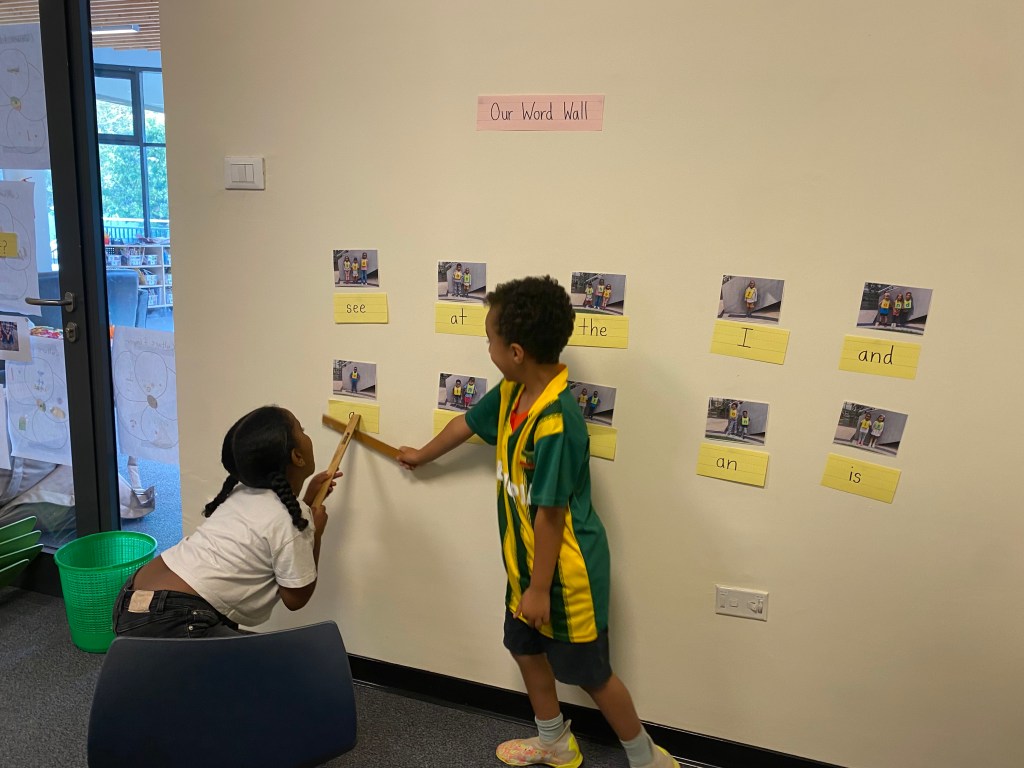
I’ve done a few other projects since that sound-wall. Trying out similar logic. Below is a picture of students playing a fly-swatter game on our sight word wall, but instead of just the written word you may notice that the pictures they’re looking at are of themselves and classmates wearing vests to “build the word.” I also gave a copy of the sight word book with student photos to the parents that year. It took a while to make and have all the students represented, but it didn’t take much effort to get started and I started with the children who would benefit from it the most. Before I knew it, again, everyone was on board wanting to be a part of it and wanting to use it.
Another year, I had visited a school in Germany that had used Trans-languaging practices to represent their community and create tools that would reflect the cultures and languages present. I had recently led a workshop introducing colleagues to what Translanguaging is and strategies in the classroom that would utilize these methods and wanted to try my hand at making some of these resources first hand. Using the related concepts as a vocabulary bank, I sent out a google form to families for support in making concept sheets. I asked them to translate the concept in their child’s home language (s), using both the traditional characters and script and an english dictation for the children to be able to try pronouncing them.
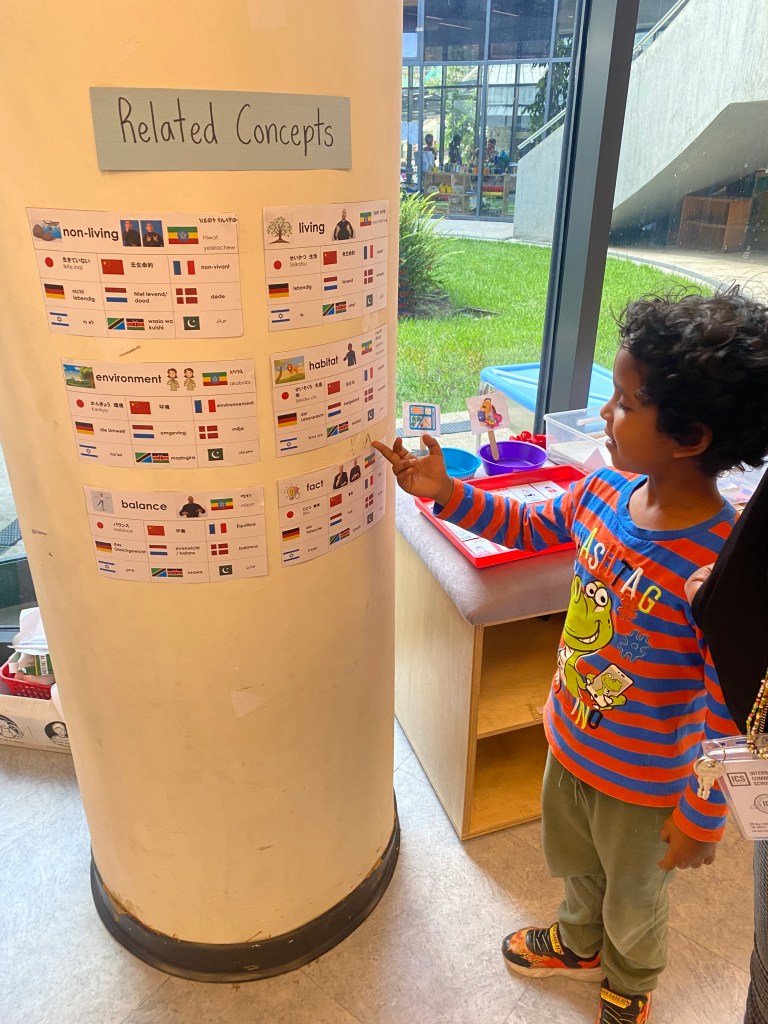
The response was incredible, with parents actively responding, and some languages having two or three forms filled out. I was eager to turn these into something the children could use, creating a format where the children could identify their flag and then see the script for the word in their own language next to it on the chart. I hung them up all around the learning space, and integrated them into our everyday learning whenever we introduced a new word or made a connection back to a concept. The children practiced saying new words in different languages, and the children who spoke multiple languages emerged as leaders, proudly sharing their language with the group. As with all these examples, the children noticed the resource and came back to it again and again, making the time and effort spent to generate it absolutely worth it.

