Ah Word Problems.Everyone’s favorite kind of math problem! I remember absolutely dreading whenever one of these written horrors showed up on one of my school work pages. Luckily, there’s a way for you to do a word problem with your child without them even making the association . . . how? become the problem!
It was my student’s birthday this week, so to celebrate I bought her a container of fluffy paint! This fun activity had a little secret though upon unwrapping, it was the base component of a hands-on mathematical afternoon adventure. My word problem went like this-
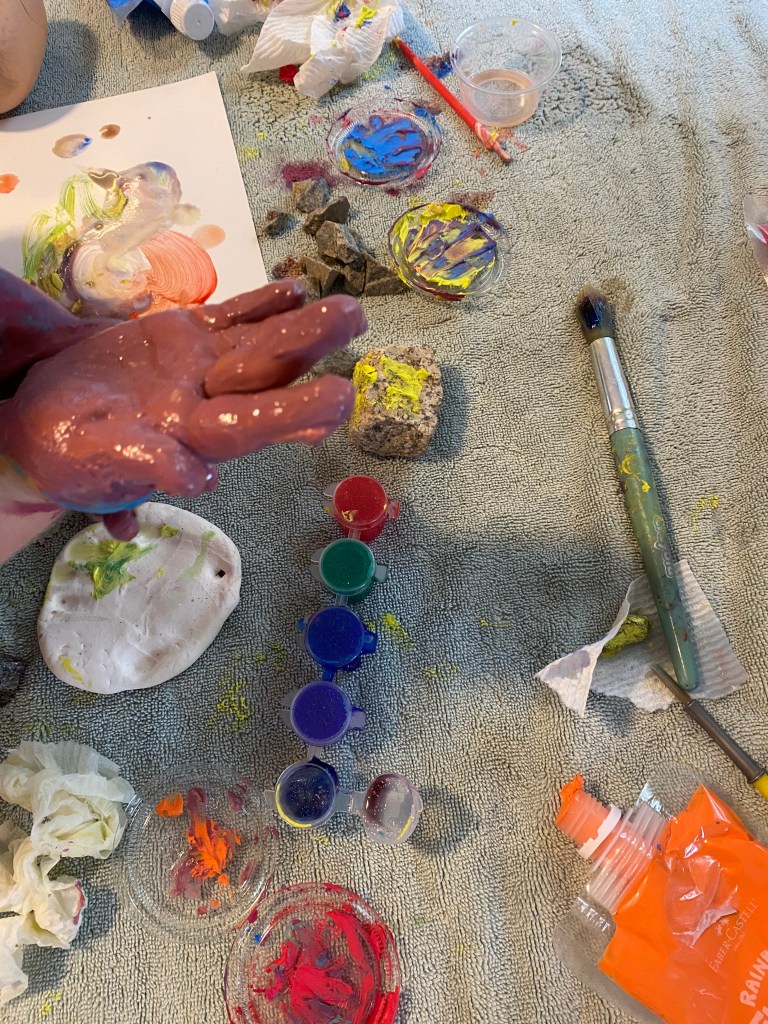
- a. B and E went to the park and collected 20 rocks. When they got home, they decided to paint 6 of the rocks E’s favorite color! How many rocks were left unpainted? (20-6=?)
- b. After they painted the 6 rocks, the girls decided to paint 3 more rocks B’s favorite color. How many rocks are now left unpainted?
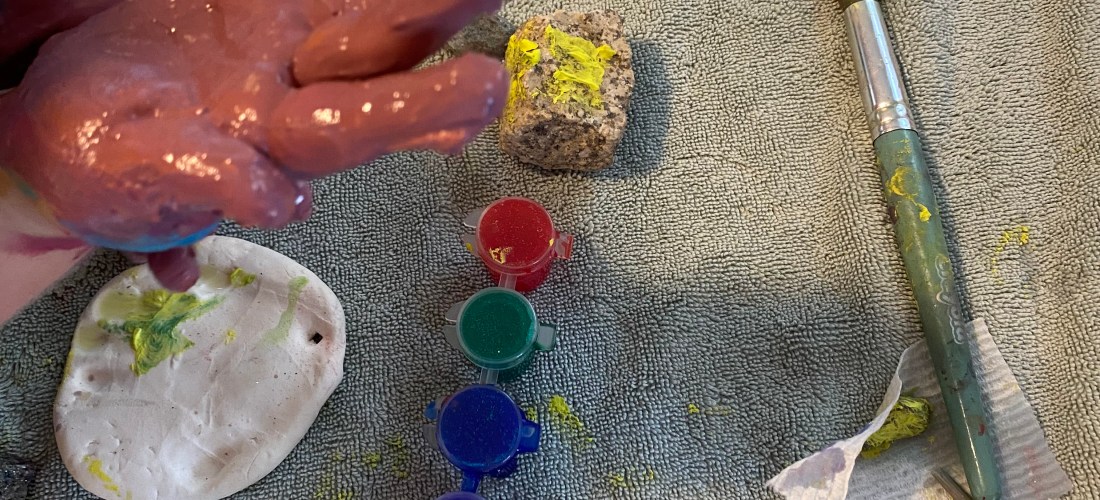
When disguised as a walk to the park, math becomes just that! We gathered 20 rocks from the outdoors, excited to bring them back to the kitchen to paint. Then we got a little messy, discovering all the joys (puffy paint is puffy!) and horrors (puffy paint is very sticky) associated with the project. Eventually, 6 rocks were painted and ready to dry before we were able to complete the problem.
Although this version of math took a lot longer then your typical work sheet, it was memorable, interactive, and enjoyable by all parties involved. Math was conveyed as an avenue to solve a read-life problem, rather then some characters on a sheet of paper. And even better, this kind of math fit into fun activities my student truly wanted to do during her birthday celebrations! A double win 🙂
So how can you replicate this technique at your house? Get creative. It’s not always about the rigor of the problem, sometimes its about the connections your child can make between math and real life. I challenge parents to use word problems in their child’s everyday routines to get the most out of an ordinary day.
Other examples you could use:
Doing math at bed time:
________ has 18 stuffed animals. _________ brings 5 stuffed animals to bed with him. How many stuffed animals sit in mom’s rocking chair?
Doing math at breakfast:
_______ gets 17 cheerios in his bowl. He eats 11. How many cheerios are left in the bowl?
Doing math when getting dressed:
_______ has 5 dresses, 3 pairs of pants and 4 shirts to choose from when getting dressed. How many clothing items does she have altogether?
 Sonia Richmond