
Exploring Translanguaging to Personalize Learning
Target Audience: International School Educators K-8
Description of Session
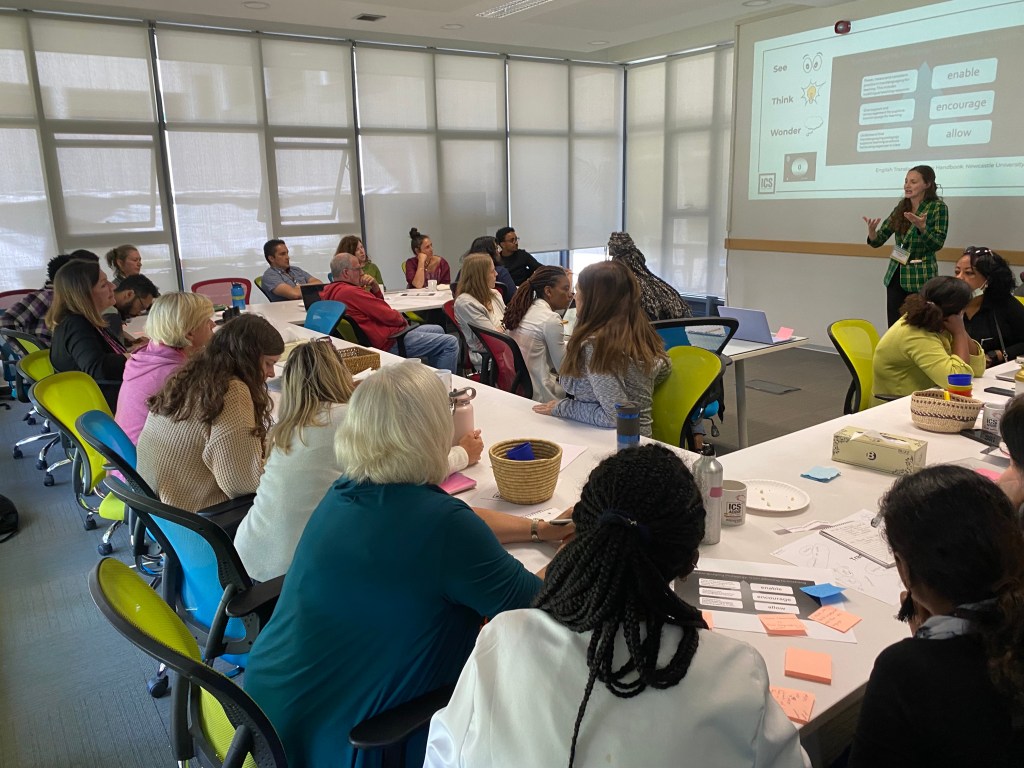
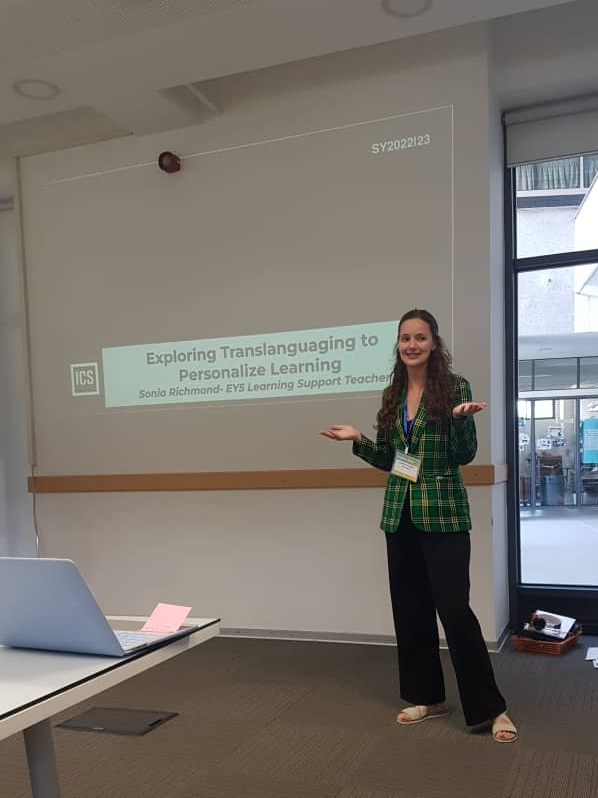
Working in International Education, many of us have heard the term translanguaging to address the needs of our diverse student bodies, but how many of us truly know what this term means? In this workshop, participants will dive deep into the history of translanguaging, including how the term came to be, how it differs from codeswitching, and why it’s critical to think in terms of a child’s holistic language repertoire. Participants will engage in a translanguaging continuum to explore what level(s) of translanguaging are currently being used in our classrooms. Lastly, as we will draw from approaches of translanguaging in multilinguall classrooms, we will aim to answer the question: How does translanguaging look in the international school classroom?
Session Objectives
- Participants will understand the history behind the term translanguaging and how it differs from codeswitching.
- Participants will be able to explain multilingualism as part of a holistic system in an individual’s mind.
- Participants will know what translanguaging pedagogy is, and be able to implement practices in the classroom setting.
- Participants will be empowered to be advocates for translanguaging in their communities.
Differentiation in the Tier 1 Classroom
Target Audience: International School Educators and Learning Support Teachers K-8
Description of Session
Working with a tiered system of support such as a RTI or MTSS model is known to be best practice to support all students with varying levels of support. However, if we are truly looking to create a personalized learning experience for each child, it is helpful to look at differentiation more holistically and not just as a way to support struggling learners. In the Tier 1 Classroom, we are looking at every child and we are considering every method to create the best possible learning experience. In this workshop, educators will deepen their understanding of differentiation to consider various methods (the content, process, product and environment) as separate opportunities to reach each learner. Participants will then practice what differentiation could look like for each element of a learning engagmentconsidering a child’s readiness, interests and learning preferences.
Session Objectives
- Participants will know Carol Ann Tomlinson’s philosophy and definition of differentiation.
- Participants will be able to explain the four methods of differentiation thoroughly: content, process, product and learning environment.
- Participants will be able to plan a lesson for an individual or group of students using different methods of differentiation according to a child’s readiness, interests, and learning preferences.
Action Research
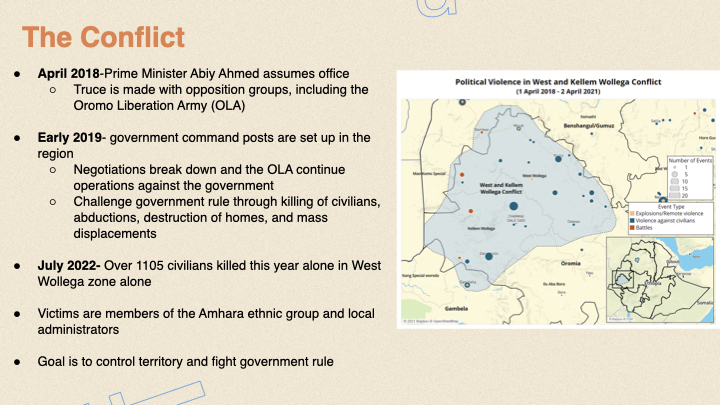
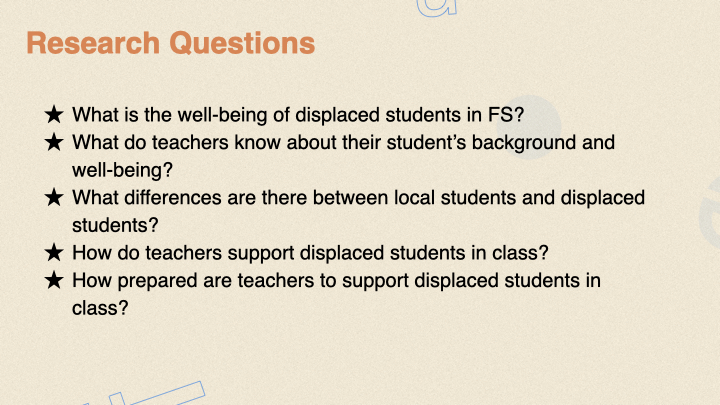
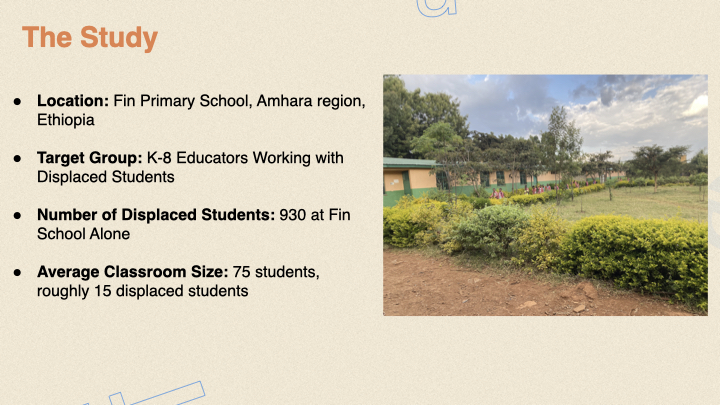
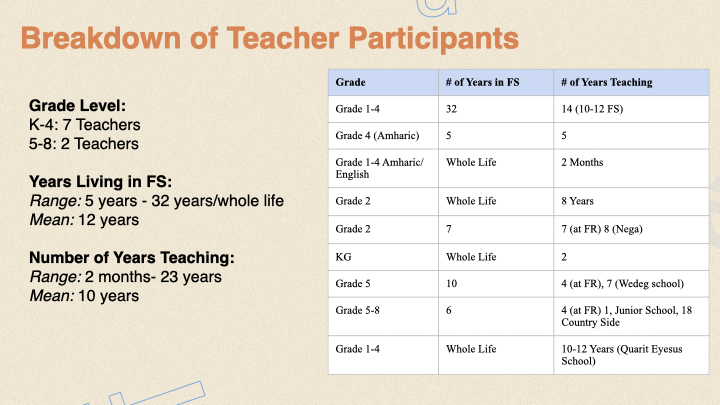
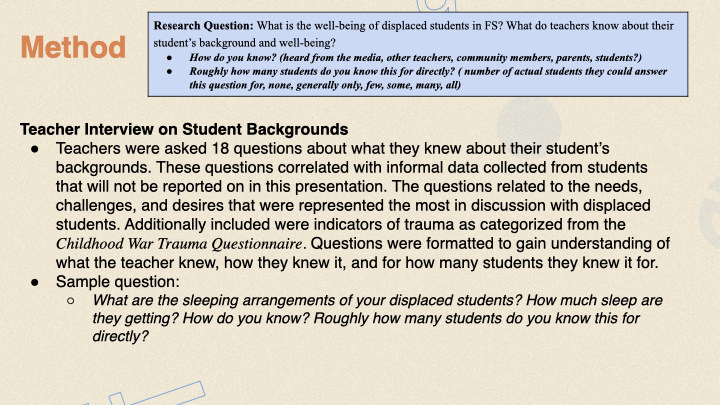
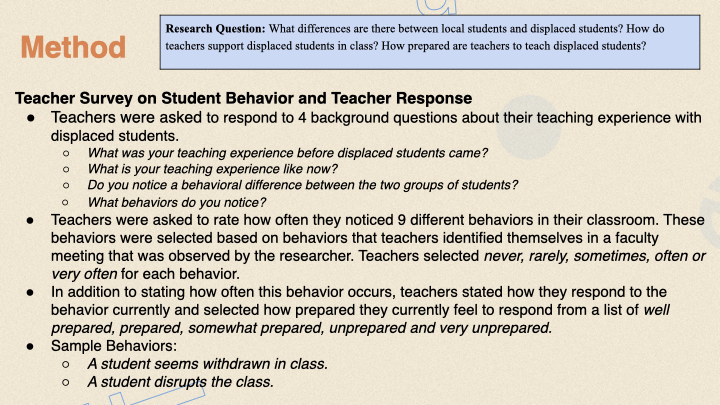
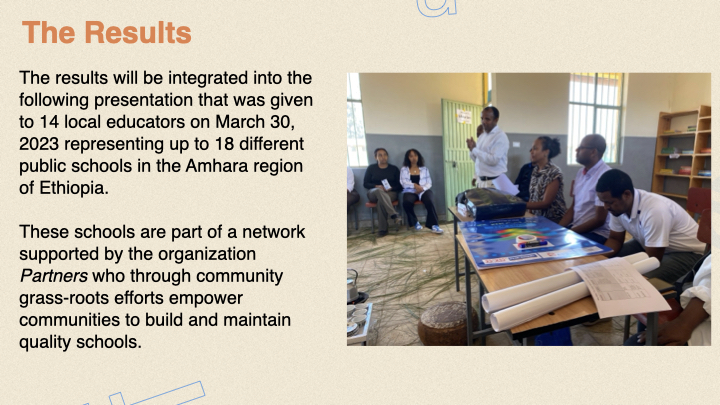
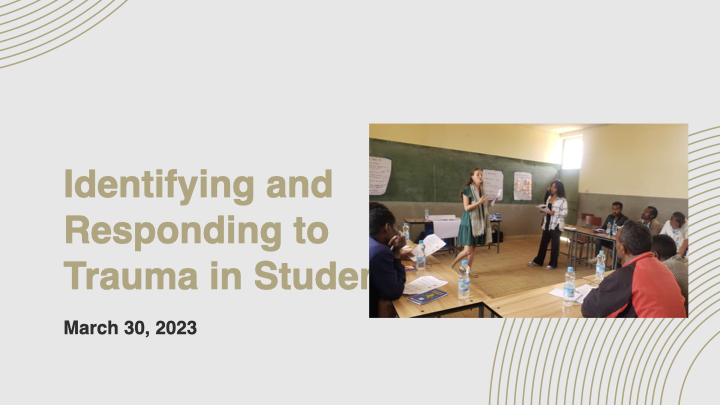
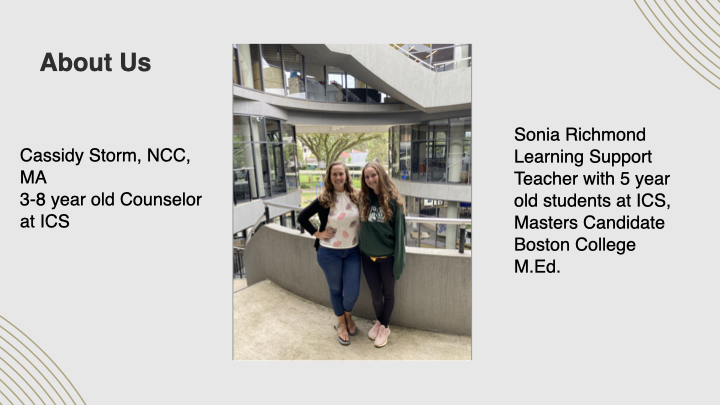
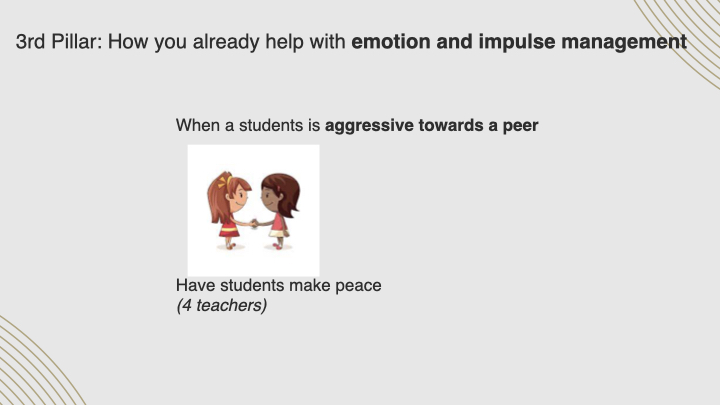
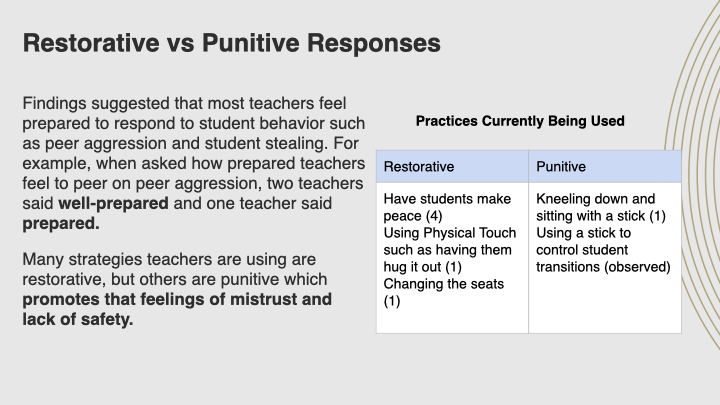
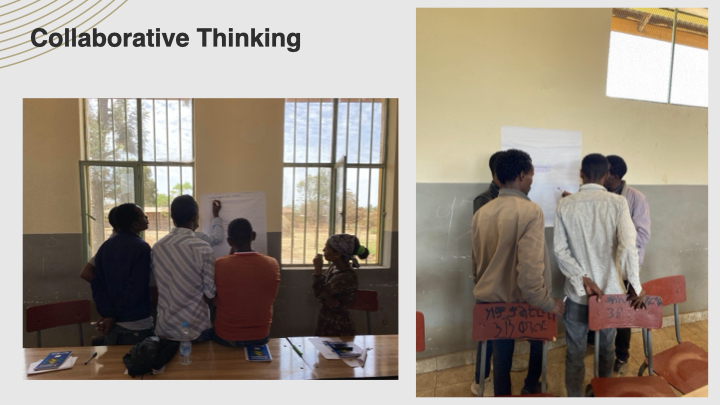
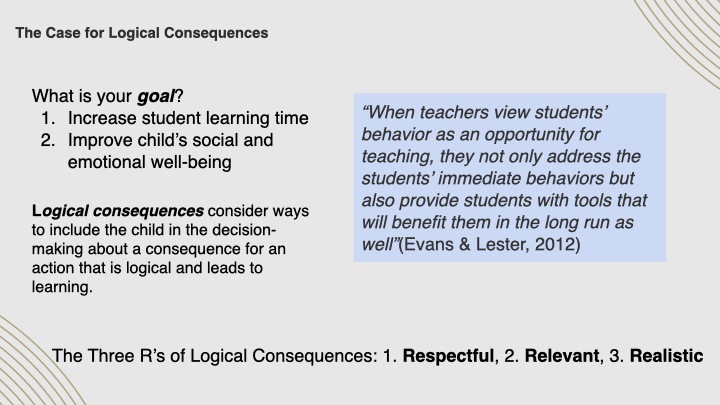
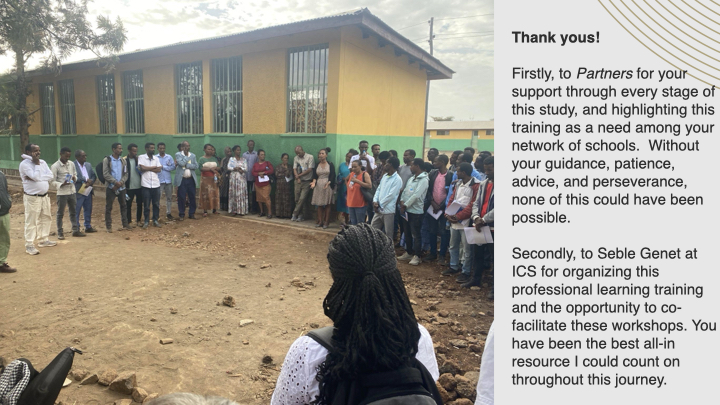
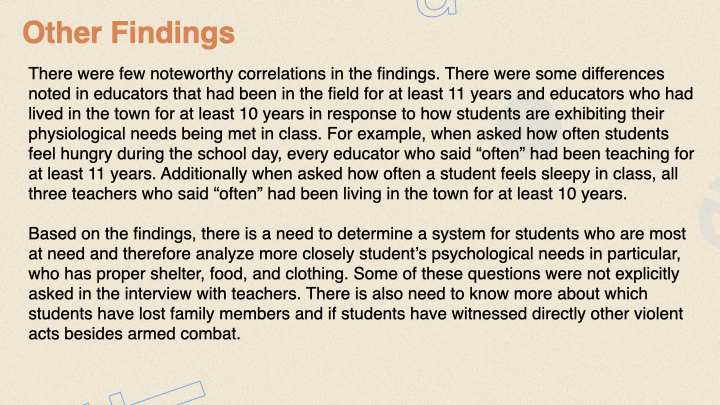
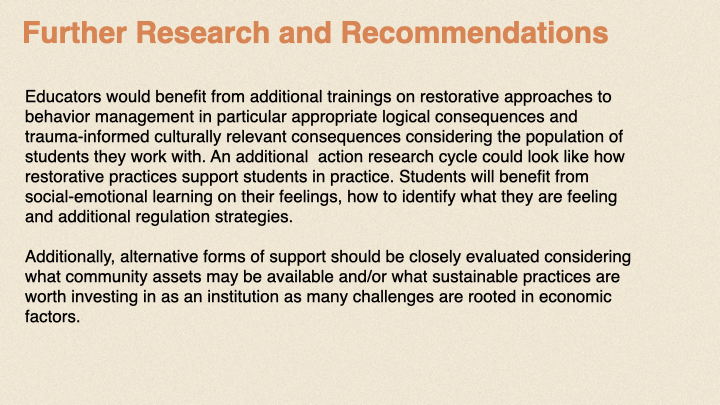
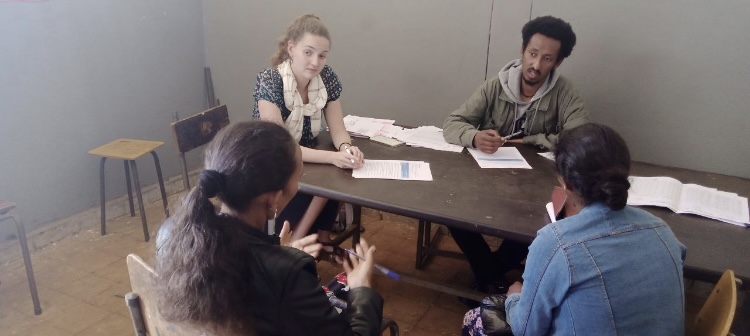
As part of my Masters of Education in Global Perspectives program at Boston College I studied and addressed the challenge of wellbeing of displaced students in the Amhara region of Ethiopia. This study was in collaboration with the professional development team at International Community School (ICS) Addis Ababa and Partners in Education, a community-based education non-profit, at one of their partner schools. The method was teacher interviews and survey results to determine to what extent government educators knew about the well-being of their displaced students and how they were currently responding to behaviors in their classrooms. The result was a series of social-emotional workshops lead by myself and the K-2 Counselor at ICS at a professional training headed by the professional learning team at ICS for schools part of the Partners in Education’s network.





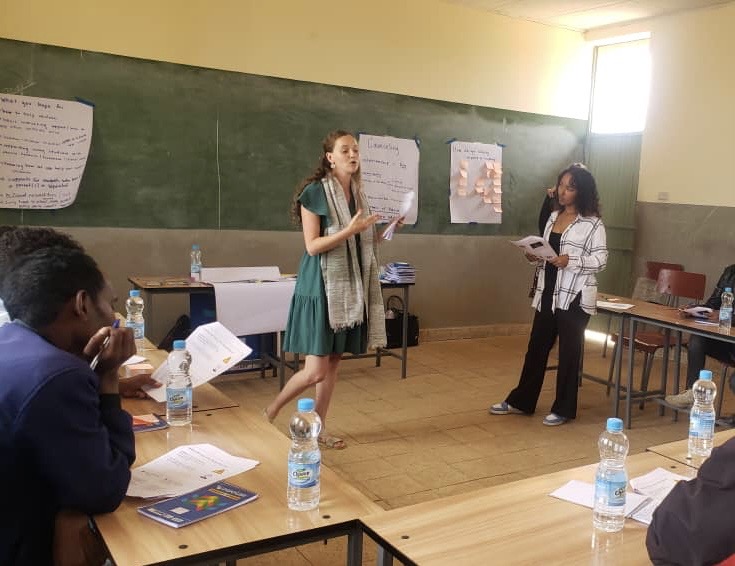
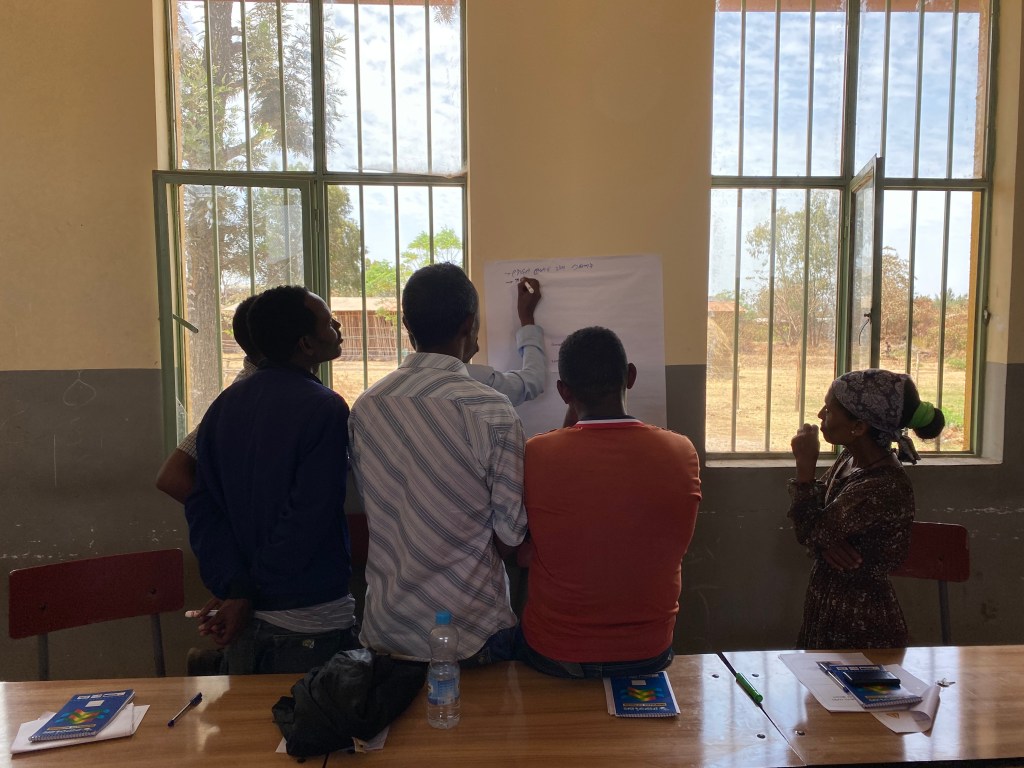
Identifying and Responding to Student Trauma, Responding to Behavior, and Teacher Self-Care
Target Audience: Government School Teachers and Divisional Leads
Description of Session- Identifying and Responding to Student Trauma
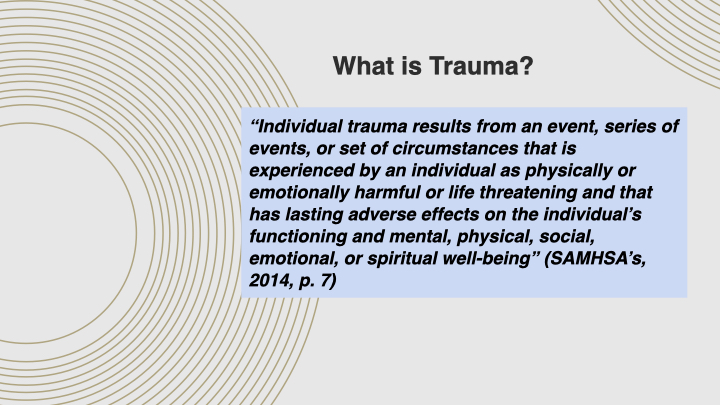
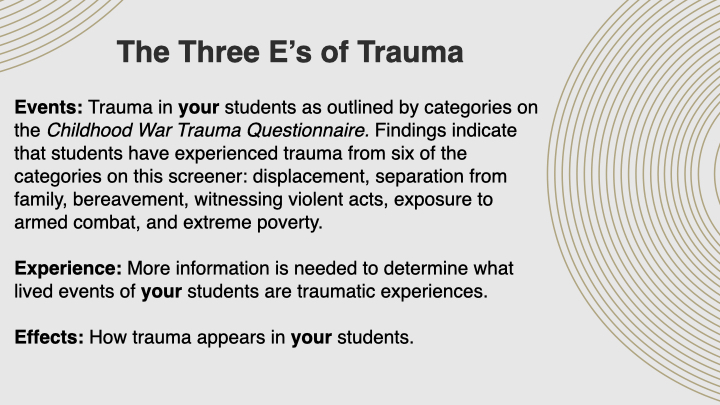
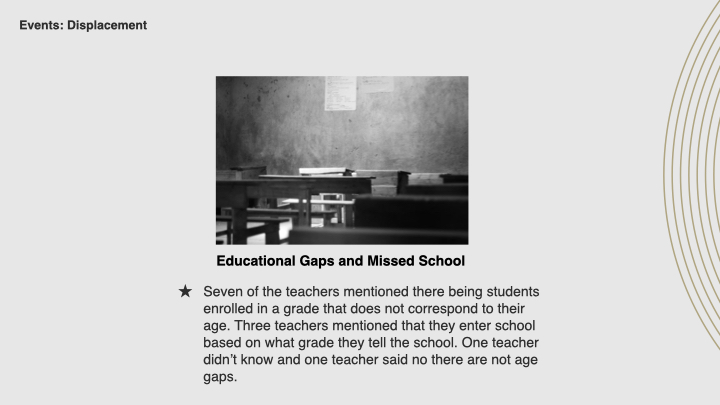
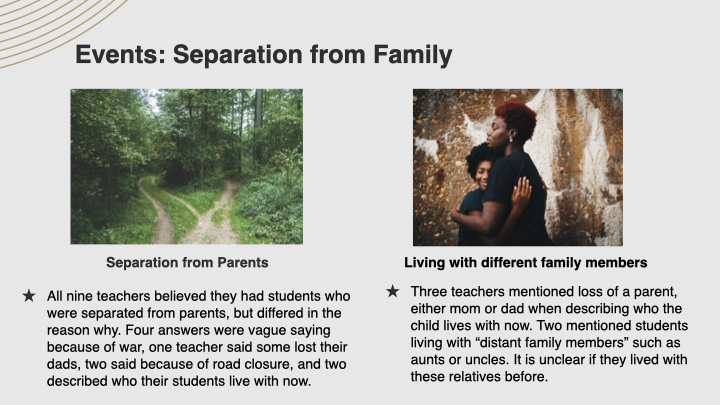
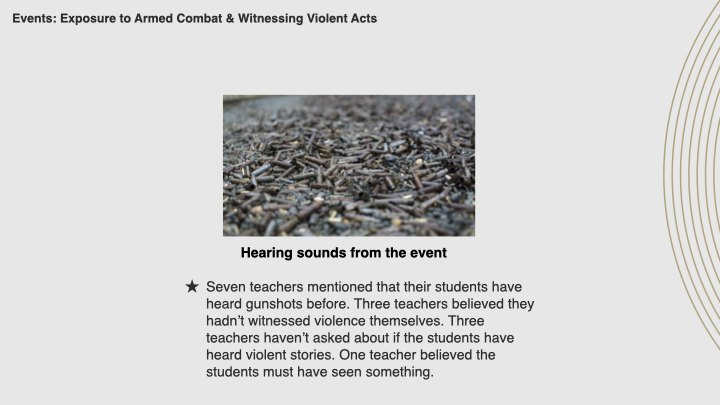
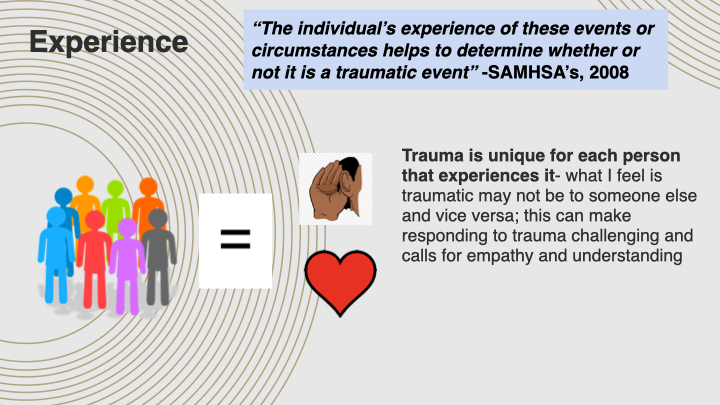
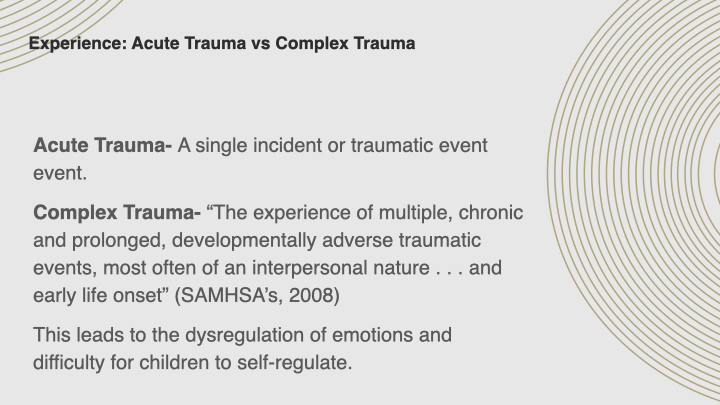
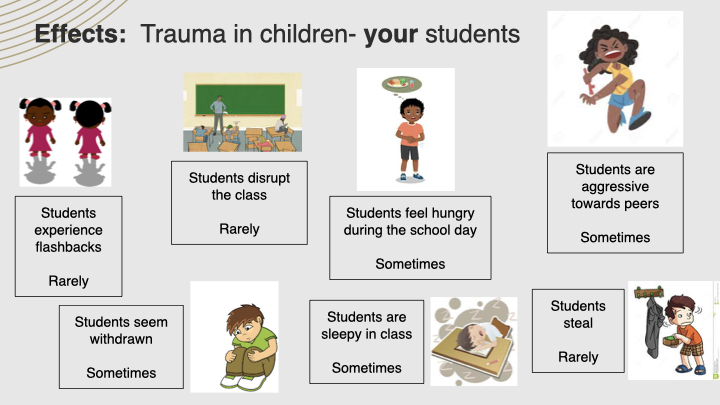
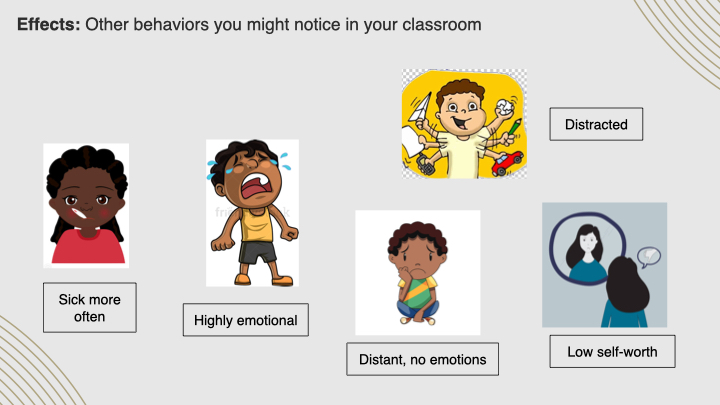
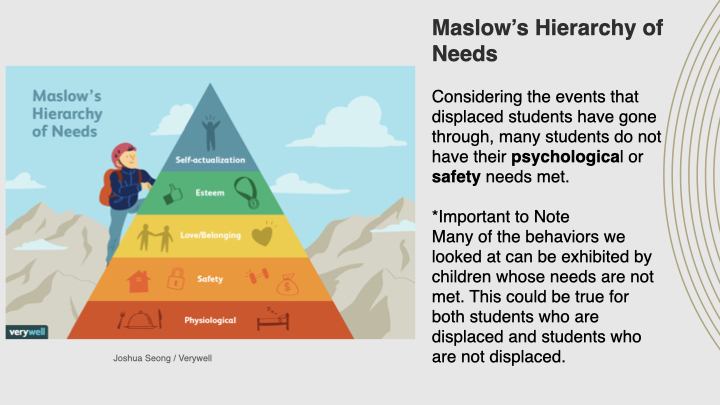
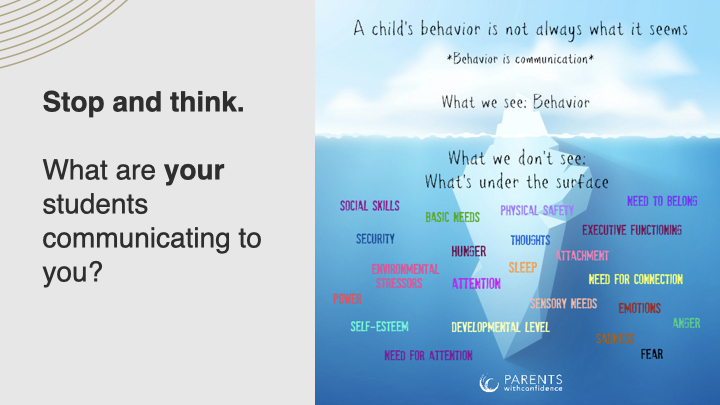
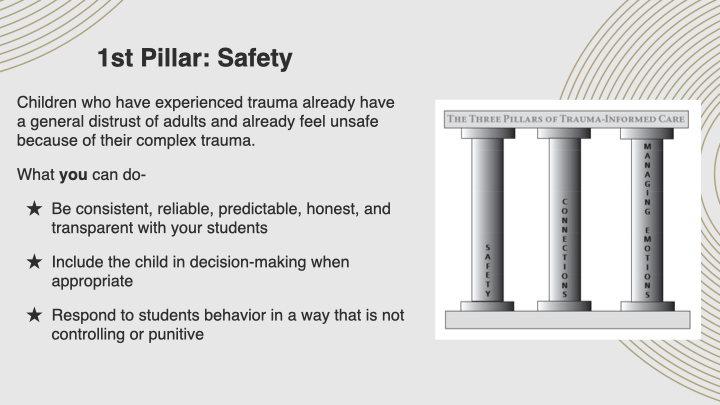
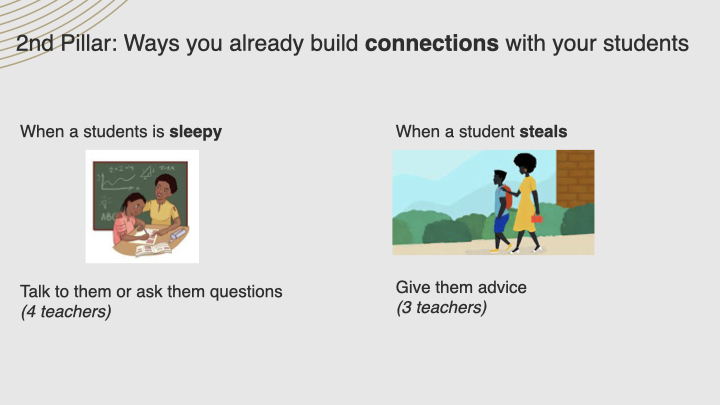
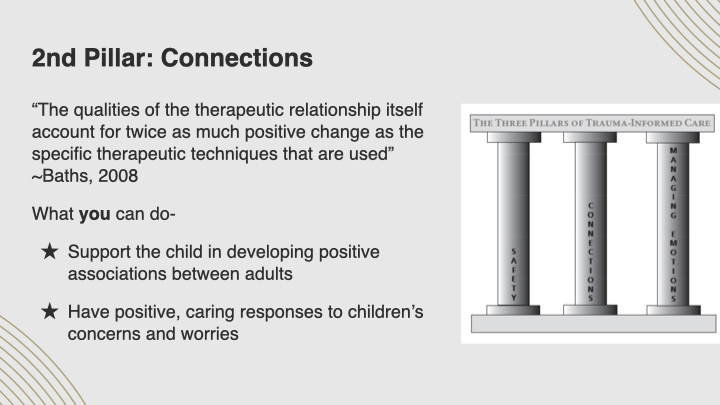
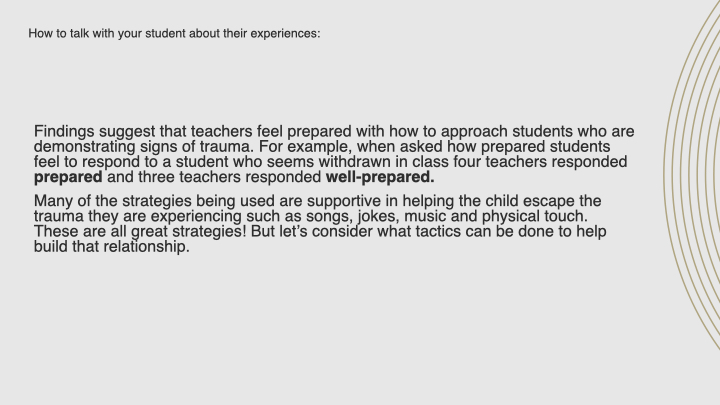
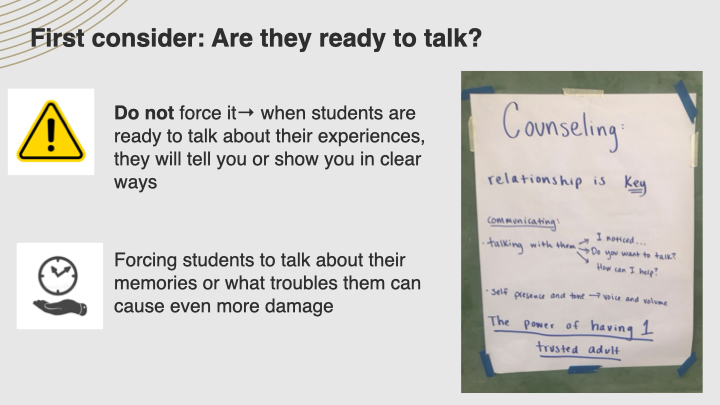
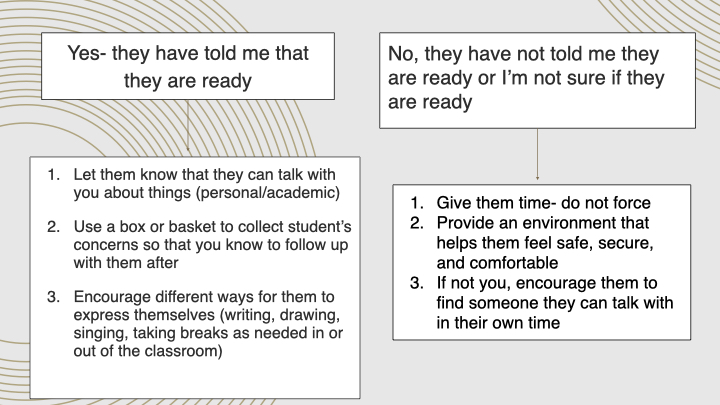
In direct response to the background experiences of students at local government schools in the Amhara region, this workshop takes teachers and divisional leads to carefully consider what “trauma” means and how to recognize trauma in elementary school aged students. Participants will share experiences to come to conclusions on how trauma impacts their direct population. Participants will learn responses that appropriate in their role as an educator that take care to focus on the readiness of the child to share about their experiences. Strategies for both a child who is ready to share and who is not yet ready will be discusses collaboratively to learn from one another.
Session Objectives
- Participants will be able to define trauma and recognize emotional responses to trauma.
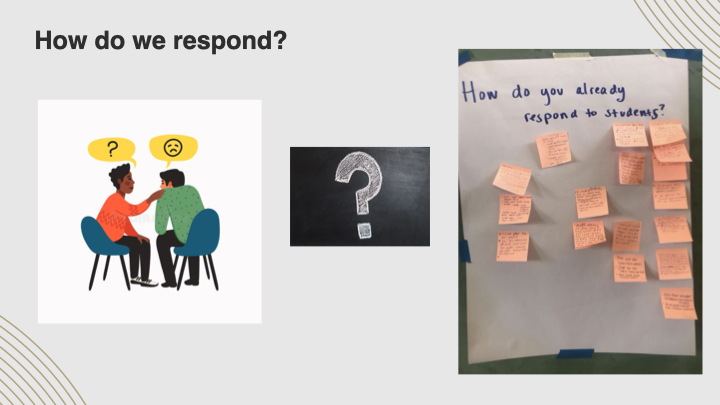
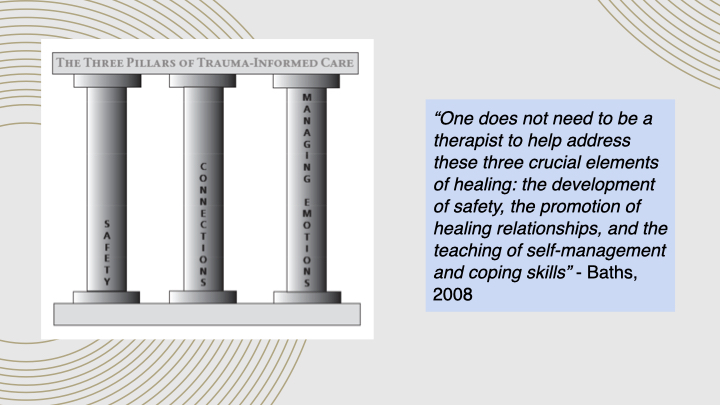
- Participants will be prepared to respond with appropriate strategies to support students with traumatic backgrounds.
- Participants will follow a flow-chart to best support students, beginning with identifying if students are ready to talk or not.
 Sonia Richmond